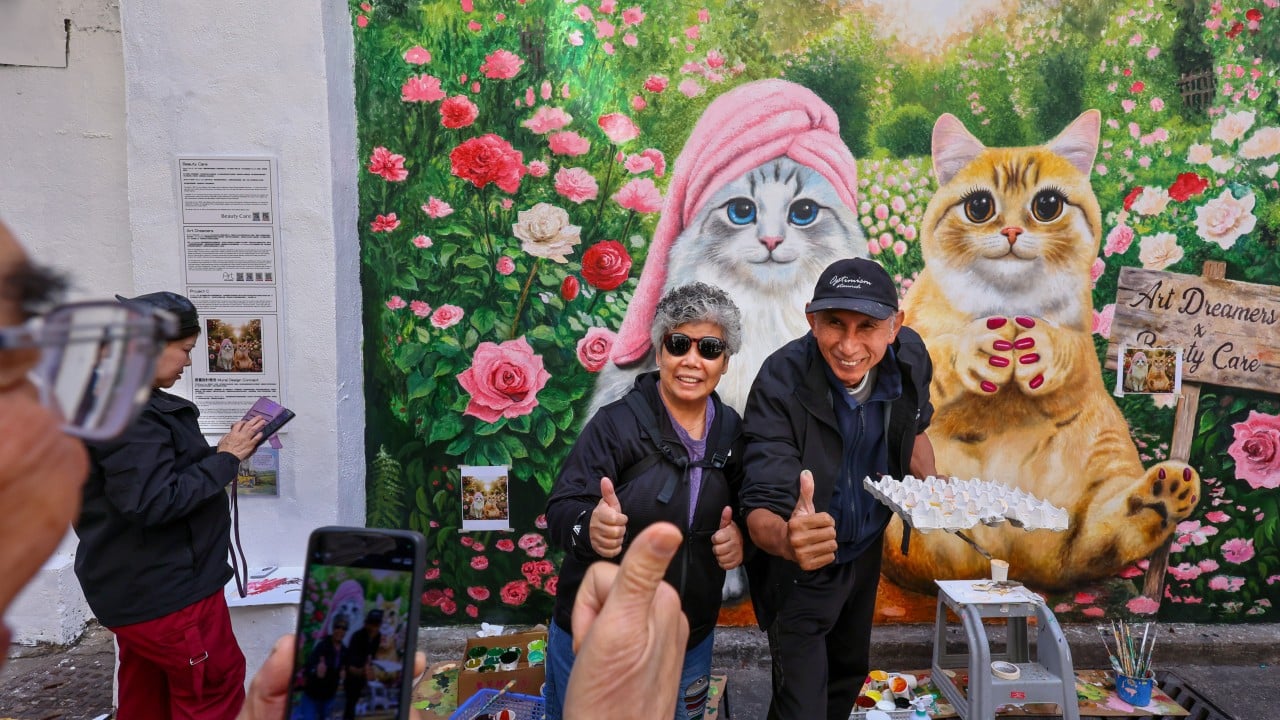
A massive, technicolor cat now stares down pedestrians at the intersection of Hi Lung Lane and Arthur Street. This is the centerpiece of a community art project that has successfully turned a gritty, overlooked corner of Yau Ma Tei into a social media destination. While casual observers see a charming tribute to the neighborhood’s "shop cats," the project represents something far more complex. It is a calculated attempt to use "soft" urban intervention to manage one of the most dense and historically resistant districts in Hong Kong.
Yau Ma Tei is not a place that welcomes polish. It is a neighborhood of wholesale fruit markets, mahjong parlors, and hardware stores that have looked the same since the 1970s. The introduction of large-scale mural art here isn't just about aesthetics. It is an experiment in whether public art can drive foot traffic without triggering the aggressive gentrification that usually follows such projects.
Beyond the Paint and the Paws
Most reporting on the Yau Ma Tei cat mural focuses on the "cuteness" factor. It’s an easy sell. People like cats. They like taking photos. However, the origin of this project lies in a strategic partnership between local non-profits, district authorities, and the "Urban Canvas" initiative. The goal was to revitalize the area’s shuttered storefronts and blank walls to make the district feel "safer" and more "accessible" to outsiders.
When you look at the mural, you are looking at a tool of urban management. By turning a back alley into a photo opportunity, the city effectively changes how that space is used. The "problematic" elements of street life—unauthorized hawking or loitering—are displaced by a steady stream of tourists and influencers. It is gentrification via the paintbrush, a quieter and more palatable version of the glass-and-steel redevelopment seen in neighboring districts.
The Shop Cat as a Cultural Shield
The choice of the cat as a subject is brilliant in its neutrality. In a city often divided by heritage conservation debates and political tension, the "shop cat" is a rare universal symbol. These animals are the unofficial mascots of Hong Kong’s traditional economy. They protect the dried seafood in Sheung Wan and keep watch over the tool shops in Kowloon.
By elevating these animals to the status of public monuments, the project creators are tapping into a deep-seated local nostalgia. It’s a way of saying, "We value the old Hong Kong," even as the physical fabric of that Hong Kong is being updated and regulated. The mural acts as a bridge, making the modernization of Yau Ma Tei feel like a tribute rather than an erasure.
The Economics of the Instagram Crowd
Does a mural actually help a neighborhood economy? The answer is rarely a simple yes.
While the "Purrs of Approval" might bring hundreds of people to the corner of Arthur Street on a Saturday, those visitors are often there for one thing: the photo. They arrive, they pose, and they leave. This creates a "phantom economy" where the metrics of success—likes, shares, and mentions—do not necessarily translate into revenue for the traditional businesses the project claims to support.
- The Displacement Effect: Small workshops and wholesalers often find the influx of tourists a hindrance to their daily operations. Loading zones are blocked by tripod-wielding visitors.
- The Rental Spike: As an area becomes "trendy" on social media, landlords take notice. A mural can be the first indicator that a block is ready for a boutique coffee shop, which inevitably leads to higher rents that the original "shop cat" owners cannot afford.
- Maintenance Realities: Public art in Hong Kong's humid, polluted environment fades fast. Without a dedicated budget for upkeep, these "revitalization" projects often become eyesores within three to five years.
For a business like a traditional cha chaan teng (tea restaurant), the mural is a double-edged sword. It brings people to the door, but if those people only want a bathroom and a free place to sit, the business suffers. The real test of the Yau Ma Tei project will be whether these new visitors actually spend money at the fruit market or the local noodle shops.
The Rise of Tactical Urbanism in Kowloon
This mural is part of a broader trend known as "Tactical Urbanism." This involves low-cost, temporary changes to the built environment intended to improve local neighborhoods. In Hong Kong, this often takes the form of street furniture, "pocket parks," and large-scale murals.
The strategy is effective because it avoids the bureaucratic nightmare of full-scale redevelopment. It is much easier to get a permit for a painting than it is to change the zoning of a city block. However, this ease of execution also means these projects can be top-down impositions. While the Yau Ma Tei mural involved "community consultation," the reality is that the vision is often driven by organizers who may not live or work in the immediate vicinity.
Authenticity vs. Curation
There is a growing tension between the authentic, chaotic soul of Yau Ma Tei and the curated version presented to tourists. The cat mural is a sanitized version of the neighborhood’s grit. It’s "street art" that has been vetted and approved.
True street art—graffiti, political slogans, and unsanctioned tags—has been largely scrubbed from the city in recent years. In its place, we see these colorful, sanctioned murals. While they are undeniably beautiful, they represent a shift toward a more controlled form of urban expression. The city is deciding which stories get told on its walls, and right now, the story is one of colorful, harmless whimsy.
The Logistics of the Mural Movement
Executing a mural of this scale in one of the world’s most crowded cities is a logistical feat. The artists had to work around the rhythms of a functioning neighborhood.
- Site Selection: Choosing a wall that is visible but doesn't interfere with traffic or residential privacy.
- Weather Management: Hong Kong’s rain and heat can ruin a mural mid-production. Specialized, UV-resistant paints are required to ensure the colors don't wash out in the subtropical sun.
- Community Buy-in: Convincing a 70-year-old shop owner that a giant cat on their wall is a good idea requires more diplomacy than artistic skill.
The technical skill involved in the Yau Ma Tei mural is high. The use of perspective ensures that the cat seems to interact with the street level, creating an immersive experience. But technical excellence doesn't negate the need for a critical look at the long-term impact on the street's social fabric.
The Future of the Arthur Street Corridor
As the crowds continue to gather, the Arthur Street corridor is at a crossroads. It could become a vibrant, multi-use space where traditional businesses and new visitors coexist. Or, it could become another "tourist trap" where the local character is replaced by shops selling cat-themed trinkets and overpriced lattes.
The success of the Yau Ma Tei cat mural should not be measured by the number of Instagram posts it generates. Instead, we should look at whether the fruit sellers at the Gwo Laan (fruit market) are still there in five years. We should ask if the elderly residents feel more connected to their neighborhood or if they feel like they are living in a theme park.
Urban art has the power to heal, but it also has the power to disguise. By focusing on the "purrs of approval," we risk missing the underlying shift in how Hong Kong manages its public spaces and its history. The cat is out of the bag, and Yau Ma Tei will never be quite the same.
The next time you stand before that wall, look past the whiskers. Look at the shops next door. See if they are open. See if they are busy. That is where the real story of the neighborhood is being written, one that paint alone cannot fix.