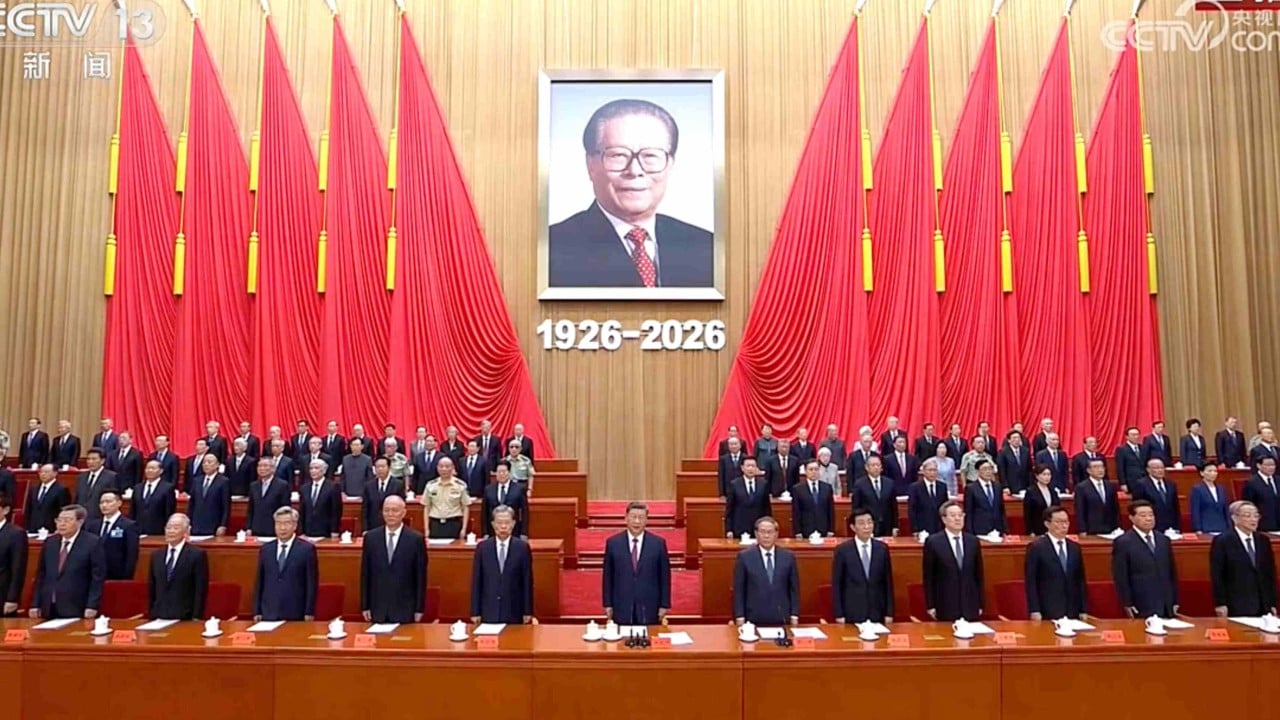
History gets weaponized in Beijing whenever political pressure rises. Chinese President Xi Jinping recently took center stage at the Great Hall of the People to lead a massive gathering commemorating the birth centenary of late leader Jiang Zemin. On paper, it was a routine state tribute for a former head of state who died in 2022 at age 96. Look closer, and you will see a carefully orchestrated political signal about party discipline, ideological control, and unyielding central authority.
Xi used his address to heap praise on Jiang, highlighting his "indelible contributions" to socialism with Chinese characteristics and economic modernization. But why look backward now? Modern Chinese politics relies heavily on historical continuity. By tying his current administration directly to the legacies of past leaders, Xi aims to project an image of unbroken consensus at the top.
The Politics of Historical Continuity
Jiang Zemin took the reins during an intensely fragile era. Stepping up in June 1989 in the wake of the Tiananmen Square crackdown and facing severe Western sanctions, Jiang steered the nation through massive global shifts, including the collapse of the Soviet Union and the 1997 Asian financial crisis. Under his watch, China aggressively expanded market reforms, dismantled unprofitable state enterprises, and ultimately secured entry into the World Trade Organization.
Those decades became synonymous with breakneck economic growth and a loosening of private commerce, creating a legacy that ordinary citizens still view through a lens of nostalgia. Internet users often remember Jiang fondly as "the Elder", a stark contrast to the austere and tightly controlled political environment seen today.
By praising these milestones, Xi is not signaling a return to Jiang's laissez-faire style of economic management. Instead, he is co-opting Jiang's record of crisis management to justify his own policy agenda. Xi's speech explicitly underscored how Jiang maintained strict party control while navigating turbulent international waters.
Messaging Disguised as Commemoration
Big political anniversaries in China rarely serve just one master. Elite gatherings of this scale act as an internal barometer for alignment. Notice who sat in the room, and more importantly, who did not. While retired heavyweights like former premier Wen Jiabao attended the centenary event, former president Hu Jintao was notably absent.
When Xi calls on the entire Communist Party to rally around a centralized core, he is drawing a direct line from Jiang's era to his own. The core message is simple: external pressures and domestic economic headwinds demand absolute obedience. Jiang is portrayed as a leader who stood firm during testing historical junctures, framing Xi's current consolidation of power as the natural continuation of that defensive posture.
This strategy helps smooth over policy differences. While Jiang championed integration into global capitalist structures and private wealth creation, Xi has pulled the pendulum back toward state-led industrial policy, tech autonomy, and tighter regulatory control over private enterprise. Praising Jiang allows the current leadership to bridge these contrasting eras, assuring the party faithful that ideological loyalty remains the ultimate currency.
What This Means for the Road Ahead
Political stability in Beijing depends on projecting absolute unity ahead of major legislative sessions and party plenums. High-profile tributes to figures like Jiang function as a reminder that internal fracturing is unacceptable.
You can expect Beijing to continue mining its recent history for legitimizing symbols. When current economic metrics stutter and global tensions mount, invoking leaders who survived past storms becomes a reliable political playbook. History is never just about the past in China. It is the primary tool used to define who holds power today and how they intend to keep it.