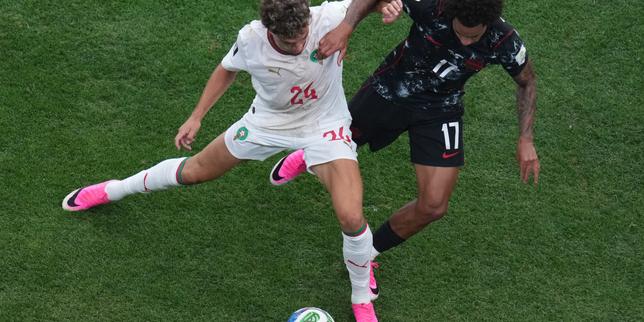
FIFA likes to pretend it operates in a vacuum. It sells a sanitized vision of "neutrality" where the pitch is a sanctuary from the chaos of global power struggles. This is a lie. When Iran insists that no one can exclude it from the World Cup, they aren't just making a sporting claim—they are testing the structural integrity of an international system that is currently buckling under its own hypocrisy.
The standard narrative, often parroted by legacy media, suggests that sports should remain "above politics." This is the lazy consensus. In reality, the World Cup is the ultimate geopolitical leverage point. To suggest that a nation’s participation is guaranteed by some divine right of athletic merit ignores every historical precedent from the 1970s South African bans to the recent scrubbing of Russia from the international bracket.
The Meritocracy Mirage
Football fans love to argue that if a team qualifies on the pitch, they belong in the tournament. It’s a clean, comfortable logic. It’s also completely detached from how the world actually works. FIFA is not a meritocracy; it is a multi-billion dollar diplomatic entity that trades in the currency of soft power.
When a superpower issues a warning regarding a nation's participation, they aren't talking to the strikers or the coaching staff. They are talking to the sponsors, the broadcasters, and the host nations. The "merit" of the Iranian national team—which is considerable—becomes irrelevant the moment the cost of hosting them exceeds the revenue they generate.
I have seen organizations burn through decades of "brand neutrality" in a single weekend because a major stakeholder decided a specific association was too toxic for the quarterly earnings report. FIFA is no different. They will defend a nation’s right to play right up until the point that defense threatens their bottom line.
The Russia Precedent and the Death of "Neutrality"
For years, the gold standard for "keeping politics out of sports" was the idea that athletes shouldn't be punished for the actions of their governments. That era ended in 2022. The swift, total expulsion of Russia from World Cup qualifying didn't just move the goalposts; it burned the stadium down.
By banning Russia, FIFA and UEFA admitted that participation is a privilege granted by the collective, not a right earned by the individual. This created a blueprint. Now, any nation involved in a significant geopolitical friction point is subject to the "Russian Filter."
- Logic Check: If Nation A is banned for "violating international norms," then every other nation's status is now subject to a vote on what those norms are.
- The Trap: Once you use the "morality" lever, you can never put it back. You are now in the business of judging regimes, not offside calls.
Iran’s defiance isn't a show of strength; it’s a desperate attempt to hold FIFA to a standard of neutrality that FIFA itself has already abandoned.
The Sponsor's Veto
Let’s talk about the money. We pretend the FIFA President holds the power. He doesn't. The power resides with the tier-one sponsors who fund the spectacle. These corporations are terrified of one thing: "Association Risk."
If a major political figure makes a specific team a lightning rod for controversy, the value of that team’s matches drops. Broadcasters worry about "brand safety" during the commercial breaks. Security costs for those specific fixtures skyrocket.
Imagine a scenario where three major Western sponsors threaten to pull out of a tournament if a specific "pariah" nation takes the field. Does anyone honestly believe FIFA would choose "sporting integrity" over a $500 million hole in their budget? They wouldn't. They would find a technicality—a "safety concern" or a "procedural error"—to facilitate the exit.
The Sovereign Fallacy
Iran’s claim that "no one can exclude us" is based on the idea of sporting sovereignty. But in the modern era, sovereignty is a collective agreement, not an individual assertion. You are only a member of the club as long as the other members agree to play with you.
We see this in every industry. A company can have the best product in the world, but if the payment processors and the cloud providers decide to de-platform them, that "sovereignty" vanishes. Football is no different. If the surrounding ecosystem—the referees' unions, the transport companies, the other 31 teams—decides the friction of your presence is too high, you are effectively excluded regardless of what the rulebook says.
The Hard Truth About Collective Pressure
The "lazy consensus" says that banning a team is a tragedy for the fans. It is. But that’s exactly why it’s a potent weapon. Geopolitics is about creating enough internal and external pressure that the status quo becomes untenable.
Using the World Cup as a bargaining chip is effective precisely because football is the "global religion." When you threaten a nation’s place in the tournament, you aren't just attacking a team; you are attacking the national psyche. It is the most efficient way to deliver a diplomatic message to a population without firing a single shot.
Stop Asking if it's Fair
The most common question in "People Also Ask" sections is: "Is it fair to ban a country from the World Cup for political reasons?"
That is the wrong question. Fairness is a playground concept. The real question is: "Is it profitable and diplomatically advantageous to maintain the status quo?"
The answer for many global powers is increasingly "No."
We are moving into an era of "Fractured Athletics." We already see it in the way leagues are splitting and new, unsanctioned tournaments are popping up. The idea of a truly "Universal" World Cup is a relic of the post-Cold War optimism that died a decade ago.
The Risk of the Contrarian Path
The danger in admitting that the World Cup is a political tool is that it ruins the magic. Once you see the strings, you can’t unsee them. If we accept that exclusion is a valid diplomatic tool, we have to accept that the tournament will eventually shrink into a series of "friendly" matches between ideologically aligned blocs.
This isn't a "brave new world." it's a return to the historical norm. The period between 1990 and 2014, where we pretended everyone could just "get along" for ninety minutes, was the anomaly. We are now returning to the baseline of human history, where every cultural exchange is a skirmish in a larger war.
The Actionable Reality
If you are a stakeholder in the sports world, stop preparing for a future of "global unity." Start preparing for "selective participation."
- Risk Assessment: Every international contract should have "Geopolitical Force Majeure" clauses.
- Brand Buffering: Decouple your marketing from specific national identities. Focus on the "spirit of the game" because the "participants of the game" are now volatile assets.
- Accept the Friction: Stop trying to "fix" the politics. You can't. The moment the whistle blows, the game is political. It always was.
Iran is right about one thing: they have the talent to be there. But talent has never been the primary requirement for entry into the world's most exclusive club. The primary requirement is compliance with the stakeholders who own the grass.
The World Cup isn't a right. It's a lease. And the landlords are losing their patience.