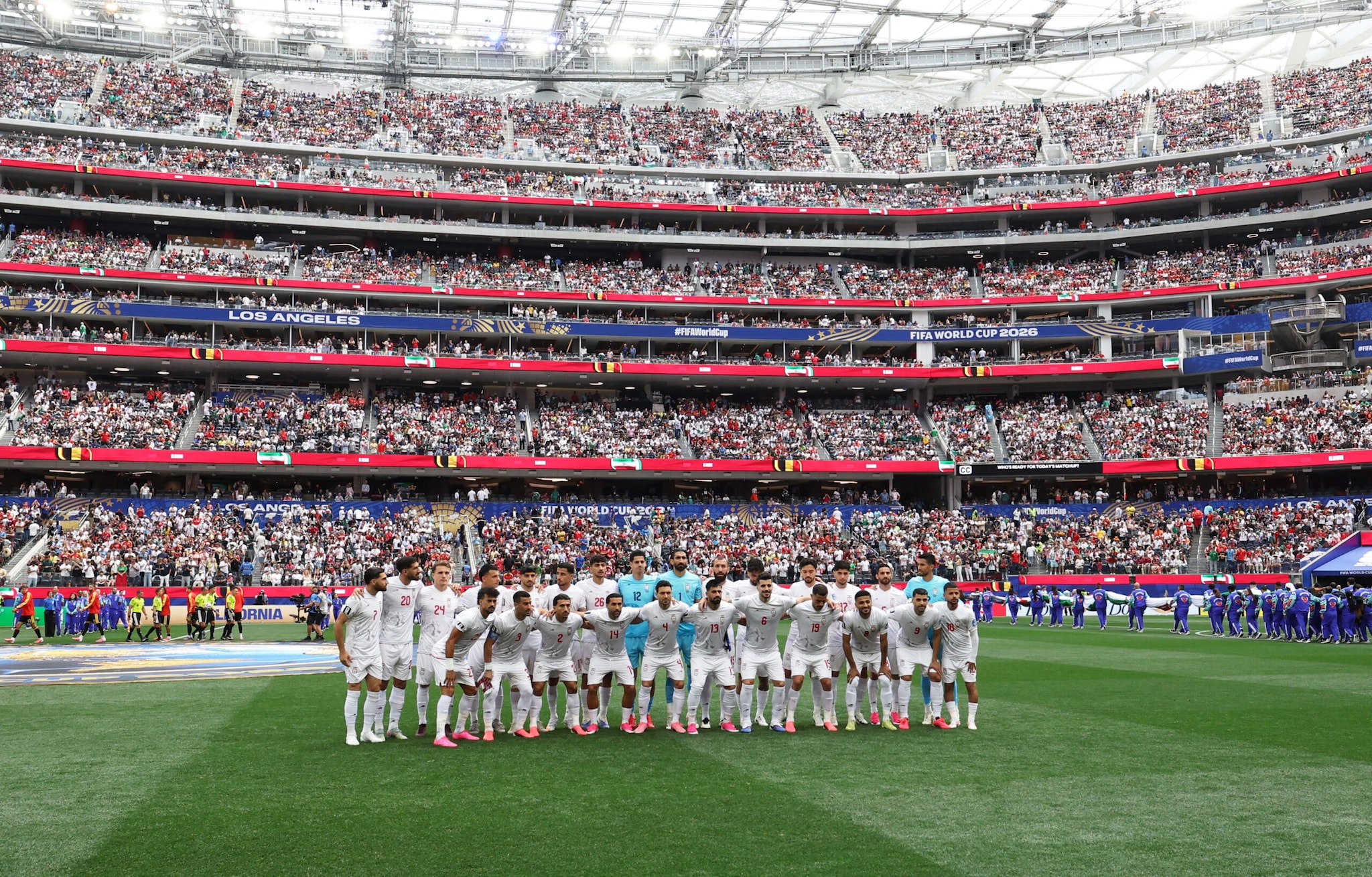
The air inside a stadium locker room after a grueling international match possesses a specific weight. It smells of liniment, damp grass, sweat, and the sharp, metallic tang of pure adrenaline cooling down. When the stadium attendants entered the away dressing room at the Los Angeles venue, the echoing roars of tens of thousands of fans were already fading into the concrete.
The match had ended. A hard-fought, exhausting draw between Iran and Belgium. On paper, it was a statistic—a single point earned, a tactical checkmark in an international friendly. But sports journalism often stops where the concrete walls begin. It reports the scoreline, tracks the possession percentages, and moves quickly to the next headline. Also making headlines lately: The Toxic Myth of the Awareness Stunt Why Dribbling a Ball Across Continents Solves Absolutely Nothing.
What it misses is the quiet gravity left behind in the dark.
On the main whiteboard, where tactical diagrams usually dictate positions, movements, and defensive formations, the Iranian national soccer team had left something else entirely. No arrows pointing toward goalposts. No player numbers hastily circled in blue marker. Instead, written in clear, deliberate script, was a simple message of gratitude. A thank you note to the city, the venue, and the staff who had hosted them on American soil. Further details into this topic are detailed by Yahoo Sports.
To understand why a few words written on a dry-erase board matter, one has to look past the score. For ninety minutes, twenty-two men ran across a field in California. But for the men wearing the white, green, and red kits of Iran, every step on an international pitch carries a heavy, unspoken burden. They play under the microscopic glare of geopolitical tension, carrying the hopes of a football-obsessed populace back home while navigating the complex realities of representing a nation often estranged from the Western world.
When an international team travels, the logistics are clinical. Hotel to bus. Bus to training pitch. Pitch to locker room. Security escorts keep the world at a distance. Yet, inside that isolated bubble, human beings remain. The players knew the historical weight of an Iranian team playing in Los Angeles—a city home to the largest Persian diaspora outside of Iran. They felt the electric energy of the stadium, a crowd split between local expatriates longing for a piece of home and American soccer enthusiasts simply watching two world-class teams collide.
Imagine the final whistle. The exhaustion settles into the muscles. The media demands are waiting, the flight home is looming, and the urge to pack up and disappear into the night is immense. Instead, someone stopped. A marker was found. The team chose to use their final moments in that temporary home to acknowledge the people who clean the floors, stock the water bottles, and open the gates.
This is not standard protocol. Usually, locker rooms after an intense international draw are war zones of discarded tape, empty energy gel packets, and muddy towels. They are left for others to clean. The act of leaving a pristine room, anchored by a written expression of thanks, breaks the transactional nature of modern professional sports. It re-establishes a truth that is frequently buried under broadcasting contracts and political commentary: sports are, at their core, an act of human connection.
Consider the contrast between the noise outside and the silence inside that room. For months leading up to any match involving Iran on Western soil, the commentary is rarely just about football. Analysts dissect visas, political statements, and cultural friction. The pressure on the athletes is immense. They are expected to be diplomats, activists, and elite competitors all at once. It is a dizzying, unfair expectation placed on young men who simply grew up chasing a leather ball through the streets of Tehran or Isfahan.
Yet, their response to that pressure was an act of profound gentleness.
The note on the board serves as a powerful metaphor for the quiet diplomacy that happens when states fail to communicate but people refuse to forget each other's humanity. A soccer pitch is one of the few places left where nations with closed embassies can face each other without weapons, measuring their strength through skill, strategy, and mutual respect. When the match ends, the rivalry dissolves back into the grass.
When the cleaning crew walked in with their rolling bins and disinfectant sprays, they did not just find a room to clear. They found a message that validated their presence. In the grand theater of international sports, the stadium staff are usually invisible. By addressing them directly on that board, the Iranian team looked past the institutions, past the federation logos, and spoke directly to the individuals who made the event possible.
The ink on a whiteboard is temporary. It wipes away with a cloth, leaving no permanent mark on the plastic surface. But the gesture lingers long after the stadium lights are cut and the grass is left to grow in the California sun. It reminds us that even when the world demands hostility, grace can still find a way to write its name in the quiet corners of the earth.