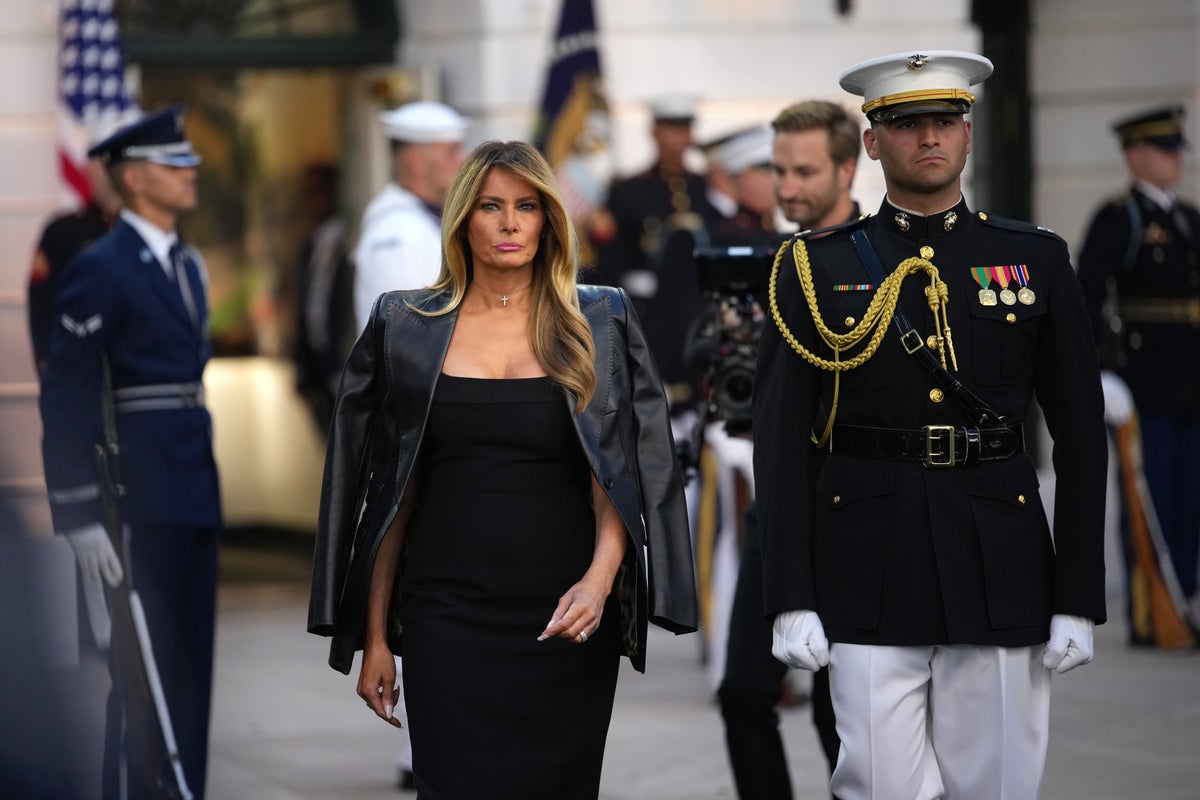
Melania Trump drew a sharp line at the threshold of the White House Executive Residence. For four years, the private quarters of the First Family served as a fortress of absolute privacy, a stark contrast to the chaotic, factional warfare defining the West Wing just a short walk away through the colonnade. Yet the boundaries of that fortress were not entirely impenetrable. The most bitter administrative battles of the Trump presidency did not always happen in the Situation Room or the Oval Office. Instead, they occurred over the guest ledger of the second and third floors, culminating in a stark reality where the First Lady found herself overruled on who could sleep under her roof.
Control over the Executive Residence is the ultimate currency of proximity in Washington. While the West Wing belongs to the public and the political apparatus, the Residence is legally and historically the domain of the First Lady. When political aides and family members attempted to blur these lines, the domestic staff became the unwitting infantry in a quiet war of attrition.
The Battle for the Executive Residence
The institutional friction between the East Wing and the West Wing is a permanent feature of modern American governance. Every administration experiences it. Staffers under Hillary Clinton clashed with the political operation; Nancy Reagan famously micromanaged her husband’s schedule to the dismay of chief of staff Donald Regan.
In the Trump administration, this institutional friction was magnified by familial ties and corporate habits imported from New York. The West Wing viewed the entire White House complex as an extension of an international business headquarters, where access was fluid and traditional boundaries mattered less than immediate utility. The East Wing, under Melania Trump, viewed the space through the lens of strict protocol and personal sanctuary.
When the political operation attempted to use the historic bedrooms of the Residence—such as the Lincoln Bedroom or the Queen’s Bedroom—as political rewards or temporary staging grounds for allies, the First Lady resisted. The tension was not merely about hospitality. It was about the preservation of an independent power base within a highly volatile environment.
The Overruled Mandate
The specific flashpoint arrived when West Wing operations dictated that key political surrogates and extended family operations required overnight access to the private quarters during periods of intense political crisis. While the First Lady maintained a strict policy regarding who could occupy the guest suites, the President’s political apparatus possessed a distinct mechanism to bypass her authority.
The Chief of Usher, who oversees the domestic operation of the White House, technically answers to both the President and the First Lady. When a direct directive comes from the Oval Office to accommodate a high-level guest or a family faction for strategic purposes, the traditional veto of the First Lady is effectively bypassed.
This maneuver occurred during crucial legislative pushes and campaign milestones, when the West Wing demanded that certain figures remain in the building past midnight to ensure continuous access to the President. To the political team, it was a matter of operational efficiency. To the East Wing, it was a direct violation of the domestic boundary.
The Architecture of White House Isolation
To understand how these internal borders crumble, one must understand the physical layout of the White House. The building is a crowded workplace masquerading as a grand home. The public tours move through the State Floor, while the real decisions happen simultaneously beneath them in the West Wing and above them in the private quarters.
The domestic staff of nearly one hundred permanent employees—butlers, maids, chefs, and plumbers—are caught in the middle of these turf wars. They are fiercely loyal to the office, trained to be invisible and completely silent about what they witness. When a guest arrives who is unwelcome by one half of the presidency, the staff must execute their duties with flawless neutrality, preparing rooms and serving meals despite the palpable frost in the air.
This environment created an unprecedented level of internal isolation. Melania Trump maintained a remarkably small staff compared to her predecessors, a deliberate choice designed to limit leaks and maintain operational security. By keeping her inner circle tight, she sought to control information, but this strategy also left her vulnerable to being outvoted when the heavier political machinery of the West Wing swung into motion.
The Precedent of Political Intrusion
History shows that the weaponization of White House overnight stays is an old game, but it usually targets outsiders. The Clinton administration famously faced scrutiny for using the Lincoln Bedroom to reward major campaign donors, turning a historic chamber into a high-stakes bed and breakfast for political capital.
The distinction in recent history is the inward nature of the conflict. The intrusion did not come from donors seeking a brush with history; it came from the internal factions of the administration itself. When the West Wing overruled the First Lady to plant an ally or a family rival in the private quarters, it was a demonstration of raw administrative dominance. It signaled that in a crisis, the needs of the political operation would always supersede the preferences of the domestic sanctuary.
This dynamic altered the behavior of the East Wing. As the presidency progressed, the boundaries grew even more rigid. Staff access to the third floor was severely restricted. The First Lady traveled independently, established distinct scheduling protocols, and ensured that her public appearances were completely decoupled from the West Wing’s daily news cycle. If she could not completely control who entered her house, she would completely control her absence from their theater.
The structural reality of the modern presidency ensures that no corner of the White House remains purely personal. The moment a family takes the oath of office, their domestic life is subsumed by the relentless machinery of a twenty-four-hour political operation. The illusion of a normal home vanishes, replaced by a complex grid of security clearances, political mandates, and internal power plays where even the guest rooms become territory to be won or lost.