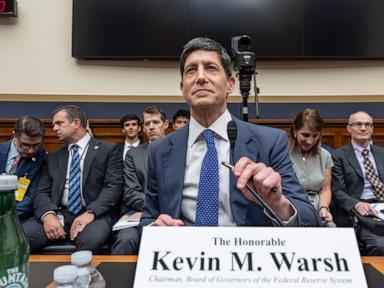
The room in the Rayburn House Office Building has no windows to the outside world. It is lined with heavy wood panels, lit by the sterile glow of television cameras, and filled with the low, anxious hum of people who know that every word spoken here will trigger an immediate, multi-billion-dollar reaction.
At the center of this room sits a man with a neat stack of papers and a glass of water. He looks like a retired high school principal or a quiet accountant.
But when he clears his throat, Wall Street stops trading.
Jerome Powell, the Chairman of the Federal Reserve, does not wield weapons, pass laws, or command armies. Instead, he wields a single, blunt instrument: the federal funds rate. To the casual observer, the biannual spectacle of the Fed Chair testifying before Congress looks like a dry, bureaucratic ritual. Representatives ask grandstanding questions; the Chairman responds in a carefully calibrated, agonizingly neutral dialect known as "Fedspeak."
Behind the jargon lies a high-stakes drama that dictates whether you can afford a home, whether your local grocery store keeps its prices steady, and whether you will keep your job by the end of the year.
The Weight of a Quarter-Percent
Consider a woman named Clara. She does not live in Washington, and she does not watch congressional hearings. She owns a mid-sized commercial bakery in Ohio.
For the past year, Clara has been staring at a blueprint for an expansion. She wants to buy a massive, industrial-grade deck oven that would allow her to double her daily bread production and hire four more workers from her community. The oven costs eighty thousand dollars. To buy it, she needs a commercial loan.
Two years ago, the interest rate on that loan would have been manageable. Today, after the Federal Reserve's aggressive campaign to cool down the economy, the interest rate makes the monthly payment suffocating.
Clara is stuck in limbo. She represents millions of business owners, home buyers, and everyday consumers waiting for a signal.
When Powell sits before the Senate Banking Committee, Clara’s future hangs on his adjectives. If he describes inflation as "sticky" or "stubborn," it means the high borrowing costs staying in place. Clara folds up her blueprint and puts it in a drawer. She does not buy the oven. She does not hire the four workers.
If he notes that price pressures are "moderating" or that the labor market is "coming into better balance," a flicker of hope appears. The interest rates might soon fall. The blueprint comes back out.
This is the transmission mechanism of monetary policy. It is not an abstract economic theory. It is a physical pressure felt in the bank accounts of ordinary people.
The Twin Tightropes of Washington
The Federal Reserve operates under a dual mandate given to it by Congress: promote maximum employment and maintain stable prices.
These two goals are often in direct conflict. It is a cruel economic reality.
Think of the economy as a massive, overheating steam engine. When the engine runs too fast, it generates immense power, but it also begins to shake, threatening to tear itself apart. That shaking is inflation. To slow the engine down, the Fed pulls a lever—raising interest rates—to make borrowing money more expensive. This cools demand, but if they pull the lever too hard, the engine grinds to a halt. That halt is a recession.
During his testimony, Powell must walk a tightrope stretched between these two abysses.
On one side of the room, lawmakers accuse him of keeping rates too high for too long, crushing the housing market, and putting working-class jobs at risk. They point to people like Clara, who are priced out of growth.
On the other side, critics warn that cutting interest rates too early could reignite the embers of inflation, sending the cost of eggs, gas, and rent soaring once again. They remind him of the painful lessons of the 1970s, when the Fed blinked too early, let inflation slip away, and spent a decade trying to claw it back.
Powell’s challenge is not just analyzing data; it is managing human psychology.
Markets are emotional. They run on greed and fear. If Powell sounds too optimistic about cutting rates, investors go on a buying spree, potentially reheating the very inflation he has spent years trying to cool. If he sounds too grim, he could trigger a wave of panic selling and corporate layoffs.
Every pause, every sigh, and every choice of word is dissected by algorithms and human analysts looking for a crack in his armor.
The Art of Saying Nothing Honestly
How do you speak to a hyper-sensitive global audience without causing a panic?
You master Fedspeak.
Fedspeak is a linguistic defense mechanism. It is designed to convey maximum information to those who know how to listen, while remaining completely inscrutable to the casual observer. It relies on passive voice, double negatives, and heavy qualifiers.
During the testimony, a senator might ask point-blank: "Mr. Chairman, are you going to cut interest rates in September?"
A normal person would say yes or no.
Powell cannot. A direct answer would lock the Fed into a path, stripping them of the flexibility they need if the economic data suddenly changes next week.
Instead, he might say: "While the Committee has seen encouraging signs of disinflation, we require further confidence that inflation is moving sustainably toward our two percent objective before we deem it appropriate to reduce the target range."
It sounds like bureaucratic sludge. But to the trained ear, it is a map.
It tells us that the Fed is no longer looking to raise rates, but they are terrified of being fooled by a temporary dip in prices. They are waiting. They are watching. They are demanding more proof.
The tragedy of this approach is the disconnect between the sterile language of policy and the visceral pain of those waiting for relief. To a family struggling to buy a home while mortgage rates hover near historical highs, "maintaining a restrictive stance" is not a strategy. It is a barrier.
The Ghost in the Machine
Behind the economic models, the dot plots, and the consumer price index reports lies a deeper, more unsettling truth that central bankers rarely discuss openly.
We do not fully understand how the modern economy works.
The old rules, built on decades of historical data, have been shattered. The global pandemic, massive supply chain disruptions, shifts in remote work, and geopolitical tensions have turned the global market into an unpredictable beast. The economic models that worked in the 1990s or the 2000s are failing to predict the current reality.
This is why Powell repeatedly emphasizes that the Fed is "data-dependent."
It is a humble admission masked as a technical strategy. It means they are flying the plane by looking out the window rather than relying on the instruments. They are reacting to events as they happen, hoping their adjustments are fast enough to prevent a crash, but slow enough to avoid whiplash.
It is a terrifying realization for anyone who believes that the people in charge have a master plan.
The Fed is not a machine with a precise dial. It is a group of human beings trying to steer a ship in a storm using a rudder that takes months to respond to their movements. When they raise rates today, they won't know the full effect on Clara’s bakery, or the broader housing market, for another year.
They are steering by looking at the wake behind them, trying desperately to guess what lies ahead in the fog.
The Human Bottom Line
When the television cameras finally shut off and the hearing room empties, the noise fades. But the ripples of those few hours of testimony begin to spread across the globe.
Traders on Wall Street adjust their algorithms. Banks tweak their lending criteria.
And in Ohio, Clara checks the financial news on her phone before she turns off the bakery lights for the night. She reads the dry headlines. She tries to translate the coded language of the man in the wood-paneled room into a simple answer for her own life.
Do I buy the oven? Do I hire the workers? Or do I wait?
The Fed Chairman's testimony is often treated as a technical update for investors and policy wonks. It is easy to get lost in the percentages, the yields, and the jargon.
But the true story of the Federal Reserve is not found in the charts. It is written in the quiet decisions made at kitchen tables, the stalled dreams of small business owners, and the invisible anxiety of a nation trying to find its footing on shifting ground.
As Clara locks the door, she decides to wait. The risk is still too high. The language from Washington remains too cautious.
The gears of the economy grind a fraction of a millimeter slower, waiting for a whisper of certainty that may never come.