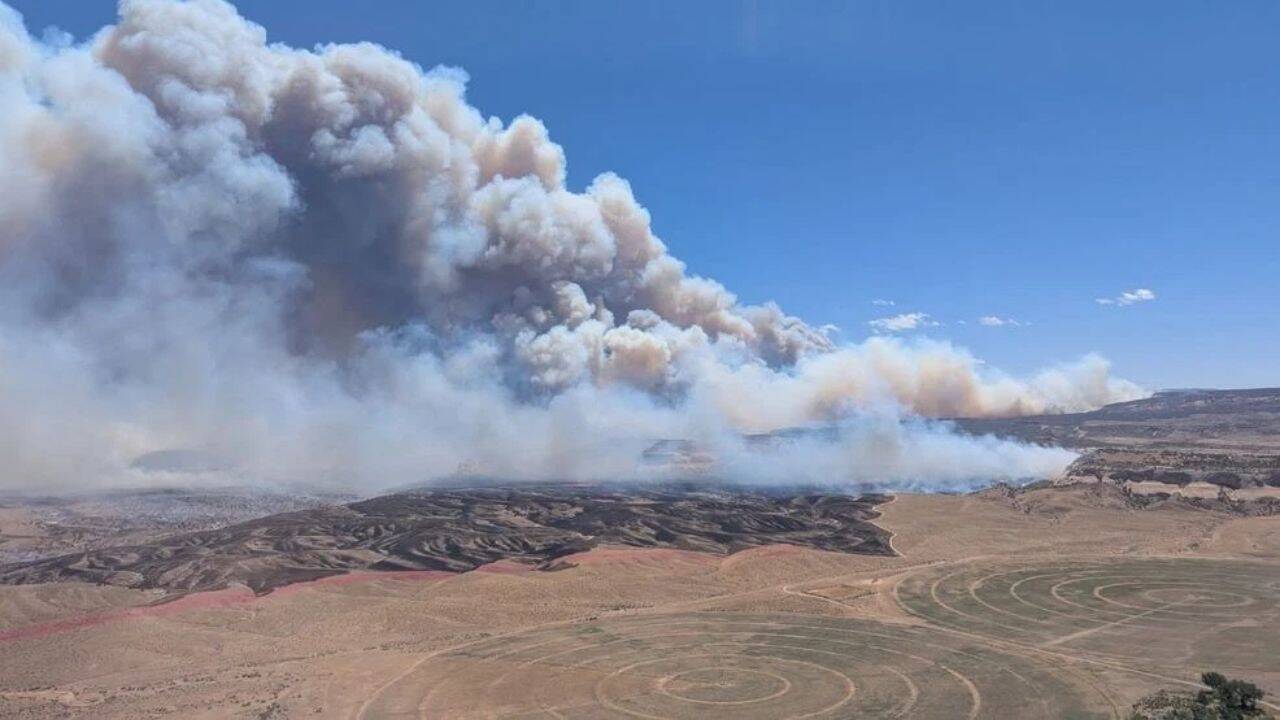
The reality hitting the American West right now is brutal. If you thought previous wildfire seasons were bad, this summer is proving that the baseline has officially shifted. We aren't just looking at regular seasonal fires anymore. We are looking at a system stretched past its breaking point, and the human cost is mounting fast.
Over the weekend, three wildland firefighters lost their lives and two others were seriously injured while fighting the Knowles and Gore fires along the rugged Colorado-Utah border. They were part of an intensive, multi-agency response team managed by the newly formed U.S. Wildland Fire Service. They stepped up to protect public lands and rural communities, paying the ultimate price in conditions that can only be described as extreme.
This isn't an isolated tragedy. It's the direct result of an explosive cocktail of record-low mountain snowpack, intense heat, and severe wind. From Arizona up to the Pacific Northwest, fire crews are scrambling. Millions of acres have already burned nationwide this year, pacing well ahead of the historical ten-year average.
The Dangerous Reality on the Colorado-Utah Line
When a fire breaks out in the backcountry of the West, the geography itself works against the crews. The Knowles and Gore fires took hold in highly complex, mountainous terrain right where Colorado meets Utah. It's an area defined by steep canyons, loose shale, and dense timber that hasn't seen decent moisture in months.
The U.S. Wildland Fire Service, which was launched earlier this year to better centralize the chaotic web of state and federal fire resources, is now facing its first major structural crisis. In a public statement, the agency acknowledged the staggering weight of the loss, expressing deep grief alongside the USDA Forest Service. But beyond the public statements, the boots on the ground face immediate, structural dangers.
In canyons like these, weather changes in seconds. A sudden gust can turn a standard flank attack into a trap. When fires burn on steep slopes, rolling debris like burning logs or dislodged boulders can crash down on crews working below. It's a logistical nightmare that limits how close heavy machinery can get to the active flame front.
Why the Cottonwood Fire Is a Logistical Nightmare
Further west in Utah, the Cottonwood Fire has ballooned into a massive monster, tearing through more than 144 square miles in Beaver County. The flames marched aggressively through narrow canyons, burning parts of a local ski resort and destroying multiple summer cabins.
Utah Governor Spencer Cox called the situation bleak, and he isn't exaggerating. The sheer physics of the terrain make containment incredibly slow. Alyssa Mason, a spokesperson assigned to the Cottonwood Fire, pointed out the core problem that outside observers often miss. You can't just drive a modern fire engine or a massive bulldozer up a vertical cliff face.
When heavy equipment can't get in, the strategy shifts. It means crews have to hike in on foot carrying heavy packs, scraping dirt lines by hand with Pulaskis and McLeod tools. It's grueling, dangerous work that slows progress down to a crawl while the wind pushes the fire forward at miles per hour.
The Recipe Behind the Historic Drought of 2026
To understand why this is happening right now, look at what happened over the winter. Utah experienced its warmest winter on record, combined with a historically pathetic snowpack. The mountains didn't get the slow-releasing water storage they need to keep vegetation hydrated through June and July.
Instead, the brush and timber turned into tinder by late spring. State Forester Jamie Barnes noted that recent fire starts are showing completely unprecedented behavior. The fires aren't just burning; they are running, spotting miles ahead of themselves, and creating their own localized weather patterns.
The crisis forced Governor Cox to issue an emergency declaration and enact a strict statewide fireworks ban ahead of the July Fourth holiday. It's an aggressive move, but a necessary one when every single spark has a high probability of starting a catastrophic blaze.
A Multi-State Emergency Straining the National Guard
The emergency isn't confined to Utah. Just across the border, Colorado Governor Jared Polis declared a state of emergency, authorizing the National Guard to step in and provide immediate aviation and ground support.
According to tracking data from the National Interagency Fire Center, crews are currently fighting dozens of massive, uncontained fires across the West.
- In Arizona, a stubborn blaze south of Grand Canyon National Park forced evacuations near Kendrick Mountain.
- Utility providers in northern Arizona and parts of Utah have taken the drastic step of enacting rolling, precautionary power shut-offs to prevent high winds from knocking live lines into dry brush.
- Red flag warnings cover an enormous swath of the country, stretching continuously from California all the way through New Mexico.
This level of simultaneous, high-intensity activity strains the entire national mutual-aid system. Teams from the East Coast and Midwest are being flown into western airbases just to keep up with the initial attack on new starts.
Real Steps for High-Risk Communities
If you live in a Wildland-Urban Interface zone anywhere in the West, sitting back and hoping for rain isn't a strategy. You need to take concrete action today to harden your property and protect your family.
First, focus heavily on your home's ignition zone. Clear all dead pine needles, dry leaves, and combustible debris from your roof and gutters. A high percentage of homes lost in wildfires aren't consumed by the main wall of flame; they catch fire from blowing embers that land in uncleaned gutters.
Second, trim low-hanging tree branches up to six feet from the ground to prevent a ground fire from climbing into the canopy. Move woodpiles at least thirty feet away from your primary structure.
Finally, prepare your evacuation plan now. Pack a go-bag with essential documents, prescriptions, and irreplaceable valuables. Don't wait for an official Level 3 "Go" order if you see active smoke columns moving toward your valley. Leaving early keeps the narrow canyon roads clear for heavy fire engines attempting to make a stand.