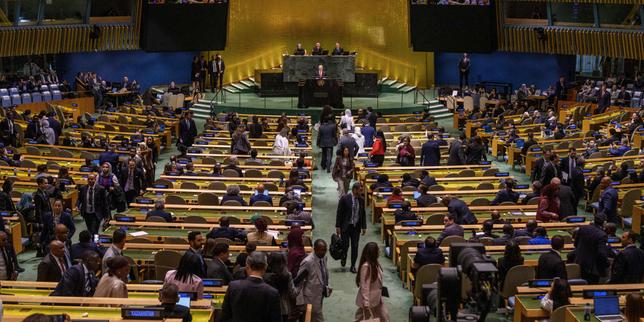
The lazy consensus in international relations is a comforting sedative. It goes like this: if Western capitals issue enough stern communiqués, summon enough ambassadors, and draft enough toothless resolutions at the United Nations, Jerusalem will suddenly recalculate its strategic calculus. The theory assumes that Israel is a client state tethered to European approval, easily coerced by the threat of diplomatic cold shoulders and symbolic reprimands.
It is a fairy tale designed to allow foreign ministries in London, Paris, and Berlin to look like they are doing something while fundamentally changing nothing.
I have watched diplomats spend decades shuffling paper corridors while facts on the ground multiply past the point of reversal. The premise that mounting diplomatic isolation can halt the expansion of West Bank housing blocks or alter the security architecture of the region is not just wrong; it is a dangerous misunderstanding of how sovereign states respond to external pressure. When you back a nation into a corner with moralizing lectures while ignoring its baseline security realities, you do not induce compliance. You induce defiance.
To understand why the conventional playbook fails, we must first look at the mechanics of what the commentariat calls isolation.
The Illusion of Western Leverage
For years, the standard critique from European think tanks and international legal scholars has centered on leverage. The argument claims that Israel depends so heavily on Western trade, intelligence sharing, and diplomatic cover that a coordinated cold shoulder would force a retreat.
This argument collapses under the weight of empirical data.
First, trade patterns have fundamentally diversified. While Europe remains a major economic partner, Israel’s trade profile increasingly looks eastward, with technology, defense, and agricultural partnerships expanding rapidly across Asia. More importantly, sovereign nations facing existential threats do not trade long-term security calculations for short-term trade concessions.
Second, the psychological impact of international condemnation inside Israel is the exact opposite of what foreign analysts expect. Every time a European parliament passes a symbolic motion or an international body issues a censure, the domestic political effect in Israel is uniform: it rallies the public around the flag. It validates the narrative that Israel stands alone against a hostile or indifferent world, a trope deeply embedded in the national consciousness. External pressure does not empower the Israeli peace camp; it shrinks it to irrelevance.
When you tell a population that the world condemns their very existence or expansion, you convince them that compromise is synonymous with suicide.
The Cisjordania Reality Check
Let us look closely at the West Bank, or what local governance frameworks call Judea and Samaria. The competitor narrative treats the expansion of Israeli communities there as a temporary administrative policy that can be rolled back with enough political will.
That view ignores physical reality.
Decades of infrastructure investment, road networks, water grids, and municipal consolidation have created a permanent, integrated geography. Hundreds of thousands of citizens live across the Green Line. You cannot simply reverse engineer a demographic and physical reality of this scale through diplomatic pressure. To pretend otherwise is to engage in diplomatic theater.
The Western demand for a freeze on construction collides with a domestic political reality where ruling coalitions depend entirely on the constituencies driving that expansion. No government in Jerusalem is going to commit political suicide to satisfy a foreign ambassador who will rotate back to a desk in Brussels in three years.
Furthermore, framing the issue purely as a real estate dispute misses the strategic logic. For the security establishment, control over the central mountain ridge of the West Bank is viewed as non-negotiable topographical defense depth. Whether one agrees with that doctrine or finds it legally indefensible under international law is irrelevant to the core point: nations do not abandon what they perceive as vital security buffers because a foreign minister is upset.
Gaza and the Fallacy of Rebuilding Norms
When we turn to Gaza, the conventional analysis reaches new levels of cognitive dissonance. The prevailing commentary suggests that post-conflict governance can be neatly outsourced to a revitalized international coalition or a technocratic authority, returning the region to some pristine pre-2023 baseline.
This is a fantasy.
The security vacuum in Gaza cannot be solved by a diplomatic checklist. Any arrangement that fails to address the root armed insurgency and the mechanics of cross-border smuggling will collapse within months. The insistence by external actors on applying traditional state-building models to an asymmetric urban warfare zone demonstrates a profound lack of operational reality.
I have seen international aid architectures repeatedly subverted because planners refuse to look at who actually holds the guns on the street. Writing reports about humanitarian law while ignoring the mechanics of enforcement is an exercise in administrative self-soothing.
The Cost of Delusion
Clinging to the belief that Western diplomatic isolation can re-engineer Middle Eastern realities carries a steep price. It prevents serious, unsentimental strategic thinking. It encourages politicians to substitute press releases for policy. And worst of all, it keeps local populations trapped in cycles of conflict by feeding them the illusion that an external savior will eventually arrive to fix the map.
If Western capitals actually want to influence events, they need to abandon the moral grandstanding. They need to understand that security dilemmas cannot be talked away with sanctions or resolutions.
Until foreign policy analysts stop projecting their own wishful thinking onto a region governed by raw power dynamics, the status quo will remain untouched, shielded by the very rhetoric meant to dismantle it.