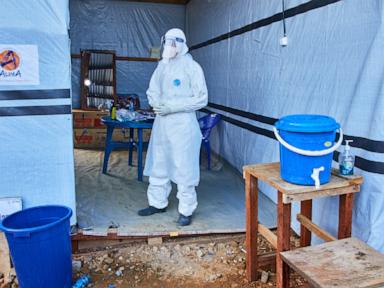
The global health establishment loves a neat disaster narrative. When an Ebola outbreak hits the Democratic Republic of Congo, the script is entirely predictable. International headlines scream about soaring death tolls. The World Health Organization issues somber warnings. Wealthy nations debate funding packages. Then, right on cue, the blame gets pinned on local skepticism, community resistance, or a tragic lack of resources.
It is a comfortable lie designed to protect the reputations of multi-billion-dollar aid organizations and national ministries.
The current outbreak in Ituri province, which has claimed more than 500 lives out of 1,500 cases in mere weeks, is not a failure of funding. It is not an unavoidable tragedy caused by an untamable Bundibugyo virus strain. The crisis spinning out of control is the direct result of a bloated, top-down humanitarian complex that systematically alienates the very people required to stop a pathogen: local frontline workers.
When local health professionals in Bunia issue a 24-hour strike notice in the middle of a deadly epidemic, they are not acting out of greed or indifference. They are revolting against an extractive colonial medical model.
The Colonial Mechanics of Modern Outbreak Response
Look closely at the grievances listed by the striking medical teams in Ituri. They are not complaining about the virus. They are complaining about the administrative teams dispatched from the capital, Kinshasa. They are protesting the influx of high-salaried external personnel who displace local labor. They are demanding unpaid hazard benefits that were promised but vanished into the bureaucratic ether.
This is the standard operating procedure for global health interventions.
When an outbreak occurs, an immediate influx of capital takes place. This money rarelylands in the hands of the nurses, contact tracers, and burial teams who live in the affected communities. Instead, it funds a parallel economy. International experts and federal bureaucrats arrive in pristine white SUVs. They rent out local hotels, drive up real estate prices, and collect hefty per diems. Meanwhile, the local doctor who has been working 18-hour shifts without adequate personal protective equipment is told to wait for a paycheck that may never arrive.
I have watched this exact dynamic play out across multiple public health emergencies over the last two decades. Millions of dollars are spent on global logistics, high-level summits, and international consultants, while the actual clinics on the ground lack basic soap and clean water.
When you treat local health infrastructure as an empty vessel to be occupied by external authorities, you destroy local trust. The widespread community skepticism and hostility that international observers find so baffling is not born out of ignorance. It is a completely rational reaction to a medical intervention that feels like an invasion. When an elite class from the capital or from Western NGOs arrives to dictate orders while ignoring local expertise, communities push back.
The Fiction of the Neutral Humanitarian
The conventional wisdom dictates that health emergencies require a neutral, centralized authority to command operations. This premise is completely flawed. A centralized health ministry located thousands of kilometers away in Kinshasa has no structural alignment with the daily realities of Ituri or North Kivu.
When centralized authorities command an outbreak response, they prioritize optics and metrics over institutional sustainability. They track cases, calculate mortality rates, and distribute experimental therapeutics to fulfill international trial requirements. But they do not build lasting capacity.
Consider the current clinical trials for the Bundibugyo strain. Enrollment has begun, yet the workers running the facilities are threatening to walk out because they lack basic equipment. The international community is eager to test new interventions, but entirely unwilling to ensure that the people administering those tests are paid a living wage.
Imagine a scenario where a multinational corporation sets up a mining operation in a remote province, brings in outside managers, extracts raw material, and leaves the local workforce unpaid and unprotected from industrial hazards. The world would rightly label it predatory exploitation. Yet, when global health organizations and federal ministries run the exact same play under the banner of humanitarian aid, it is celebrated as a heroic intervention.
Dismantling the Myth of Community Resistance
Every major media outlet covering the Congo crisis mentions "angry residents" and "widespread skepticism about the virus" as primary obstacles to containment. This framing serves a specific purpose: it shifts the blame for failure from the organizers of the response to the victims of the disease.
If a community refuses to cooperate with contact tracers, the establishment assumes the community needs better "sensitization" or education. The reality is far simpler. The community does not trust the response because the response has given them no reason to trust it.
When a family sees their local health clinic neglected for years, only to witness a sudden, massive influx of money and armed security personnel the moment an outbreak is declared, they see an agenda that is not about their well-being. They see an intervention designed to protect the rest of the world from a virus, rather than an effort to save local lives.
True public health security cannot be imported. It cannot be enforced at the barrel of a gun or bought with short-term grants that expire the moment the case numbers drop to zero.
Stop Funding the Superstructure
The definition of insanity in public health is sending more money to the same centralized agencies and expecting a different outcome. To break the cycle of recurring outbreaks and compounding strikes, the entire financing model must be inverted.
First, international donors must bypass the centralized national and international bureaucracies. Funding should be tied directly to local provincial health divisions and disbursed transparently to frontline staff. If a local nurse is risking their life to treat an Ebola patient, their compensation should be guaranteed by a direct, unalterable mechanism, not filtered through multiple layers of administrative skimming in capital cities.
Second, the practice of importing outside labor to manage local crises must be aggressively curtailed. Local professionals understand the language, the social dynamics, and the political geography of their communities. They possess the social capital required to overcome skepticism. Importing workers from other provinces or countries because they hold specific institutional credentials is an act of administrative arrogance that actively undermines containment efforts.
Third, clinical trials and experimental medical interventions must not take precedence over fundamental care. It is ethically indefensible to enroll patients in trials for unapproved treatments while the baseline staff lacks basic gloves and syringes. The foundation of any medical response must be the safety and dignity of the workforce.
The strike in Ituri is a stark warning. The frontline workers are pointing out that the current system is hollow. If the global health community continues to ignore them in favor of top-down command structures, the death toll will not stop at 500. It will continue to climb, fueled not by the biological virulence of Ebola, but by the systemic rot of the humanitarian industry. Stop trying to fix the old outbreak response model. Scrap it and fund the locals directly.


