Fifteen military police officers showed up to escort a Palestinian family back home. Within minutes, they were outnumbered.
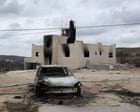
That single mismatch tells you almost everything you need to know about what's happening in the occupied West Bank right now. When the Tubasi family tried to return to their homes in the village of Jalud, south of Nablus, in late September 2026, violent Israeli settlers descended on the scene, forced the family onto a roof, torched the houses, blocked roads, and pelted Israeli security personnel with stones, injuring three of them. You might also find this similar story interesting: When the Spotlight Fades and the Worst Reality Sets In.
Look closely at how that operation fell apart. According to reporting in Haaretz and The Guardian, the Israeli military didn't tell national police or the Shin Bet domestic intelligence service what they were doing. No backup. Worse, they picked Sukkot—a Jewish holiday when extremist outposts are packed—to send a tiny escort into a flashpoint area. An Israeli security source called it "madness".
Honestly, calling it a policing failure misses the bigger picture. When state forces get rolled over by a mob and end up evacuating the victims instead of arresting the attackers, you're looking at a breakdown of authority, political will, or both. As extensively documented in detailed coverage by Reuters, the implications are significant.
Why West Bank Settler Violence Keeps Escalating
Most coverage treats each West Bank attack like a freak explosion. It isn't. It's a slow, grinding erosion of normal life that builds day by day until a single house burns and makes international headlines.
Take Jalud. The village sits southwest of Nablus, covering roughly 1,580 hectares, hemmed in by settlements and outposts. Mahmoud Tubasi, 60, spent three years building his family's home brick by brick at a cost of around 500,000 new shekels—roughly $163,500. Across the valley, less than a kilometer away in a straight line, sits a newly built settlement. Then in January 2026, the Ras al-Ain outpost went up right along a road passing his property.
Harassment spiked almost immediately. By July, settlers seized the house, forcing Mahmoud, his 51-year-old wife Aedah, and their family into his father's two-story home while two sons scattered to Ramallah and Kafr Yasif. When the family tried to go back on September 29 under military escort after more than 70 days away, settlers arrived before the soldiers even left. Tires were placed inside to spark the blaze. Soldiers put Mahmoud and Aedah in a jeep, drove them 100 meters away, and pulled them out of the scene while the house burned.
Wael Tubasi described what was left of two family homes afterward: doors gone, tiles stripped, stairs torn out, bathrooms, windows, and walls smashed. Nothing spared. On top of the structures, Mahmoud lost roughly 26 dunams—about 2.6 hectares—of agricultural land, including more than half of the 350 olive trees he'd planted, plus fig trees, apricot trees, grapevines, and fencing.
That pattern repeats across the territory. UN data shows roughly 3,800 Palestinians were displaced in 2026 alone through settler violence, house demolitions, and evictions, across more than 1,430 recorded settler incidents touching around 260 communities. Nablus Governorate alone logged 900 settler attacks in the first half of 2026, including 137 in August alone, according to the Palestinian Wall and Settlement Resistance Committee.
What People Get Wrong About Military Response
If you assume the Israeli military automatically steps in to stop violent settlers, the record says otherwise. Sometimes troops try and fail; sometimes they hesitate; sometimes they act in ways that push Palestinian families out anyway.
In August 2026, in Qusra—also south of Nablus—settlers and soldiers set up a tent blocking three homes on the edge of the village, cutting water and electricity and keeping an ambulance away from a sick toddler. When soldiers tried riot-control measures to push the settlers back, the troops retreated. Days later, the army asked besieged Palestinian residents like Qusai Ridi to leave their houses for a supposed three-day military operation, and when families refused, soldiers consolidated them into a single neighbor's house while settlers patrolled outside.
Even when the military claims it is cracking down, the follow-through is thin. Following the Qusra siege, the IDF said it dismantled two illegal outposts near the village, detained one Israeli, and sent patrols, while Israeli police didn't immediately confirm whether anyone detained had actually been arrested. Look at the broader accountability gap documented by rights groups: since 2020, Israeli civilians and soldiers have killed more than 1,100 Palestinians in the West Bank, resulting in only a single indictment over those deaths, according to B'Tselem figures cited by The Guardian.
Politics Inside the Chain of Command
Why does a military with heavy firepower look paralyzed in front of a crowd of extremists? Politics sits right on top of the chain of command.
In November 2026, Israeli news outlet Walla reported that West Bank military commander Maj. Gen. Avi Bluth decided against evicting 13 settler families who raided and occupied eight empty Palestinian homes in al-Duyuk al-Tahta, west of Jericho, without prior military approval—an action that also involved assaulting and robbing two Israeli activists and shooting a Palestinian man in the leg. Why hold back? Because with Israel's next government still being negotiated after the October 2026 elections, commanders wanted to avoid moves that would trigger a fierce right-wing backlash.
You see the same dynamic in how officials frame the crisis. Julien Lerisson, head of the International Committee of the Red Cross delegation for Israel and Palestine, warned after the Jalud attack that frequent, severe violence is making everyday Palestinian life "untenable" and called for international humanitarian law on protecting private property and essential services to be respected. Meanwhile, U.S. Ambassador to Israel Mike Huckabee called the siege of Palestinian homes in Qusra a "horrific act of terror" meant to intimidate a family. Yet on the ground, commanders routinely weigh political fallout against enforcement—and enforcement usually loses.
The Olive Harvest Flashpoint and Competing Claims
Every autumn, West Bank olive groves turn into a battleground. That's not hyperbole. It's seasonal clockwork.
According to IDF figures citing the Civil Administration, roughly 16,000 to 17,000 tons of olives were harvested across the West Bank in the 2026 season, yielding about 16 to 17 million liters of olive oil worth an estimated 900 million shekels—around $277 million. The military maintains that "areas of friction" make up only a small percentage of harvesting zones, insisting that most coordinated harvests under army protection went forward without incident and that troops were heavily deployed to prevent clashes.
Meanwhile, the Israeli human rights group Yesh Din recorded more than 1,100 settler violence incidents since the start of the harvest season, including 483 directly tied to olive picking. Both statements can be true at once depending on how you measure them: thousands of tons of olives still get picked, while hundreds of farmers get attacked, blocked from their land, or forced to watch trees get cut down.
To understand why the friction never really cools off, you have to look at the competing realities on the ground:
- Territorial claims: Palestinians seek the West Bank—captured by Israel in the June 1967 war—as the core of a future state, while many settlers and their political backers argue the entire territory belongs to Israel on historical, religious, and security grounds.
- Security framing: The IDF says it deploys across the sector to thwart terrorism and stop clashes from any side, yet critics inside and outside Israel argue soldiers often negotiate with violent settlers rather than arrest them.
- Humanitarian impact: Humanitarian agencies like the ICRC stress obligations under international humanitarian law to protect civilian property and access to services, while displaced families like the Tubasis are left living in temporary quarters with ruined livelihoods and deep psychological trauma.
What Happens Next When Law Enforcement Steps Back
When a family tries to come home with a 15-officer escort and leaves in an armored vehicle while their house burns, deterrence dies. Every extremist watching learns that numbers, timing, and political hesitation matter more than property law.
For anyone tracking this crisis—whether you're a journalist, policy analyst, legal researcher, or advocate trying to separate spin from reality—a few practical steps make a real difference:
- Cross-check military statements against local and NGO documentation. Official summaries often highlight "defensive missions" or a single detention while leaving out unprosecuted raids or unaddressed property destruction. Compare IDF notices with field reports from groups like Yesh Din, B'Tselem, and UN OCHA.
- Track indictments and convictions, not just press releases. Detentions and "dismantled outposts" frequently fade without charges. Look at whether suspects actually face indictment in Israeli courts.
- Watch political calendars around coalition talks and holidays. Major Jewish holidays and government formation periods consistently coincide with heightened outpost activity and cautious military restraint.
- Follow humanitarian access and displacement metrics. Property damage and blocked roads rarely make front pages on their own, yet they drive long-term displacement faster than headline clashes.
The Tubasi family didn't lose a symbolic argument in Jalud. They lost two stone houses, hundreds of olive trees, and their sense of safety in a single afternoon while armed forces stood nearby and couldn't hold the line. Until accountability actually sticks, that scene will keep repeating.