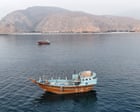
The Indian Ocean does not care about politics. It does not read diplomatic briefs, nor does it pause its rhythmic, crushing currents for presidential elections. When you stand on the coast of Mahé, the largest island in the Seychelles, the water looks like spilled turquoise ink. Beautiful. But if you talk to the fishermen who have mended nets here for three generations, they will tell you that the beauty is a mask. The ocean is changing. It is warming, rising, and emptying.
For an island nation, the ocean is not a view. It is the floor, the ceiling, and the life support system.
When the President of Seychelles, Wavel Ramkalawan, stepped forward to confer the title of Guardian of the Blue Horizon upon Indian Prime Minister Narendra Modi, the global media treated it as a standard diplomatic photo opportunity. Ribbons. Handshakes. Pomp. But beneath the starched suits and the flashbulbs lay a quiet, desperate reality about the future of geopolitics, survival, and who controls the largest liquid highway on earth.
This was not a standard medal for political friendship. It was an acknowledgment of ownership over an invisible crisis.
The Island that Understood Its Loneliness
To understand why a tiny archipelago in the middle of the western Indian Ocean matters to a nuclear-armed subcontinent, you have to look at a map through the eyes of a sailor. Seychelles is tiny in landmass but massive in maritime territory. It controls over 1.3 million square kilometers of ocean.
Imagine a house where the living room is a square foot, but the backyard stretches for hundreds of miles. That backyard is filled with tuna, coral reefs, and piracy lanes.
For decades, small island states were patronized by larger nations. They were treated as vacation spots, dots on a map, or tactical fueling stations. But isolation brings a brutal clarity. The people of Seychelles knew long before the rest of the world that if the oceans die, they drown. They pioneered the concept of the Blue Economy—the radical idea that the ocean is a finite economic engine that must be managed like a precious treasury, not an open dump.
But a treasury needs a guard.
Seychelles had the vision, but it lacked the muscle. It lacked the radar systems, the naval vessels, and the satellite capability to monitor millions of miles of deep water. Illegal fishing vessels from thousands of miles away were vacuuming the ocean floor. Pirates from the Somali coast were hijacking ships. Climate change was bleaching the coral, turning underwater rainforests into white boneyards.
Enter New Delhi.
The Strategy of the Soft Footprint
Geopolitics usually smells of exhaust and heavy metal. When superpower nations offer help, they usually bring demands for military bases, heavy infrastructure, and massive debt. It is a transactional world.
The relationship that formed between India and Seychelles over the last decade, however, shifted into something else. It became an experiment in shared survival.
Consider how maritime security actually works on the water. It is not about aircraft carriers steaming through the waves with flags flying. It is about a coastal radar surveillance system installed on a remote island, quietly pinging data back to a central command center. It is about India gifting fast attack crafts and aircraft like the Dornier to the Seychelles Coast Guard, allowing a handful of local sailors to project authority over a massive horizon.
This is what New Delhi calls SAGAR—Security and Growth for All in the Region. It is a clunky acronym for a deeply human concept: your house cannot be safe if your neighbor’s house is on fire.
When President Ramkalawan spoke about the Guardian of the Blue Horizon title, he was referencing this specific, quiet architecture of protection. He was acknowledging that India did not come to the southwest Indian Ocean as an occupier, but as a lifeguard.
The Invisible Highway
Let us look at the stakes that the average citizen never sees.
Every time you click to buy a product online, or fill your car with fuel, you are relying on the Indian Ocean. More than 80 percent of the world’s seaborne oil trade passes through these waters. It is the choke-point of global civilization. If these waters become lawless, if piracy returns, or if geopolitical tensions boil over into naval blockades, the global economy chokes.
But for India, the stakes are existential.
India is essentially a giant peninsula jutting into a massive ocean. Its security is entirely dependent on what happens in the water. For years, New Delhi looked north, watching its land borders with anxiety. But the true vulnerability lay south. The sea lanes are India's lungs.
By stepping up to defend the maritime sovereignty of smaller nations like Seychelles, Mauritius, and the Maldives, India is not just playing the role of a generous big brother. It is building a wall of stability. It is ensuring that the ocean remains open, free, and secure from aggressive external powers looking to plant their own flags in the backyard of East Africa.
The Meaning of a Title
Titles in international diplomacy are usually cheap. They are minted by committees and forgotten by history.
But Guardian of the Blue Horizon has a poetic weight to it. The "Blue Horizon" is where the sky meets the water—a line that is always moving, always shifting, and impossible to pin down. To guard it means to look far into the future, past the immediate political news cycle, toward the generational shifts in our planet's ecology and security.
When Ramkalawan praised Modi’s leadership in ocean governance, he was highlighting a shift in how global leaders view power. Power used to be measured by how much concrete you could pour, or how many missiles you could parade through a capital city. Today, true power is being measured by how much vulnerability you can absorb for others.
India has taken on the role of the first responder in the Indian Ocean. When a maritime disaster strikes, when an oil tanker leaks, or when a cyclone devastates an island community, it is the Indian Navy that arrives first with medical supplies, engineering teams, and clean water.
That is what governance looks like when the starch is washed out of the diplomacy. It looks like a sailor handing a bottle of water to a survivor on a battered coastline.
The Unfinished Voyage
The ceremony in the capital city of Victoria is over. The speeches have been archived, and the dignitaries have flown back to their respective capitals.
But on the beaches of Seychelles, the water still laps against the sand, relentless and indifferent. The challenges facing the Blue Horizon have not vanished. The water is still warming. The fish are still moving to cooler, deeper lanes. The shadow of great power competition still looms over the tropical waters, as larger empires look to buy influence with glittering promises.
The title conferred on the Indian Prime Minister is a heavy debt to carry. It means that whenever a crisis brews in the western reaches of this vast ocean, the eyes of the islands will turn toward New Delhi. They will not look for rhetoric. They will look for ships on the horizon.
A fisherman pushes his wooden boat into the surf at dawn on the coast of Praslin. He checks his fuel, looks at the sky, and points his bow toward the open, empty blue. He is completely alone out there, small against the immense scale of the planet. But the goal of this entire geopolitical dance, the ultimate purpose of radars, treaties, and titles, is to ensure that when that man reaches the horizon, the sea is still alive, still peaceful, and still his.