Dawn breaks cold over Whitehall. The stones are slick with a fine London mist that clings to wool coats and freezes in the corners of breath. Inside a quiet room near Wellington Barracks, a craftsman runs his fingers over a pelt that was breathing on the other side of the planet just months ago. The fur is thick, coarse to the touch, and carries a faint, sharp scent that modern air fresheners can never quite scrub away.
For centuries, this has been the ritual. You might also find this related coverage interesting: The Hollow Arsenal We Leave Behind.
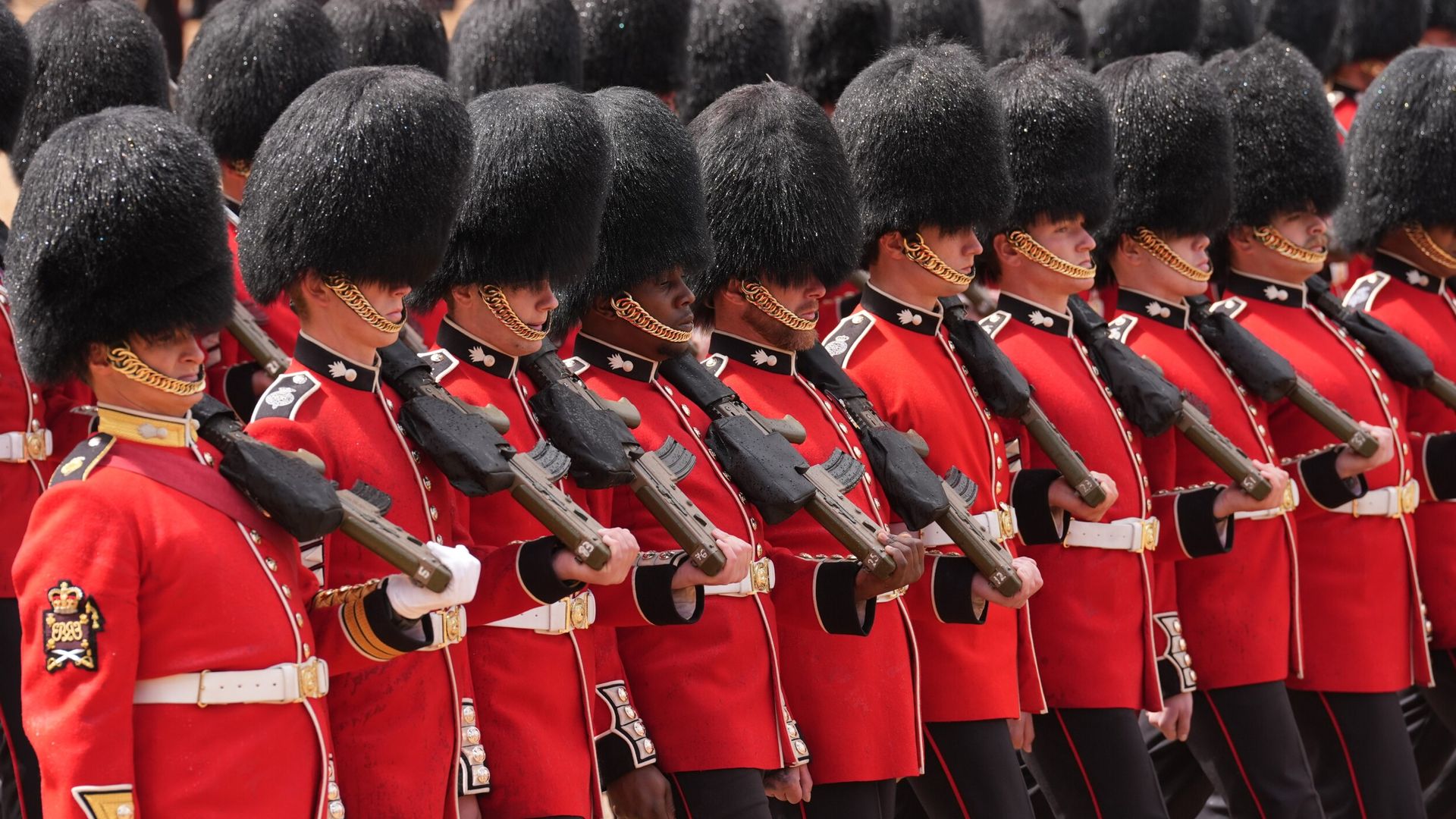
Outside, tourists gather by the iron gates. They wait with cameras poised, shivering against the damp wind, eager for the changing of the guard. When the soldiers finally march out, heads held impossibly high, the eye is inevitably drawn upward. To the towering black cylinders perched atop their heads. They rise nearly eighteen inches into the air, framing youthful faces in a dark, imposing halo. They look heavy. They are heavy.
Yet most people watching from behind the barricades never stop to ask where those iconic caps come from. Or how they survive in an era that has largely left behind the harvesting of wild animals for ceremonial dress. As extensively documented in detailed coverage by The New York Times, the implications are worth noting.
Consider the numbers for a moment. Every single year, the British Army purchases dozens of traditional bearskin caps to outfit the King's Guard. Each one requires the skin of a Canadian black bear. Not a synthetic fabric engineered in a spotless laboratory, but a living creature hunted from the wild.
Activists have protested this practice for decades. Animal welfare groups have staged demonstrations outside the gates, holding up placards featuring photographs of bear cubs, trying to pierce the armor of institutional inertia. For years, the official response from the Ministry of Defence remained a fortress of rigid tradition. The narrative was simple, rehearsed, and immovable: nothing else behaves like real fur. Synthetic alternatives, officials argued, could not withstand the torrential downpours of an English autumn, nor could they maintain that deep, midnight-black sheen under the relentless flashbulbs of millions of tourists.
Tradition is a powerful narcotic. It dulls our sensitivity to change by wrapping old habits in the warm, heavy blanket of heritage.
But public pressure does not vanish just because you ignore it. Recently, a parliamentary committee of MPs took a hard look at the ledger and the logic. They listened to designers, animal rights campaigners, and military outfitters. Their conclusion was blunt: the time has come for the bearskin caps worn by the King's Guards to be replaced with a fake fur alternative.
Change in ancient institutions rarely arrives like a thunderclap. It usually creeps in through the floorboards, driven by exhaustion and undeniable proof.
Imagine standing in a high-tech textile laboratory in the heart of Europe. The room smells of ozone and fresh dye. On a steel workbench sits a prototype fabric developed specifically to challenge centuries of military tradition. It is called faux fur, but calling it that feels entirely inadequate. It is a marvel of material science. Strands of acrylic and modacrylic fibers have been blended, twisted, and treated to mimic the exact length, density, and water-repellent properties of a real pelt.
When scientists tested this modern alternative against simulated rainfall and gale-force wind machines, the results stunned even the skeptics. It did not mat. It did not weigh a ton when soaked. It dried faster than the real thing.
Why, then, do we cling so desperately to the old ways?
Part of the answer lies in our deep psychological aversion to breaking sacred continuity. A soldier standing guard outside Buckingham Palace is not just a security guard; he is a living monument. He represents an unbroken chain stretching back through Victorian drawing rooms, Crimean battlefields, and Georgian drawing rooms. To alter his uniform is perceived by traditionalists as an act of erosion, a chipping away at the very granite of national identity.
Yet, identity is not static. It evolves or it rots.
Think about the horses in the cavalry, the polished brass buttons, the red tunics. Uniforms change all the time. Hemlines rise and fall, fabrics are updated for comfort, and synthetic blends have replaced pure wool in countless military applications worldwide. The British military itself adopted gore-tex and modern body armor decades ago, quietly abandoning archaic field gear in the name of safety and practicality. The bearskin cap remains an isolated monument to stubbornness, defended by a bureaucratic preference for the status quo.
The financial argument adds another layer to the shifting ground. Sourcing wild bear pelts from North America involves importation fees, specialized curing, and hand-crafting by a dwindling handful of traditional furriers who possess the niche skills required to shape the pelts. It is an expensive, carbon-heavy supply chain. A scalable, high-grade synthetic alternative offers a predictable cost structure and a clear conscience.
When members of Parliament push for this change, they are not just trying to appease animal welfare groups. They are attempting to align a beloved national spectacle with modern ethical standards. They are asking a simple, piercing question: does our pride really require the death of wildlife when technology can replicate the aesthetic without the slaughter?
The resistance is fading, not because the traditionalists suddenly woke up enlightened, but because the contrast between modern values and archaic practices has grown too stark to ignore.
Picture a future morning outside the palace gates. The mist still rolls in from the Thames. Tourists still press against the iron railings, phones raised to capture the stoic march of the guards. The caps upon their heads look just as grand, just as tall, and just as deeply black as they ever did.
The only difference is what is missing.
No life was ended to make the spectacle possible. The heritage remains entirely intact, but the cruelty has been edited out of the story.
That is what progress actually looks like. It is rarely a dramatic revolution that sweeps away the past. More often, it is a quiet, sensible correction made by people who realize that we can honor our history without repeating its mistakes. The bearskin cap will likely pass into museums and memory, leaving behind a cleaner, kinder symbol of enduring grace.