History rarely announces itself with a trumpet blast. More often, it arrives in the dead of night, carried on the damp wind of an autumn morning in Beijing, whispering through the austere corridors of power where men in dark suits measure the lifespan of empires in decades rather than days.
Imagine standing on the gray flagstones of Tiananmen Square just as the smog yields to a pale, uncompromising dawn. The air tastes of coal smoke and ancient dust. For generations, the story of modern China has been written as an unbroken ascent—a breathtaking economic miracle that hoisted hundreds of millions of people out of rural poverty and planted gleaming skyscrapers across skylines that once knew only mud brick and rice paddies. Yet, beneath the polished glass of the financial districts, a heavy silence hangs. It is the silence of an elite bracing against a storm they can see gathering on the horizon.
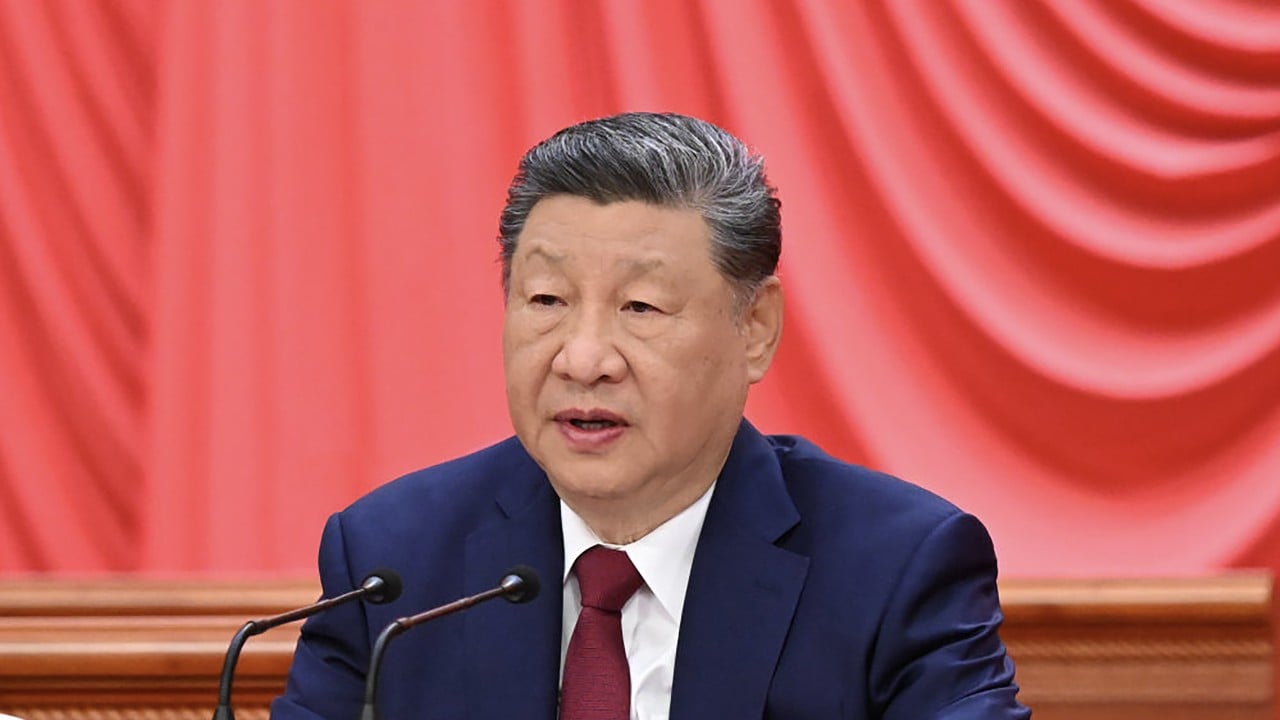
When Xi Jinping invoked the memory of the Long March ahead of a crucial Communist Party plenum, he was not merely reaching for a convenient piece of state rhetoric. He was signaling an atmospheric shift.
To understand the gravity of that warning, you have to look past the sanitized press releases and examine the psychological architecture of the nation's leadership. The original Long March of 1934 was not a victory parade. It was a harrowing, year-long military retreat of six thousand miles through freezing mountain passes, treacherous marshlands, and relentless enemy fire. Four out of every five soldiers died along the way. Those who survived were forged in a crucible of absolute suffering, emerging with an ironclad belief that survival requires total sacrifice, unyielding discipline, and the willingness to endure unimaginable hardship.
By dragging that ghost into the modern boardroom, Beijing’s leadership is sending an unambiguous message to its citizens and to the world. The era of easy growth is over.
The structural pressures bearing down on the world's second-largest economy are neither temporary nor superficial. They are tectonic. Property markets that once expanded with reckless, dizzying speed now groan under mountains of unpayable debt. Ghost cities stand as monuments to speculative fervor, while local governments grapple with fiscal shortfalls that threaten the very mechanics of public administration. At the same time, an aging population looms like a slow-moving demographic tidal wave. China is growing old before it grows rich, a cruel inversion of the path taken by Western economies a century prior.
Outside observers often misread these internal anxieties as signs of imminent collapse. That is a dangerous mistake. Authoritarian states do not shatter simply because their balance sheets look bruised. Instead, they hunker down. They centralize control. They demand absolute ideological conformity and prepare their people for prolonged economic winter.
Consider the everyday reality for a young engineer in Shenzhen or a factory floor manager in Guangzhou. The dizzying job market of the 2010s, where tech startups threw exorbitant salaries at fresh graduates and ambition felt like a guaranteed ticket to prosperity, has curdled into intense competition. The colloquialism neijuan—involution—captures the prevailing mood. It describes a society trapped in a hyper-competitive loop where everyone runs faster and faster just to stay in the exact same place. Graduates struggle to find meaningful employment, opting instead for civil service exams in record numbers, seeking the cold comfort of state security over the wild risks of the private sector.
The leadership looks at this internal friction and sees a national security threat. Their answer is not to loosen the reins, but to pull them tighter. Self-reliance has become the new national mantra. In the face of stringent technological export controls and shifting global supply chains, Beijing is pouring staggering sums into domestic semiconductor manufacturing, green energy technologies, and advanced robotics. They are determined to build a fortress economy that can withstand any external siege.
This is the substance behind the martial rhetoric.
When a superpower feels hemmed in by strategic rivals, international trade barriers, and slowing domestic momentum, it pivots inward and upward. The plenum serves as the theater for this consolidation of will. It is where ideological orthodoxy is reinforced, where dissent is quietly buried under layers of party discipline, and where the population is reminded that personal comfort must always bow before collective survival.
History teaches us that nations under pressure can become remarkably resilient, but they also become profoundly unpredictable. The psychological pivot from unbounded optimism to a defensive siege mentality changes how a giant operates on the world stage. It hardens its posture toward neighbors, intensifies its resolve in territorial disputes, and transforms economic policy into an instrument of geopolitical warfare.
The path ahead does not feature smooth highways or guaranteed triumphs. It is steep, rocky, and strewn with obstacles that will test the endurance of a billion and a half people.
The morning mist over Beijing eventually burns off, revealing the vast, unyielding geometry of the Great Hall of the People. Inside, the doors are sealed. Outside, the millions go about their lives, shopping in neon-lit malls, scrolling through WeChat feeds, and watching the quiet accumulation of power and pressure. They know, just as well as the leaders dictating the directives from above, that the ground beneath them is shifting. They are packing their bags for a journey they did not choose, marching into a future where every step forward must be fought for with blood, sweat, and an unyielding, terrifying resolve.