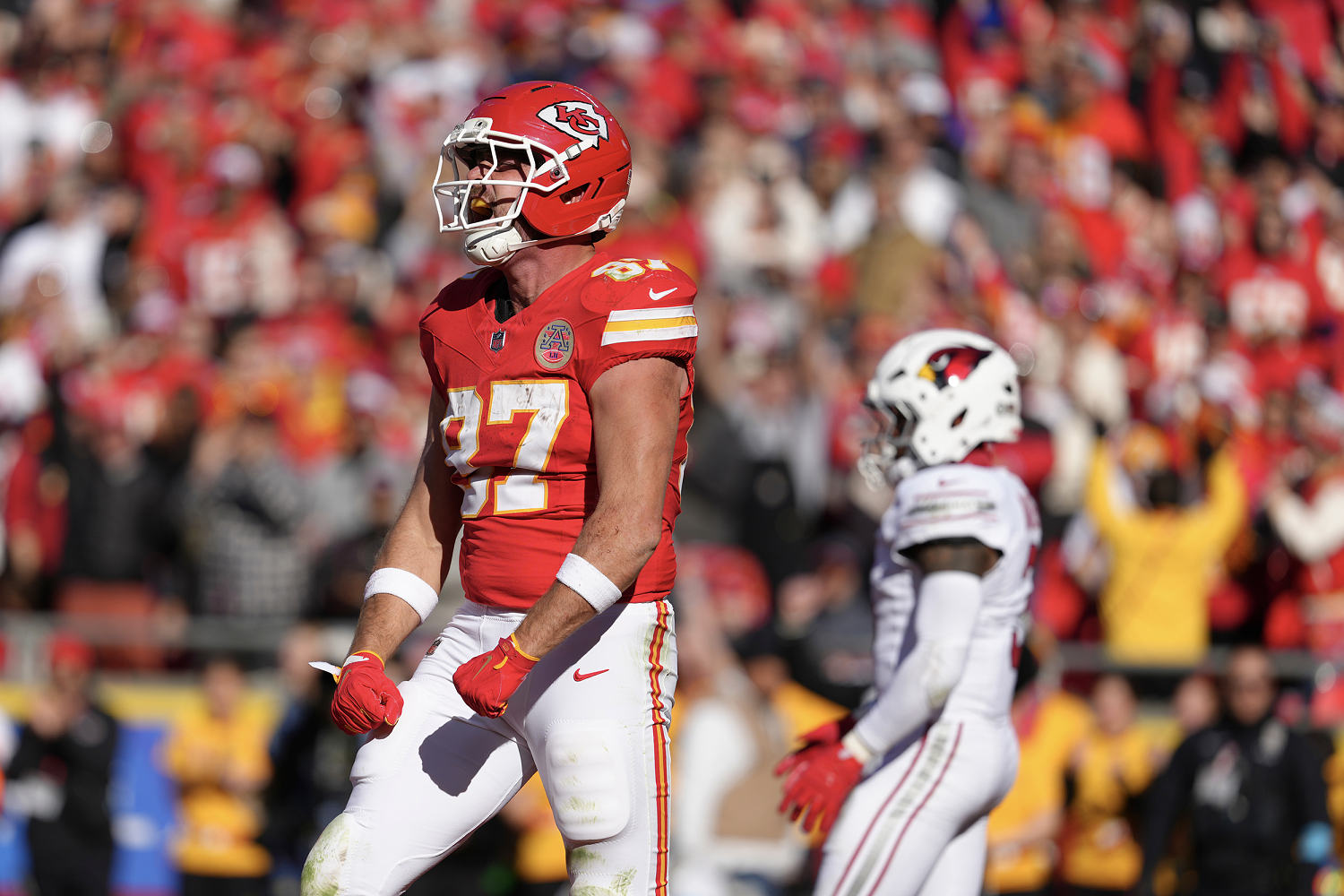
November in the National Football League does not care about your September hype.
By the eleventh week of the season, the air turns sharp, the turf hardens like concrete, and the league splits cleanly into two populations: the teams that are merely surviving the attritional grind, and the rare, stubborn veterans who treat the cold as an invitation. If you have ever sat in the upper bowl of an outdoor stadium in late autumn, hands shoved deep into coat pockets, watching your own breath hang in the floodlights while twenty-two men collide at twenty miles an hour below you, you know the exact sound of this month. It is not the crisp pop of training camp. It is a heavy, dull thud. Every hit carries the accumulated mileage of ten prior Sundays.
This is the backdrop against which Week 11 unfolded—a slate of games that, on paper, looked like a standard mid-season checkpoint, yet underneath the box scores revealed a profound truth about longevity, stubbornness, and what happens when elite performers refuse to surrender to the calendar.
At the center of that revelation stood two familiar figures operating on entirely different planes of pressure: Travis Kelce, delivering a performance that felt less like a single afternoon of football and more like the culmination of a decade-long thesis, and Dak Prescott, standing in the pocket with the calm, surgical detachment of a quarterback who has finally tuned out the noise surrounding his name.
The Architecture of a Night Years in the Making
To understand why Travis Kelce’s Week 11 explosion resonated so deeply across the football world, you have to understand the quiet, creeping skepticism that shadows every aging superstar.
In sports, decline rarely arrives with an announcement. It shows up as a half-step lost on an out-route. It appears when a linebacker who used to grasp at air suddenly gets a hand on a jersey. For months leading into the middle of the season, the whispers around Kelce followed a predictable, almost clinical script. Analysts pointed to target shares, bracket coverages, and the inescapable arithmetic of birth certificates. People wondered aloud if the magic between Patrick Mahomes and his favorite security blanket had finally settled into something more modest—still useful, certainly, but no longer terrifying.
Watch closely, though, and you realize that great tight ends do not win with raw speed alone. They win with geometry and memory.
Think of a master jazz musician who has played the same club for twelve years. He does not need to play the fastest scales to hold the room; he knows exactly where the acoustics bend, where the silence between notes carries the most weight, and how the drummer is going to lean into the downbeat before the drummer even raises a stick. That is how Kelce and Mahomes operate when the field shrinks and the defensive coordinator dials up a coverage designed specifically to erase number eighty-seven.
In Week 11, that accumulated history became impossible to contain. Every time the defense shifted a safety over the top to bracket him, Kelce found the soft, unguarded seam three yards behind the linebacker's ear. Every time a cornerback tried to jam him at the line of scrimmage, he used a subtle dip of the shoulder—a move refined over thousands of unglamorous Tuesday afternoon walkthroughs—to slip free into open grass.
He wasn't outrunning twenty-three-year-old defensive backs. He was out-thinking them. He was reading the leverage of their hips before the ball was even snapped, throttling down in zones where defenders expected him to sprint, and turning routine seven-yard hooks into back-breaking first downs that drained the life out of the opposing sideline.
By the time the fourth quarter arrived, the performance had crossed from statistical dominance into something heavier. It was a reminder that greatness in the NFL is rarely a sudden flash of lightning. More often, it is water wearing down stone—years of shared telepathy, bruised ribs, and stubborn preparation suddenly breaking through the dam all at once.
The Quiet Violence of the Pocket
While Kelce’s afternoon was a masterclass in spatial improvisation, Dak Prescott’s Week 11 showcase was a study in pure, unblinking poise.
There is no harder job in American sports than playing quarterback for the Dallas Cowboys when the season hits its inflection point. Every incomplete pass is dissected on morning television before the stadium lights have even cooled. Every interception becomes an indictment of character, leadership, and contract value. Imagine trying to perform complex triage in an emergency room while fifty thousand people scream advice from the gallery and a three-hundred-pound defensive end tries to knock you through the floor every four seconds. That is the baseline reality of Prescott’s Sunday afternoons.
Yet in Week 11, Prescott looked entirely untouched by the surrounding circus. He kept dealing.
The word dealing gets thrown around casually in sports bars, usually to describe a pitcher hitting the corners of the strike zone or a point guard threading bounce passes in traffic. For a quarterback, dealing means something far more visceral. It means knowing a free blitzer is barreling toward your ribs, keeping your eyes locked twenty yards downfield anyway, and delivering a spiral into a window the size of a mailbox a fraction of a second before the collision arrives.
Prescott operated from the pocket with ruthless efficiency. When defenses played soft zone to prevent the deep ball, he methodically took the underneath throws, marching his offense down the field in ten- and twelve-play drives that suffocated the clock. When they crept closer to the line of scrimmage to choke off the run, he punished them over the top, dropping passes in stride to receivers who barely had to break their cadence.
What stood out most was not a single highlight-reel throw, though there were plenty. It was the rhythm. Snap, drop, plant, fire. No panic when the edge collapsed. No unnecessary drift into the teeth of the pass rush. Just a steady, relentless distribution of the football that forced defenders to cover every blade of grass from sideline to sideline.
Why November Separates the Contenders from the Pretenders
If you step back from the individual brilliance of Kelce and Prescott, a larger pattern emerges—one that explains why Week 11 consistently serves as the true fault line of an NFL season.
Early in the year, offenses thrive on surprise. Coordinators unveil wrinkles they spent all spring designing in windowless film rooms. Trick plays work. Unproven rookies catch veteran corners off guard. By mid-November, however, the element of surprise is dead. Every team has ten games of high-definition tape on every opponent. Defensive coordinators know your favorite third-down concepts, your quarterback’s preferred side of the field under pressure, and your offensive line’s subtle tells on run-pass options.
At this point in the calendar, scheming alone cannot save you. You have to beat the man across from you when he knows exactly what is coming.
Consider a hypothetical defensive coordinator—let’s call him Marcus—sitting in his office at two in the morning on a Wednesday before Week 11. He has watched every snap Kelce and Prescott have played all year. He knows Kelce loves the option route against man coverage on third-and-six. He knows Prescott thrives on play-action crossers when the run game establishes even a hint of credibility. Marcus draws up the perfect counter-coverage on his whiteboard. On paper, every gap is plugged and every route is bracketed.
Then Sunday arrives, and the whiteboard meets human will.
Marcus’s linebacker hesitates for a tenth of a second—just long enough for Kelce to slip behind him into the end zone. His defensive end gets stonewalled at the point of attack, giving Prescott an extra half-second to reset his feet and rifle a twenty-yard dig route into tight coverage. The scheme was sound. The execution by the stars on the other side simply refused to yield.
That is the invisible divide of late autumn football. Lesser players shrink when the margin for error vanishes; the elite treat the shrinking margin as clarity.
The Human Cost Behind the Box Score
It is easy, sitting on a couch with a high-definition broadcast and real-time fantasy stats scrolling across the bottom of the screen, to reduce these Sundays to numbers. Catches, yards, passer rating, completion percentage—clean, digestible metrics that fit neatly into Monday morning columns.
Those numbers tell the truth, certainly, but they leave out the texture of the effort.
They do not capture the ice bags taped tightly to knees and shoulders in the quiet hum of the locker room an hour after the final whistle. They do not show the film sessions on Monday mornings when bodies feel like they have been in a minor car wreck, yet the mind has to stay sharp enough to spot a safety’s subtle pre-snap disguise. And they rarely acknowledge the psychological weight of carrying expectations that never lower, regardless of injuries, roster turnover, or the brutal parity of a league designed to pull every franchise back toward average.
For Kelce, playing at this level so deep into a Hall of Fame career requires an almost obsessive devotion to maintenance—treating recovery with the same intensity as game day, adjusting his body mechanics to absorb punishment differently than he did at twenty-five, and accepting that every opponent circles his number in red ink before the week even begins.
For Prescott, sustaining this kind of command demands a thick skin and a short memory. Quarterbacks in high-profile markets live on a razor’s edge between adoration and scrutiny. To keep dealing week after week without letting the external pressure bleed into your mechanics requires a rare compartmentalization—an ability to treat the fourth quarter of a tight November game with the same calm focus as a walkthrough in May.
What Lingers After the Stadium Empties
Eventually, the stadium lights dim. The grounds crew begins repairing divots in the torn-up grass, the broadcast trucks roll out toward the highway, and the Week 11 standings settle into place.
On the surface, the takeaway seems simple enough: two of the league's most established stars delivered when their teams needed them most. Yet if you look a little closer at what transpired on those fields, something far more enduring comes into focus.
In a league obsessed with the next big thing—the younger draft pick, the faster receiver, the flashier offensive scheme—Week 11 belonged to the craftsmen. It belonged to the tight end who has spent a decade mastering the geometry of open space, and the quarterback who stood inside a collapsing pocket and refused to flinch.
Cold weather is coming. December will bring shorter days, heavier hits, and playoff races decided by inches. And when the noise reaches its peak, the advantage will still belong to the men who have been here before, standing calm in the middle of the storm, waiting for the ball to snap.


