Say it slowly.
Abdul El-Sayed.
For millions of Americans, the syllables do not roll off the tongue with the effortless familiarity of a Smith, a Kennedy, or a Jones. They carry a slight pause. A momentary hesitation in the mouth of a television anchor, a roll-call clerk, or a neighbor trying very hard not to get it wrong. For decades, in the marble corridors of the United States Capitol, a name like that existed only as an abstraction—a line item in a foreign policy briefing, a demographic footnote in a pollster’s spreadsheet, or, in the darker chapters of the post-9/11 era, a reason to be pulled out of an airport security line for "random" secondary screening.
Now, that name belongs to a United States Senator.
Wait. Stop and let the sheer improbability of that sentence settle into the room.
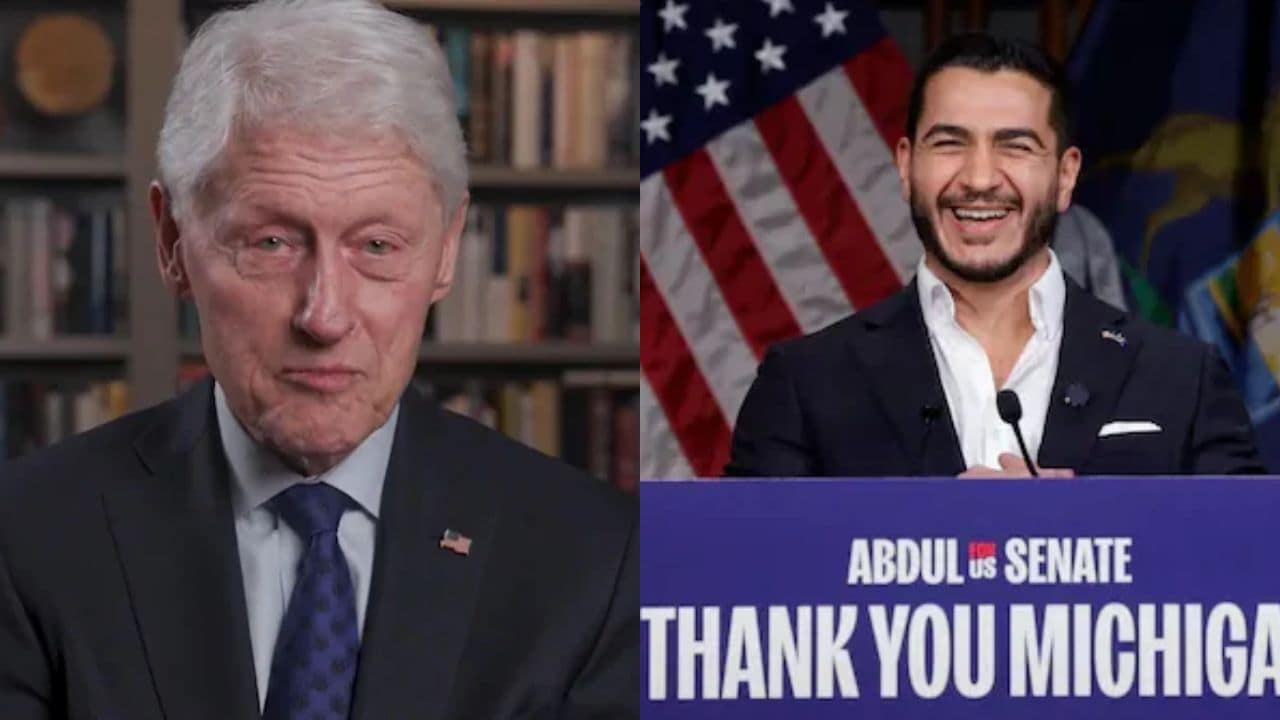
In November 2026, Michigan voters did something that, just twenty years ago, political strategists would have dismissed as a hallucination. They elected Abdul El-Sayed—a physician, an epidemiologist, the son of Egyptian immigrants, and a practicing Muslim—to the upper chamber of Congress. When he raises his right hand to take the oath of office, placing his left hand on a Quran, he will shatter a 237-year-old barrier, becoming the first Muslim senator in American history.
To read the standard political commentary on this moment is to watch a miracle get flattened into a spreadsheet. Pundits talk about coalition math. They analyze turnout margins in Wayne and Washtenaw counties, dissect the youth vote in Ann Arbor, and debate what his victory means for the progressive wing of the Democratic Party. They treat it like a chess move.
They are missing the entire point.
Because politics is never just math. It is memory. It is the quiet, invisible ledger kept by every kid who ever opened a lunchbox in a middle school cafeteria and prayed nobody would ask what their mother had packed. It is the calculation made by every immigrant parent who told their children to keep their heads down, become a doctor, stay out of trouble, and never, under any circumstances, draw attention to the fact that they pray five times a day.
The Anatomy of an Outsider
To understand what happened in Michigan, you have to understand the specific gravity of being "the first."
Consider a hypothetical scene—one that plays out in living rooms from Dearborn to Grand Rapids on the night of the election. Picture a twelve-year-old boy named Tariq sitting cross-legged on a living room rug, watching the returns come in on a glowing television screen. His father, a mechanical engineer who moved to Michigan in the late nineties, is standing behind the sofa with his arms crossed, refusing to sit down until the final precinct reports.
For years, Tariq’s father has lived by an unwritten contract: work twice as hard, complain half as much, and accept that the highest rooms of American power were built for other people. When Tariq looks at the screen, he sees a man who looks like his uncle, wearing a tailored suit, speaking with the cadence of a Midwesterner and the conviction of a preacher. When the anchor calls the race, Tariq’s father doesn't cheer. He just exhales, a long, shaky breath he seems to have been holding since 2001.
That is not a political statistic. That is a tectonic shift in what a child believes is possible.
El-Sayed’s journey to this exact moment was neither linear nor inevitable. Born in Detroit and raised in the suburbs of Bloomfield Hills, he followed the classic immigrant blueprint to perfection. He was a star lacrosse player at the University of Michigan, a Rhodes Scholar at Oxford, and a medical graduate from Columbia University. By his early thirties, he was running the Detroit Health Department, tasked with rebuilding a public health infrastructure that had been hollowed out by decades of disinvestment and a historic municipal bankruptcy.
He knew how to read the vital signs of a struggling city. He understood that when lead leaches into the water supply or asthma rates spike along industrial corridors, those aren't just medical emergencies; they are political failures.
Yet when he first ran for governor of Michigan in 2018, the political establishment treated him like a curiosity. He was thirty-three. He refused corporate PAC money. And he carried a name that whisper campaigns in rural diners tried to weaponize. Back then, the conventional wisdom was brutal and clear: a Muslim candidate with a progressive platform could inspire a crowd, sure, but he could never win statewide in the industrial Midwest.
He lost that primary. Most people thought that was the end of the story—another bright shooting star absorbed into the atmosphere of cable news panels and podcast microphones.
They misread him. They misread Michigan. And they misread the quiet exhaustion of voters who had grown tired of politicians who sounded like they were reading from a focus-grouped script.
Why the Rules Changed in Michigan
How does a candidate go from "unelectable" in 2018 to making history in 2026?
If you ask the beltway consultants, they will point to the shifting demographics of the Great Lakes State. Michigan is home to one of the largest and most politically engaged Arab American and Muslim populations in the country. For decades, that community was treated as a reliable voting bloc to be courted every four years with a plate of baklava and a few polite platitudes, only to be ignored once the ballots were counted.
By 2024 and 2026, that patience had evaporated. Voters in places like Dearborn, Hamtramck, and Flint were no longer interested in symbolic gestures. They wanted someone who understood the connection between foreign policy and domestic neglect, someone who looked at healthcare not as a commodity to be traded on Wall Street, but as a basic human right.
But demographic math alone doesn't win a statewide Senate race in Michigan. You cannot win without carrying independent voters in Macomb County, union households in Saginaw, and skeptical retirees in the Upper Peninsula—places where few people have ever stepped inside a mosque.
El-Sayed won them over by doing something remarkably simple, yet terrifyingly rare in modern politics: he treated voters like adults.
Think of the American healthcare system as an old, leaking roof. For years, politicians have walked into living rooms during rainstorms, handed out plastic buckets, and argued fiercely over whether the buckets should be red or blue. El-Sayed walked in, looked at the ceiling, and said, The roof is rotted. We need to tear it off and build a new one.
As an epidemiologist, he didn't talk about policy in the dry, bloodless jargon of Washington think tanks. He talked about what happens when a diabetic in Flint has to ration insulin because the rent went up three hundred dollars. He talked about the sheer moral absurdity of a system where a cancer diagnosis is also a bankruptcy notice. When he spoke to autoworkers in Lansing or farmers in Kalamazoo, he wasn't asking them to look past his faith or his heritage. He was asking them to recognize their own struggle in his.
I remember watching a town hall in a union hall outside Detroit a few years back, long before this Senate run was even a rumor. The room was packed with men in Carhartt jackets—men who looked like they had spent thirty years on an assembly line and had zero patience for Ivy League academics. At first, the skepticism in the room was thick enough to chew. Arms were crossed. Eyes were narrowed.
Twenty minutes in, El-Sayed wasn't lecturing them. He was breaking down how private equity firms were buying up rural hospitals, stripping them for parts, and leaving entire counties without an emergency room. By the end of the hour, the arms were uncrossed. A retired machinist in the back row stood up, cleared his throat, and said, "Doc, I don't know much about your religion, and frankly I don't care. You're the first guy in twenty years who told me the truth about why my clinic closed."
That is the alchemy of real politics. It happens when shared humanity overrides manufactured fear.
The Invisible Burden of Representation
Still, we have to be honest about the weight he is about to carry.
To become "the first" in America is both a triumph and a trap. In the halls of the Senate—a body designed by the Founders to be slow, deliberate, and insulated from sudden cultural shifts—Abdul El-Sayed will never have the luxury of being just another freshman lawmaker. Every vote he casts, every question he asks during a committee hearing, and every syllable he utters on the floor will be scrutinized through a prism that none of his ninety-nine colleagues have to endure.
History shows us how heavy that crown can be. When Hiram Revels became the first Black senator in 1870, or when Patsy Mink became the first woman of color elected to the House in 1965, they didn't just represent their constituents; they were forced to stand in as living proof of their communities' fitness for self-governance. If they stumbled, the failure was never theirs alone. It was weaponized against everyone who looked or prayed like them.
El-Sayed knows this. You can see it in the way he carries himself—a blend of unmistakable pride and hyper-vigilant composure. He knows that there are corners of the internet, and certain microphones in Washington, waiting for him to lose his temper so they can dust off old, ugly tropes about anger and allegiance.
And yet, there is a profound liberation in simply showing up.
For over two centuries, the United States Senate has operated like an exclusive club with an unwritten dress code for the soul. Even as the nation grew wildly diverse, the upper chamber remained overwhelmingly white, male, and Christian. Decisions about war, immigration, civil rights, and religious freedom were routinely debated in a room where millions of Americans had no one at the table who truly understood their lived reality.
When you have never had to explain your holiday to your boss, you assume the calendar is neutral. When you have never been asked "where are you really from" in the grocery store checkout line, you assume belonging is automatic.
Having a Muslim doctor from Michigan sitting on the Senate Health, Education, Labor, and Pensions Committee—or weighing in on judicial nominations—changes the chemistry of the room. It forces the institution to confront the actual country it governs, rather than a nostalgic postcard of the country it used to be.
Beyond the Symbolism
There is a danger, of course, in getting drunk on symbolism.
History is full of barrier-breaking victories that felt euphoric on election night and hollow two years later. A seat at the table means very little if the menu never changes. Voters in Michigan didn't send Abdul El-Sayed to Washington just so they could frame a newspaper headline and hang it on the wall. They sent him there because their water bills are too high, their wages haven't kept pace with groceries, and their faith in American institutions is hanging by a thread.
If he gets swallowed by the cautious, incrementalist machinery of Capitol Hill—if he trades his sharp, diagnostic clarity for the soft compromises of Senate etiquette—the magic will evaporate overnight. The very people who knocked on doors in freezing rain to put him over the top will be the first to hold him accountable.
That is the true test waiting for him when the confetti is swept off the floor in Detroit. Can a disruptor survive inside an institution built to tame disruptors? Can an epidemiologist cure a body politic that has grown addicted to its own dysfunction?
Nobody knows the answer yet. The Senate has a way of grinding down even the sharpest edges.
The Sound of a New Chapter
Think back to the beginning of the twenty-first century. Think about the fear, the suspicion, and the quiet shrinking that defined the Muslim American experience for an entire generation. Kids changed their names on job applications. Mosques hired armed guards for Friday prayers. An entire community was told, explicitly and implicitly, that they were guests in their own house, and that their welcome was conditional.
That era did not vanish overnight. Prejudice does not simply pack its bags and leave because an election was called. There will still be ugly headlines, heated floor debates, and moments when the old fractures threaten to split wide open again.
Yet something irreversible has just occurred.
Picture the Senate chamber on a Tuesday afternoon next January. The heavy wooden desks, the brass inkwells, the hushed rustle of legislative aides moving along the back wall. The clerk stands at the podium, adjusts his glasses, and begins calling the roll for a vote.
He reads down the alphabetical list of senators, one by one, the familiar cadence echoing off the walls of a room that has seen the Civil War, the New Deal, and the Civil Rights Act. He pauses for a fraction of a second, looks down at the sheet in his hand, and speaks clearly into the microphone.
"Mr. El-Sayed."
And from the back row, a voice answers back.
"Aye."