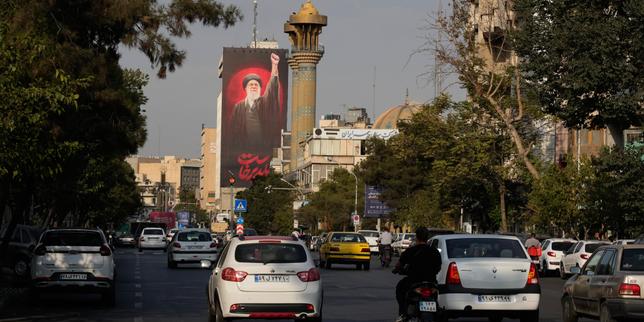
The tea goes cold on the zinc counter. In a small kitchen in Tehran, the air smells of cardamom and rising anxiety, though the radio plays a cheerful folk melody that feels entirely out of place.
Farther west, officials in Washington shuffle briefing folders, adjusting dials on a massive machinery of economic pressure designed to squeeze a government without ever firing a shot. Between these two worlds lies a chasm of human experience, measured not in policy briefs, but in the price of bread, the flicker of a failing power grid, and the quiet, crushing realization that tomorrow might be harder than today.
We talk about geopolitics as if it were a game of chess played by distant giants. It is not. It is a slow-motion collision between political survival and ordinary people who just want to pay their rent and buy medicine for their parents.
The Anatomy of a Squeeze
When the President of Iran stepped before the microphone recently to admit that the country is facing deep, cascading problems, he was saying out loud what everyone already knew. The state treasury is strained. The currency wobbles against reality. Inflation is a thief that visits every household before dawn, taking a little bit of purchasing power away while no one is looking.
(Note: The following scenario is a hypothetical composite based on documented economic conditions in import-dependent urban centers.)
Imagine a pharmacist named Reza. He opens his shop at eight in the morning. The metal rolling shutter groans as it lifts, revealing empty shelves where imported cardiac medications used to sit neatly in rows. A customer walks in, an elderly woman clutching a prescription written in shaky cursive. Reza has to tell her the truth. The medicine is gone. Not because it doesn't exist in the world, but because the banking channels are choked, the currency exchange rates are a moving target, and the cost of bringing a box of pills across the border has doubled in a month.
This is what a sanction looks like from the inside. It does not arrive with a dramatic explosion. It arrives as a locked door. It arrives as a whispered conversation between merchants who no longer trust the value of their own money.
For years, the political establishment in Tehran promised that resistance would bring self-reliance. They built domestic industries. They forged trade routes through alternative allies. Yet, an economy deeply tied to the global flow of oil cannot simply insulate itself from the rest of the planet without paying a severe, structural toll.
The Politics of Pressure
The strategy from the United States and its allies is explicit. Maximum pressure. The theory holds that if you turn the economic screws tight enough, the citizens will eventually demand a change in course from their leaders.
History suggests a more complicated, darker reality.
When external pressure mounts, populations rarely rise up to overthrow their governments overnight. Instead, they hunker down. They adapt. They turn to informal black markets, smuggling rings, and family networks of survival. The middle class, traditionally the engine of political reform and moderate voice, gets crushed into the dust. When you are fighting simply to secure cooking oil and flour for the week, grand political ideology becomes a luxury you cannot afford.
The Iranian president acknowledged these heavy realities because he could no longer hide them behind political rhetoric. The numbers refuse to cooperate. Youth unemployment remains high. Graduates with degrees in engineering and literature drive unregistered taxis through choked streets, burning fuel they can barely afford to make enough rials to buy dinner.
Yet, the machinery of the state grinds on. Security apparatuses remain well-funded. Hardliners point their fingers outward, blaming every domestic failure on foreign malice. They use the sanctions as proof of an existential siege, justifying tighter internal controls and silencing dissent under the banner of national defense.
The Invisible Cost
Consider what happens in the corridors of power when leaders run out of easy answers.
They make choices between bad and worse. Do they subsidize bread to keep the streets quiet, knowing it will print more worthless money and accelerate inflation? Or do they pull the subsidies, risking immediate, explosive unrest from citizens who have nothing left to lose?
These are not abstract economic variables on a spreadsheet. They are human triggers.
Back in the Tehran kitchen, the tea has lost its warmth entirely. The radio switches to an evening news broadcast, detailing yet another diplomatic stalemate, another round of designations announced from a podium thousands of miles away. The people sitting in that room do not analyze trade tariffs or compliance mechanisms. They simply calculate how many months their savings will last if the price of meat goes up again next week.
The collision between global ambition and local reality continues to play out in real time. The sanctions loom larger, casting long shadows over ordinary lives that were already bent beneath the weight of a changing world. No policy paper or diplomatic communique can capture the exact sound of a door locking against a future that suddenly feels entirely out of reach.