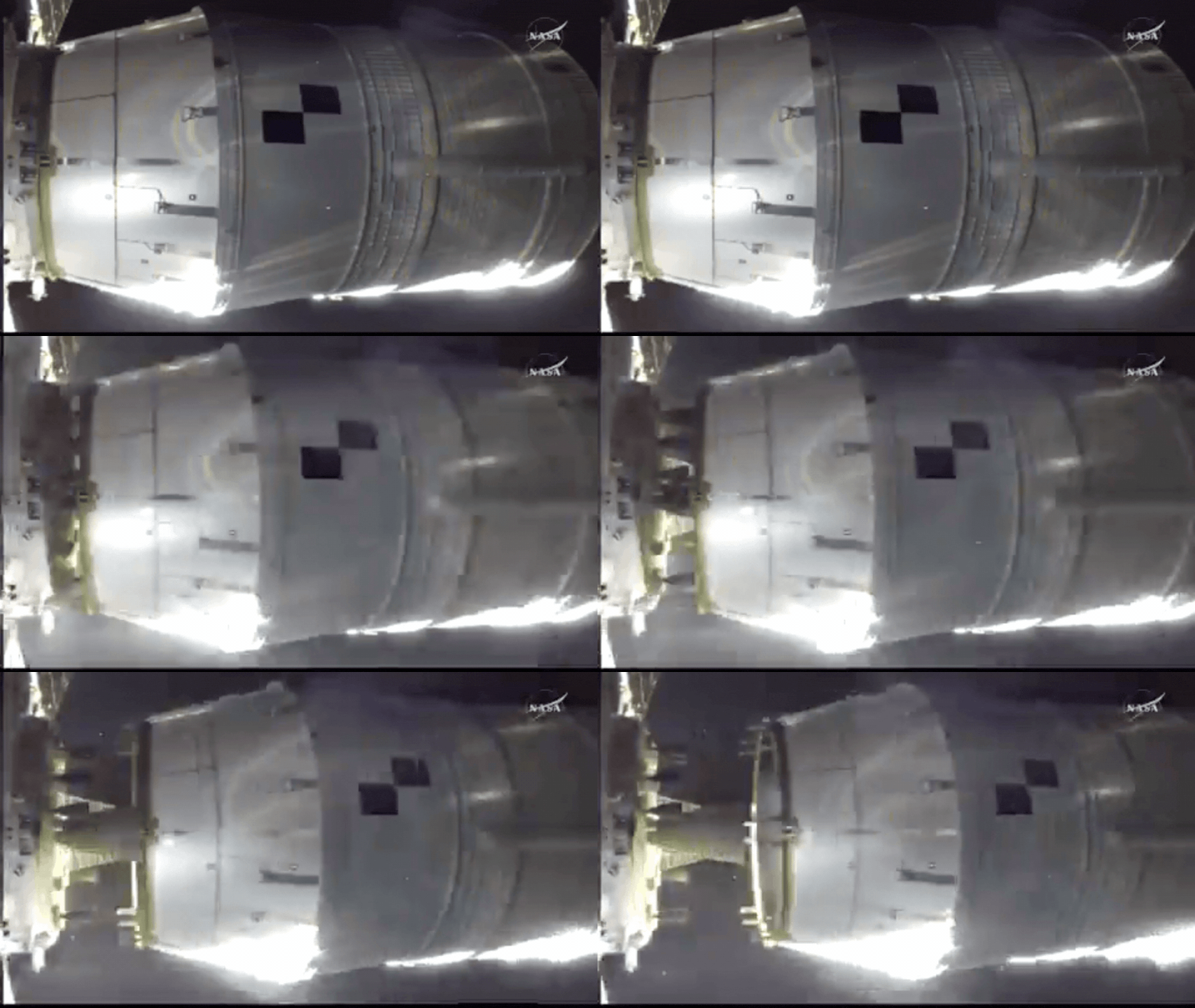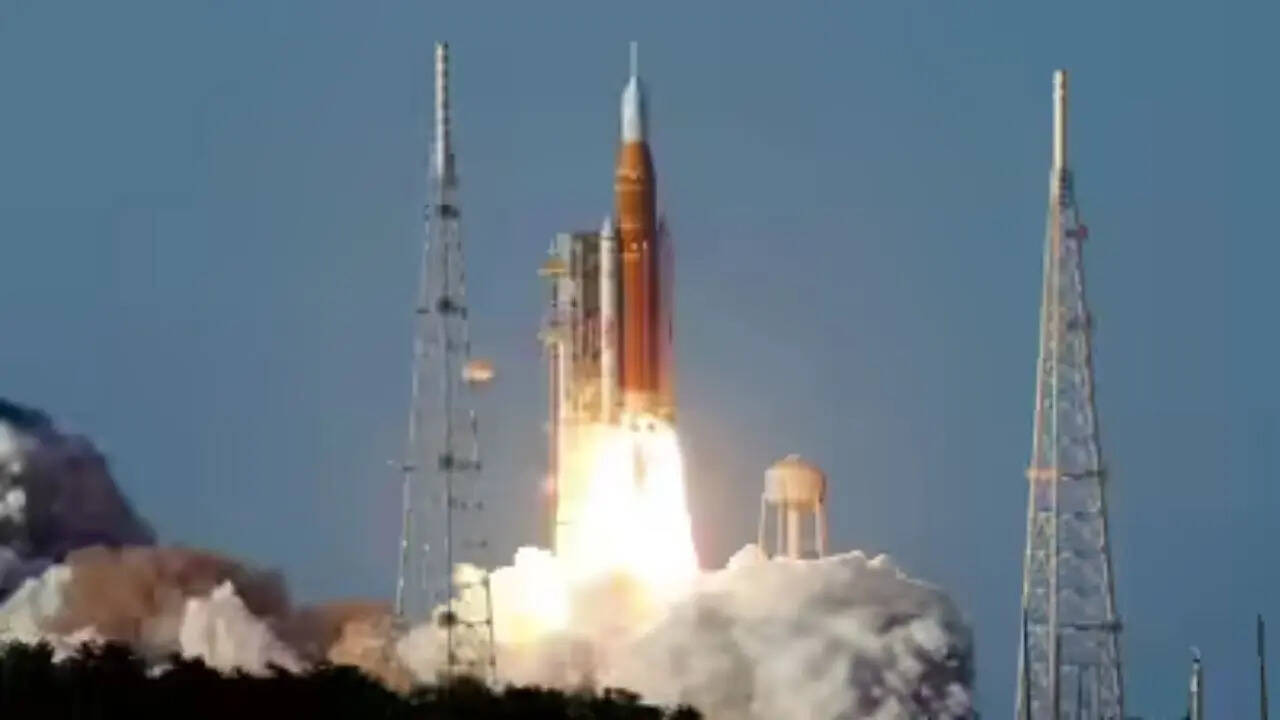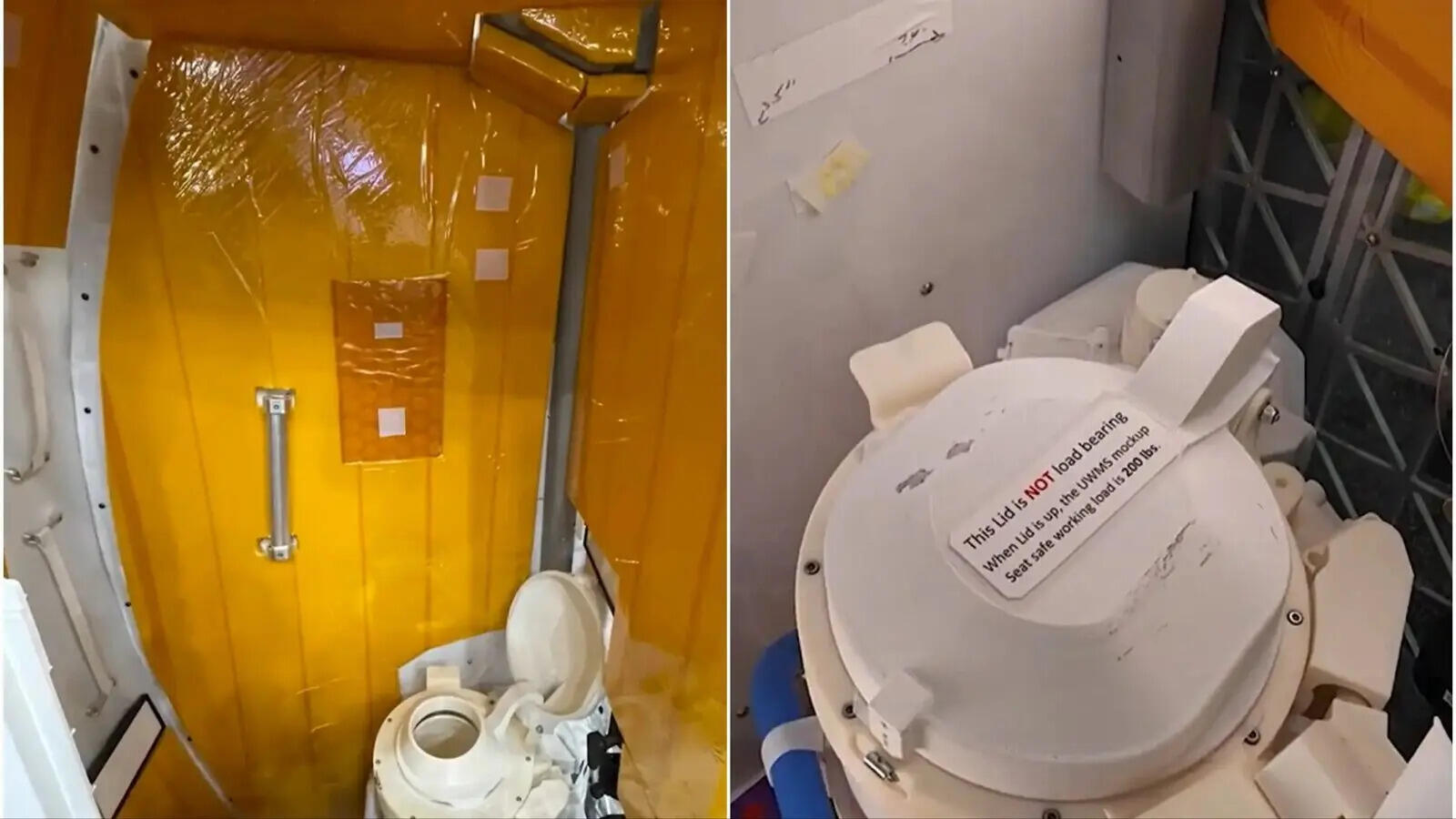
The engineering marvel known as the Orion spacecraft is currently facing a humble but potentially mission-ending adversary. NASA engineers are scrambling to address a series of technical failures within the Universal Waste Management System (UWMS) that the Artemis II crew reported during high-fidelity testing. While a malfunctioning toilet might sound like a punchline to those on the ground, in the vacuum of space, it is a high-stakes biological hazard that can compromise sensitive electronics and astronaut health. This isn't just about comfort; it is a critical systems failure that highlights the fragility of our deep-space ambitions.
The Artemis II mission represents the first time humans will venture toward the Moon since 1972. Unlike the International Space Station (ISS), which orbits a mere 250 miles above Earth and enjoys a constant supply of spare parts, the Orion capsule will be 240,000 miles away. There is no "abort and come home" for a plumbing leak when you are halfway to the lunar farside.
The Engineering Reality of Zero Gravity Biology
Human waste in space behaves according to the laws of fluid dynamics in a weightless environment, which is to say, it goes everywhere. To counter this, the UWMS relies on a complex architecture of fans, separators, and vacuum pressure.
The current issue involves the dual-phase separator, a component designed to pull air and liquid apart so the air can be recycled into the cabin while the liquid is stored or vented. During recent simulations, the Artemis II crew identified a persistent "pressure instability" within this separator. If the pressure isn't maintained within a razor-thin margin, the system risks "flooding," where liquid enters the air-scrubbing lines. This isn't just a mess. It's a fire hazard and a breeding ground for bacteria that could overwhelm the life support systems of a small, enclosed capsule.
NASA’s previous solutions for the Apollo missions were famously primitive, involving "fecal containment bags" that the astronauts loathed. Those missions lasted days. Artemis missions are designed to eventually last weeks or months. The transition from "coping" with waste to "managing" it via the $23 million UWMS was supposed to be a solved problem. Instead, it has become a primary technical bottleneck.
Why the Redesign is Struggling
The UWMS was built to be 65% smaller and 40% lighter than the systems used on the Space Shuttle. In aerospace engineering, every gram saved is a victory, but the pursuit of miniaturization often comes at the cost of durability.
When you shrink a mechanical system that handles corrosive biological fluids, the tolerances become unforgiving. Salt crystals from urine can build up in the narrow tubing. Biofilms—slimy layers of bacteria—can clog the centrifugal separators. The reports coming out of the Artemis II training cycle suggest that the "compact" nature of the Orion's plumbing makes it nearly impossible for the crew to perform mid-flight repairs.
The Maintenance Paradox
On the ISS, if a toilet breaks, the crew has room to float, tools to disassemble the unit, and a second toilet to use in the meantime. The Orion capsule is roughly the size of a large SUV. If the UWMS fails:
- The crew must revert to "contingency" bags.
- The cabin air quality drops immediately due to off-gassing.
- Humidity levels spike, putting an extra load on the Environmental Control and Life Support System (ECLSS).
The "brutal truth" is that NASA is trying to fit a 21st-century bathroom into a 1960s-sized footprint. The physics of waste separation simply do not scale down as easily as microchips do.
The Hidden Cost of the Artemis Timeline
The pressure to launch Artemis II by late 2025 or early 2026 is immense. With China’s lunar program accelerating, the political optics of a delay are unpalatable for the agency. However, the "fly and fix" mentality that plagued the early Shuttle era is a dangerous path.
The UWMS issues are indicative of a larger trend within the Orion's development: systemic integration friction. This occurs when various high-tech sub-systems, often built by different contractors, are forced into a confined space. The toilet isn't failing in a vacuum—it’s failing because it is fighting for power, space, and thermal management with a dozen other "priority" systems.
Biological Contamination Risks
One overlooked factor is the effect of lunar gravity vs. microgravity. Artemis II is a flyby, but future missions will land. A waste system that works—or fails—in zero-G might behave differently in the 1/6th gravity of the Moon. If the separator is already showing signs of instability during Earth-based simulations, the "sloshing" effects during the trans-lunar injection burn could be catastrophic.
Fecal matter contains microbes that can be remarkably resilient. In a closed-loop system like Orion, a leak doesn't just stay on the floor. It atomizes. It enters the ventilation. It settles on the control panels. This is why the crew's report of "intermittent odor" and "moisture at the interface" is being treated with such gravity. It is the first sign of a breach in the primary barrier between the crew and their own biology.
The Counter-Argument: Is it Just Growing Pains?
Some industry insiders argue that these reports are exactly why we do high-fidelity testing. They claim the system is "behaving within expected variance for a pre-flight prototype." This perspective is dangerously optimistic.
A spacecraft is a chain of systems. The UWMS is a link in that chain. If a heat shield has a crack, we don't say it's "within variance." We fix it. The tendency to treat the "commode" as a secondary or "luxury" item is a relic of an era when astronauts were expected to endure any hardship. Today, mission success depends on the cognitive performance of the crew. An astronaut who hasn't slept because of a malfunctioning waste system and a foul-smelling cabin is an astronaut prone to making errors during the critical orbital insertion maneuvers.
The Move Toward a Solution
NASA is currently investigating two paths. The first is a hardware "patch"—a redesign of the separator vanes to handle higher flow rates. The second is a software update to the sensor suite that triggers the vacuum pumps, attempting to "anticipate" a clog before it happens.
Both solutions are band-aids. The real fix would be a complete overhaul of the fluid path, but that would require a redesign of the Orion's internal bulkhead, something the current timeline won't allow.
The Real Stakes
If Artemis II launches with a compromised waste system, the mission risks becoming a PR nightmare. Imagine the first humans to return to the Moon in fifty years having to cut their mission short or spend their historic journey dealing with "contingency bags" because a $23 million toilet couldn't handle the pressure. It would be a blow to the image of American technical exceptionalism.
The engineering team at the Johnson Space Center is working triple shifts. They know that the success of the Artemis program doesn't just depend on the massive SLS rocket or the heat shield. It depends on the smallest, most ignored parts of the machine working perfectly.
Space is hard. Biology is harder. Mixing the two in a small metal box for ten days is the ultimate test of human ingenuity. We are finding out, in real-time, that you can't conquer the stars if you haven't mastered the basics of life on the ground.
The next testing phase in the vacuum chamber at Plum Brook Station will be the decider. If the UWMS fails there, NASA will be forced to choose: delay the Moon mission again, or send four brave souls into deep space with a high-tech bucket.
The hardware is the limit.