Every single headline right now screams the same tired script. United States drops bombs on Revolutionary Guard outposts. Iran promises a decisive counter-offensive. Analysts on cable news sweat under studio lights, clutching their coffee mugs, warning of an inevitable regional conflagration.
It is theater.
If you believe that a mid-tier kinetic exchange in the middle of a desert signals the opening salvo of a genuine war between Washington and Tehran, you have fallen for the oldest psychological trap in geopolitics. I have watched diplomats, defense contractors, and regional desk officers play this exact game for two decades. They leak intelligence, stage measured retaliations, and draft aggressive press releases knowing full well that both capitals are terrified of the one thing they claim to want: total victory.
The lazy consensus is that escalation is an accident waiting to happen, a spark that will inevitably catch the dry grass of the Middle East. The reality is far more cynical and far more controlled. These strikes and counter-strikes are safety valves. They are carefully calibrated pressure releases designed to appease domestic hardliners in both countries without altering the underlying balance of deterrence.
Let us look at the mechanics of this supposed crisis. When the Pentagon authorizes a strike on Islamic Revolutionary Guard Corps logistics hubs, military planners do not roll dice. They pick targets using a precise calculus of minimization. They hit facilities that can be rebuilt in a week, populated by personnel who received advance warning through backchannel intermediaries in Oman or Qatar. The goal is never to cripple. The goal is to create just enough smoke for the evening news cycle so the administration can claim it restored deterrence.
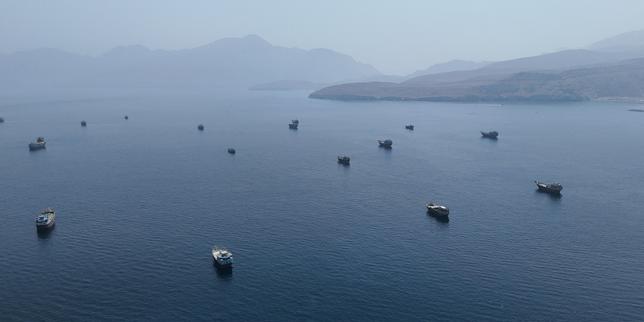
On the other side, the Iranian leadership operates under the exact same operational constraints. When Tehran announces a decisive operation, the Western press treats it like a declaration of total mobilization. They picture swarms of ballistic missiles blotting out the sun. But Tehran's doctrine is built around asymmetric proxies, cyber disruption, and deniable maritime harassment in the Strait of Hormuz. They do not want a conventional war with a military that outspends them ten to one. They want perpetual, low-intensity friction that keeps economic sanctions in the headlines while protecting the regime's core survival.
The Myth of Accidental War
The most pervasive delusion among foreign policy commentators is the doctrine of inadvertent escalation. You will hear experts warn that a miscalculation by a junior commander on a patrol boat or a radar operator tracking a drone will trigger an uncontrollable chain reaction.
This is bureaucratic self-preservation masquerading as analysis.
Modern military command and control systems feature multiple layers of political oversight specifically designed to prevent lower-level personnel from starting global conflicts. Washington and Tehran maintain direct and indirect crisis communication lines precisely because neither side wants a rogue captain rewriting national security strategy. When an incident occurs, both intelligence apparatuses run rapid triage. If they want an excuse to escalate, they will manufacture one out of a minor incident. If they want to de-escalate, they will dismiss a major provocation as a technical glitch or a localized error.
Imagine a scenario where a commercial tanker is hit by a mysterious mine off the coast of Fujairah. Within minutes, intelligence analysts are not frantically trying to figure out what happened; they are running simulations on how different attribution narratives will affect global oil futures and domestic approval ratings. The truth of who dropped the mine matters far less than how each government decides to weaponize the ambiguity.
This brings us to the core misunderstanding of deterrence in the modern era. Traditional deterrence theory assumes two rational actors threatening mutually assured destruction. But the United States and Iran are not locked in a classic deterrence dilemma. They are business partners in a grim, perpetual rivalry. The conflict justifies defense budgets in Washington, legitimizes authoritarian crackdowns in Tehran, and ensures that energy markets remain volatile enough to pad the balance sheets of multinational hydrocarbons firms.
The Economic Reality Behind the Smoke
Follow the money, and the fog of war evaporates instantly.
Every time a bomb drops on an IRGC depot, defense stocks tick upward. Raytheon, Lockheed Martin, and General Dynamics do not care about the ideological purity of the Islamic Republic; they care about inventory replenishment cycles. Precision-guided munitions are expensive to manufacture and even more expensive to replace. A few dozen airstrikes burn through millions of dollars in ordnance that American taxpayers purchase through the federal budget.
Simultaneously, the Iranian regime uses the threat of American aggression to justify internal economic mismanagement. When the currency collapses and citizens flood the streets demanding bread and basic liberties, the state machinery points to foreign intervention and external plots. The bombs falling on IRGC outposts are unironically the best PR gifts the regime receives. They validate the narrative of a besieged nation standing alone against the Great Satan, drowning out chants about inflation and systemic corruption.
We are told that sanctions and strikes are slowly backing the regime into a corner. This assumes the regime operates like a publicly traded corporation beholden to shareholder value. It does not. It functions as a security cartel. Cartels survive by maintaining a state of managed crisis. If the crisis ends, the justification for the cartel's internal hierarchy vanishes with it. Therefore, a permanent state of cold war is the optimal outcome for the architects of the system.
Dismantling the Threat Matrix
Let us address the recurring questions that populate policy think-tank briefs and Sunday morning talk shows.
Is Iran months away from a nuclear weapon?
Experts have been claiming Tehran is six months away from a bomb for thirty years. This is a perpetual horizon. If you keep moving the finish line, you never have to admit your predictive models are flawed. The reality is that possessing a nuclear warhead and possessing a functional, deliverable nuclear deterrent are two entirely different technological thresholds. Even if the threshold is crossed, deterrence theory suggests that a nuclear-armed Iran behaves more cautiously, not less, because the regime values its own survival above messianic martyrdom.
Will the proxy networks in Iraq, Syria, Lebanon, and Yemen collapse if the United States increases the kinetic pressure?
This question misunderstands the nature of distributed networks. You cannot bomb an ideology, nor can you destroy a decentralized franchise model with tactical airstrikes. The Axis of Resistance is not a monolithic army taking orders via a secure red phone from Tehran; it is an ecosystem of local militias capitalizing on failed state structures. When you hit a logistics hub in eastern Syria, you merely force the local commander to diversify his supply lines and rely more heavily on local smuggling rings. You alter the transaction costs, but you do not alter the strategic outcome.
The Uncomfortable Truth About De-escalation
The most contrarian position you can take in modern geopolitics is that nobody actually wants peace, because peace is messy, expensive, and requires accountability.
A permanent settlement between the United States and Iran would require Washington to accept a regional security architecture where it no longer holds absolute hegemony, and it would require Tehran to abandon the revolutionary ideology that justifies its domestic legitimacy. Neither side is willing to pay that price.
So they settle for the choreography of retaliation. A strike here, a drone buzzing a carrier group there, a fiery speech in the parliament, a solemn statement from the State Department. It looks dangerous. It sounds urgent. It sells advertising space for news networks. But beneath the bluster, the parameters of the conflict remain strictly bounded.
Stop reading the updates as if you are watching a countdown to apocalypse. Read them as you would read box scores from a cynical, scripted sports league where the owners profit regardless of which team wins the game. The bombs will keep falling, the press releases will keep flowing, and the status quo will remain completely untouched.