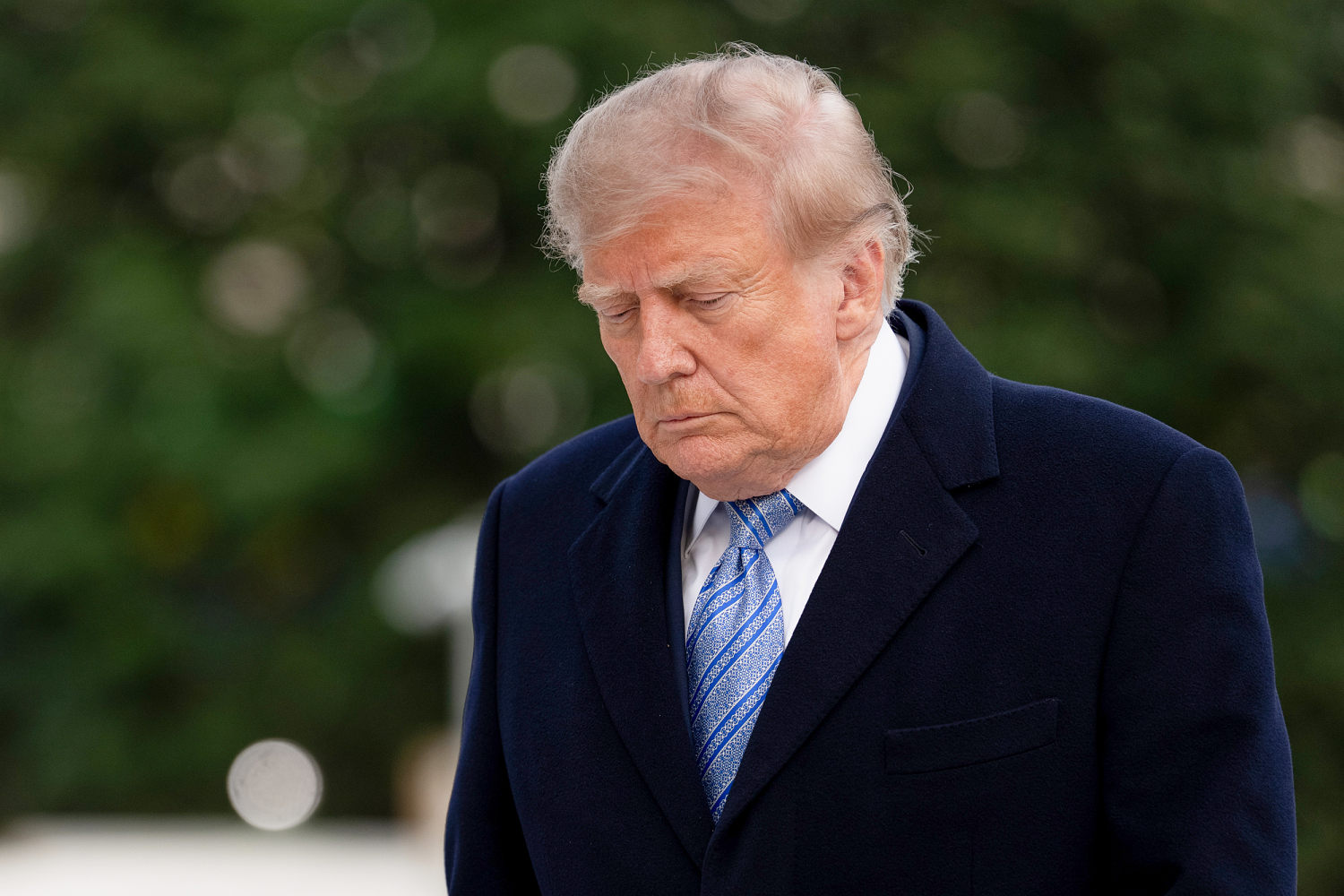
The press gallery drools over the footage. Billionaires in tailored suits walk up the marble steps of the Eisenhower Executive Office Building. Cameras flash. Pundits on cable news adjust their glasses and solemnly declare that the adults are finally in the room. They tell you that a high-level summit between tech executives and federal officials is a historic exercise in democratic stewardship. They whisper about guardrails, public-private harmony, and the urgent need to protect humanity from rogue algorithms.
It is a fairy tale for people who have never run a business outside a PowerPoint deck.
I have spent years watching the sausage get made in policy circles. I have seen founders burn through millions trying to comply with frameworks written by incumbents who want nothing more than to pull up the drawbridge behind them. Let us stop pretending these Washington gatherings are about safety, ethics, or national destiny.
This is a cartel meeting.
The mainstream narrative is built on a comforting delusion: that giant tech monopolies are terrified of government regulation. The exact opposite is true. Big Tech loves regulation the way a fish loves water, provided they are the ones holding the pen. When an OpenAI, an Anthropic, or a Google sits down across from federal regulators, they are not being scolded. They are negotiating the terms of their future monopoly.
The Compliance Moat
To understand why these summits happen, you have to look past the press releases about responsible innovation and look at the balance sheets. Building frontier artificial intelligence models requires billions of dollars in compute infrastructure. That financial barrier was already narrowing the field to a handful of well-capitalized players backed by cloud giants. But financial barriers alone do not guarantee permanent dominance. Garage startups still find ways to innovate around capital constraints through efficiency, clever distillation, and open-source breakthroughs.
That is what keeps billionaires awake at night.
So, how do you neutralize a developer in a basement running open-weights models on consumer hardware? You cannot out-innovate a distributed, permissionless community of global contributors through product quality alone. You have to outlaw them.
Enter the Washington summit.
The playbook is ancient. In the nineteenth century, railway barons lobbied for complex safety and rate regulations that crushed regional competitors. In the twentieth century, legacy financial institutions welcomed compliance burdens that made de novo banking impossible. Today, tech giants are weaponizing "safety" as a regulatory tollbooth.
When corporate leaders advocate for mandatory licensing regimes, third-party audits, mandatory liability insurance, and government-approved model registration, they are not protecting consumers. They are imposing a fixed compliance cost that a three-person startup cannot absorb, but a firm with a fifty-million-dollar legal department treats as a rounding error. Every rule hashed out over catered sandwiches in Washington widens the moat.
Dismantling the Existential Risk Red Herring
The foundational myth of these summits is the imminent threat of rogue superintelligence. For the past few years, a well-funded chorus of alarmists has convinced lawmakers that code is equivalent to enriched uranium. They demand strict federal oversight of training runs, mandatory reporting thresholds for compute power, and strict containment protocols.
This framing is brilliant marketing and terrible engineering.
An artificial intelligence model is a matrix of floating-point numbers trained on text data. It does not possess a survival instinct, a clandestine bank account, or a desire for world domination. It is a sophisticated pattern-matching engine. By framing open-weights models as weapons of mass destruction, incumbents achieve a dual objective: they inflate their own technological prowess in the public imagination, and they hand regulators a pretext to criminalize decentralized distribution.
If you make it a felony to train a model above a certain compute threshold without a federal certification, you have effectively nationalized the frontier of software development and handed the keys to the incumbents who helped write the compliance manual.
Notice who is never invited to these closed-door summits. You will not find independent open-source maintainers, privacy advocates, or decentralization researchers at the table. You will find corporate lobbyists wearing badges that say "Trust and Safety." They use the language of public welfare to secure protectionist rents.
The Economics of Regulatory Capture
Let us trace the exact financial mechanics of what happens after a Washington AI summit concludes.
First, the White House announces a voluntary or statutory framework for model evaluation. The criteria for safety are intentionally vague, requiring subjective assessments that only massive enterprises can afford to operationalize at scale.
Second, the startups that managed to bootstrap their way into the market suddenly find that their venture capital investors pull back. Why? Because institutional capital hates regulatory liability. Seed funds stop backing foundational model research in domestic jurisdictions because the legal exposure of shipping uncertified code becomes catastrophic. Venture capital flows instead into safe, predictable enterprise wrappers that merely resell API access to the approved incumbents.
Third, the open-source ecosystem faces an existential squeeze. When policymakers start discussing liability for downstream use, the developer who publishes weights on a public repository is suddenly exposed to lawsuits for how a third party utilizes that code. The result is predictable: open-source development migrates entirely outside Western jurisdictions, rendering domestic security arguments completely moot while gutting local technical sovereignty.
This is not a bug in the summit design. It is the core feature.
Why the Press Gets It Wrong
Journalists covering these events consistently fall for the corporate communications playbook. They write breathless profiles about visionary executives counseling politicians on the dangers of their own creations. It makes for compelling cinematic drama, but it is an inversion of reality.
CEOs do not go to Washington to warn the government about the dangers of technology. They go to manage their market share. When an executive publicly calls for stricter government oversight of their own sector, your immediate reaction should not be admiration for their civic virtue. Your reaction should be suspicion. No rational commercial entity asks for state-enforced handcuffs unless those handcuffs are lined with velvet and fitted exclusively for their competitors.
Look at the history of every major technological shift over the past fifty years. Telecommunications, biotechnology, commercial aviation—every single one followed the exact same trajectory. Wild, chaotic innovation fueled by garage builders and academic rebels, followed by institutional consolidation, followed by a cozy marriage between regulators and monopolies disguised as public safety.
We are currently hurtling through the consolidation phase. The Washington summits are the board meetings where the terms are ratified.
How to Build Outside the Trap
If you are a founder, an engineer, or an investor currently navigating this environment, you need to strip away the noise and look at where the puck is actually going.
Stop waiting for regulatory clarity. Clarity from Washington means one thing: rules written by your competitors to keep you out. If a policy framework makes it easy for your startup to comply, it is either completely toothless or designed to catch only the most incompetent bad actors while letting incumbents consolidate.
Embrace cryptographic and architectural decentralization. Centralized APIs hosted on regulated cloud infrastructure are sitting ducks for regulatory capture. If your entire business model depends on calling an endpoint provided by a company that just shook hands with a cabinet secretary, you do not have a business. You have a lease on someone else's platform.
The future belongs to edge computing, local execution, and un-capturable architectures. You cannot regulate a model that runs locally on a device without a kill switch. You cannot subpoena an open-source repository maintained by anonymous contributors scattered across fifty countries.
The politicians and the executives shaking hands in Washington know this. That is why they are trying so desperately to lock down the perimeter before the perimeter becomes completely indefensible.
Do not buy the narrative. Do not celebrate the photo ops. And above all, stop asking the cartel for permission to build.