Morality is a luxury of the comfortable.
When war breaks out, the armchair ethicists crawl out of the woodwork to condemn the "profiteer." They paint a caricature of a cigar-chomping villain hoarding grain while the world burns. It is a lazy, emotional narrative that ignores the cold, hard mechanics of survival.
The truth? The war profiteer is not the enemy of the people. They are the most efficient resource allocator in a collapsing system.
If you want to understand why a country wins or loses, don't look at the flags. Look at the balance sheets of the privateers. We have been conditioned to see profit during a crisis as a moral failing. In reality, it is the only mechanism that prevents total systemic failure when the state proves, as it always does, to be incompetent.
The Myth of the "Fixed Pie"
The standard critique of war profiteering rests on the "Fixed Pie" fallacy. This is the amateur economic belief that if Company A makes a massive profit during a conflict, they must have stolen that value directly from the pockets of the suffering.
It is the opposite.
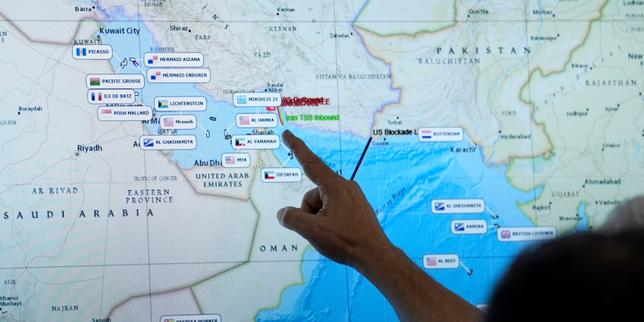
In a theater of war, supply chains don’t just "slow down." They vanish. The risk of moving a cargo ship through a contested strait or trucking medical supplies through a zone of active shelling is nearly infinite. Most "ethical" companies simply exit the market. They flee to the safety of stable regions, leaving the local population with nothing but thoughts and prayers.
The profiteer stays.
They stay because the potential for "excessive" profit outweighs the very real risk of total capital loss or death. When you remove the profit motive under the guise of "price gouging laws," you don't make goods cheaper. You make them disappear.
Incentivizing the Impossible
During the American Civil War, the term "shoddy" became popular because of contractors selling poor-quality wool to the Union Army. The knee-jerk reaction was to demand more oversight. But the real failure wasn't the profit; it was the lack of a competitive market.
When the state grants a monopoly to a single supplier under a "patriotic" banner, you get corruption. When you allow open, aggressive profiteering, you get innovation born of desperation.
Profit is the signal. It tells the global market: "Bring resources here, now."
High prices are a flare gun. They scream for more supply. If a gallon of fuel costs $20 in a war zone, every entrepreneur with a truck and a death wish is suddenly incentivized to find a way to get fuel there. As soon as they arrive, the competition drives the price down to $18, then $15.
The "moral" alternative? The government caps the price at $4. No one brings fuel. The trucks stop. The ambulances stay parked. People die.
I’ve seen this play out in private equity circles during regional instabilities. The companies that "do the right thing" by freezing prices or maintaining standard margins go bankrupt in six months because they can’t afford the 400% increase in insurance premiums. The "greedy" ones survive to keep the lights on.
The State Is the Real Profiteer
We focus our vitriol on the private contractor because they are an easy target. But let’s talk about the ultimate war profiteer: the State.
Governments use conflict to expand their power, suspend civil liberties, and print money that devalues the life savings of every citizen. While a private company has to actually deliver a product to get paid, the state simply taxes the future.
The military-industrial complex isn't a failure of capitalism; it’s a failure of cronyism. There is a massive difference between a merchant selling boots to a soldier and a lobbyist securing a $50 billion no-bid contract for a jet that doesn't fly in the rain.
Identifying the Difference
- Legitimate Profiteering: High-risk, high-reward delivery of scarce goods (food, fuel, medicine, ammunition) at market-clearing prices.
- Crony Profiteering: Using political influence to block competitors and secure taxpayer-funded guarantees regardless of performance.
The public hates the former because the price tag is visible. They ignore the latter because it’s buried in a 2,000-page budget bill.
The Ethics of the Black Market
When a legal economy collapses under the weight of war and "moral" regulation, the black market saves lives.
Call it the "shadow economy" if it makes you feel better. These are the ultimate profiteers. They operate outside the law, face execution or imprisonment, and charge "exorbitant" fees. Yet, in every major conflict of the 20th century—from the Siege of Sarajevo to the current proxy wars—the black market was the only reason the civilian population had access to antibiotics or clean water.
We condemn the "smuggler" while the official aid trucks are stuck in three weeks of bureaucratic red tape at a border crossing. The smuggler doesn't care about your paperwork. They care about the gold. And because they care about the gold, they find a way through the mountains.
If you find that "gross," you are prioritizing your aesthetic comfort over the survival of people on the ground.
Risk-Adjusted Returns Are Not "Greed"
Let’s run a thought experiment.
You own a fleet of transport planes. A conflict breaks out in a region that needs food. Your insurance company tells you that your policy is void if you fly into that airspace. One of your pilots wants triple pay to take the risk. Fuel costs at the destination are unknown.
Do you charge the same freight rate you charge for a flight from London to New York?
If you do, you are a bad steward of your company and an idiot. You will be out of business by Tuesday. To stay operational, you must charge a premium that covers the replacement cost of a lost plane and the massive hazard pay for your crew.
The "morality" crowd calls that premium "blood money." I call it a risk-adjusted return. Without that premium, the food stays in the warehouse in London, and the people in the conflict zone starve.
Who is more moral? The man who gets rich delivering grain, or the man who stays "pure" while the silos stay empty?
The Fallacy of the Post-War Recovery
The same people who hate the profiteer during the war are the first to complain when the "reconstruction" phase is slow.
Reconstruction is just profiteering with a harder hat. You need massive amounts of capital to rebuild a decimated power grid. That capital isn't going to show up out of the goodness of its heart. It shows up for a 25% IRR (Internal Rate of Return).
If you cap the returns on reconstruction projects to "protect the people," the people will live in the dark for thirty years. Look at the history of post-conflict zones. The ones that embrace "aggressive" private investment—yes, even the ones that feel "exploitative"—recover in a decade. The ones that rely on "fair" international aid and state-controlled rebuilding remain ruins for generations.
Stop Asking if it’s Fair
"Fair" is a word used by children and politicians. It has no place in a discussion about survival and logistics.
The question we should be asking is not "Is this person making too much money?"
The question is: "Is the resource moving?"
If the resource is moving, the system is working. The profit is simply the friction-reduction fee. When you try to remove the profit, you increase the friction. When friction becomes absolute, movement stops.
We need to stop apologizing for the profiteer and start studying them. They are the only ones with the guts to put a price on risk when everyone else is hiding behind a press release.
The Hard Truth of Incentives
The moralists want a world where people do the right thing because it is right.
I want a world that works.
In a world that works, the desire for wealth drives a man to sail a ship through a blockade to deliver supplies that wouldn't be there otherwise. That desire is more reliable than any treaty, any UN resolution, and any "ethical" corporate social responsibility mandate.
Greed is a constant. Altruism is a variable.
If you bet a nation’s survival on a variable, you’ve already lost the war.
Build your system on the constant. Let the profiteers run. The tax revenue from their "excess" will fund the next generation's defense, while their competitors—lured by those same high margins—will eventually drive the prices back down to reality.
The next time you see a headline decrying a company for making a fortune during a crisis, ask yourself one question: Would you prefer they didn't show up at all?
Because that is the only other option.
Choose the villain who delivers over the saint who stays home.
Stop trying to moralize the market. Start paying the premium for survival.