Elon Musk gets the headlines, the tweets, and the late-night comedy monologues. When SpaceX hits public markets around mid-June under the ticker SPCX, the talking heads will scream about Musk becoming the world’s first trillionaire.
They're missing the real story.
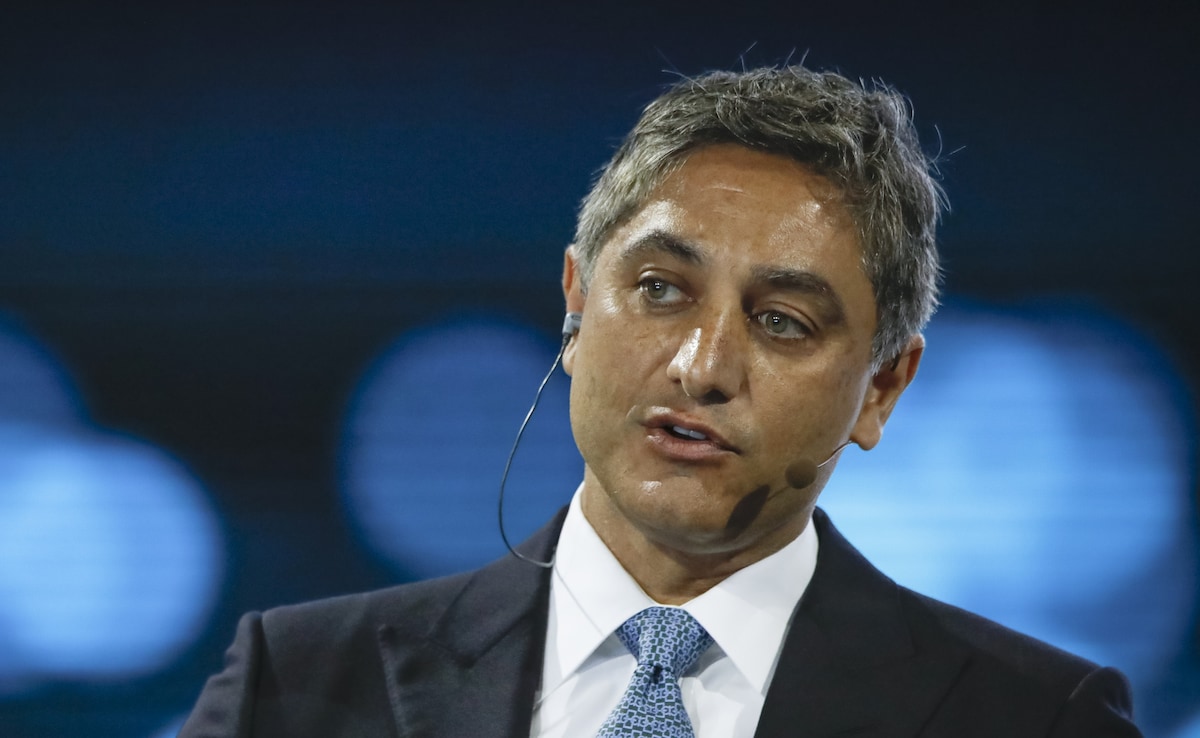
While the media obsess over Musk’s 42% equity stake, a quiet, low-profile investor of Indian origin is positioned to walk away with a mind-boggling $128 billion. His name is Antonio Gracias. If you haven't heard of him, that's exactly how he likes it.
Gracias doesn't do Twitter wars. He doesn't build underground tunnels or buy social media platforms on a whim. Yet, through his private equity firm, Valor Equity Partners, Gracias controls roughly 7.3% of SpaceX. As the rocket company targets a massive IPO valuation between $1.75 trillion and $2 trillion, his stake isn't just a win. It’s one of the greatest venture returns in human history.
Understanding how Gracias pulled this off reveals the mechanics of how the elite make money in modern tech finance. It also shows why the upcoming SpaceX listing is far more dangerous, complex, and fascinating than a simple bet on satellite internet.
The Goan Neurosurgeon’s Son Who Outmaneuvered Silicon Valley
To understand how a guy running a mid-sized private equity firm in Chicago ended up owning more of SpaceX than almost anyone else, you have to look at where he started.
Gracias isn't your typical tech bro. His father immigrated to Michigan from Goa, India, eventually building a career as a neurosurgeon in Detroit. His mother was a Spanish pharmacist. Gracias grew up far from the Silicon Valley echo chamber, studying international economics at Georgetown before picking up a law degree at the University of Chicago.
In 1995, while still sitting in law school classrooms, he scraped together the capital to launch MG Capital, the firm that eventually evolved into Valor Equity Partners.
His strategy was simple: don't invest in software apps that disappear in three years. Invest in manufacturing, heavy metal, and operational scale.
That specific mindset led him to Elon Musk in the early 2000s. When Musk was bleeding cash trying to get Tesla’s early cars off the assembly line and crashing his first three Falcon 1 rockets into the Pacific Ocean, mainstream venture capitalists fled. They thought Musk was a lunatic wasting millions on impossible hardware.
Gracias saw something else. He saw a manufacturing problem. Valor Equity Partners didn't just write a check; they embedded operational experts directly into Tesla and SpaceX to help fix the supply chain bottlenecks. Gracias joined the SpaceX board in 2008, anchoring a risky financing round when the company was days away from bankruptcy. He held on through every delay, explosion, and regulatory fight.
Now, that loyalty is paying off at a scale that defies comprehension.
Breaking Down the $128 Billion Math
Let's look at the actual numbers because they're wild. SpaceX filed its registration documents with the SEC, intending to raise between $75 billion and $80 billion in fresh capital. That alone blows past Saudi Aramco’s 2019 record of $29.4 billion to become the largest IPO ever.
The targeted valuation range sits firmly between $1.75 trillion and $2 trillion. To understand how massive that is, consider that India’s most valuable conglomerate, Reliance Industries, hovers around a $190 billion market capitalization. SpaceX wants public markets to value it at nearly ten times that amount on day one.
If the market bites at the $1.75 trillion mark, the math for Gracias and Valor Equity Partners looks like this:
- Total SpaceX Equity Stake: ~7.3%
- Implied Stake Value: $127.7 billion (roughly Rs 12.16 lakh crore)
- Alphabet (Google) Comparison: For context, Alphabet invested $1 billion in SpaceX back in 2015 for an 8% stake. Even after accounting for later dilution, Alphabet's remaining slice will be worth around $64 billion. Gracias outplayed Google by getting in earlier and buying up secondary shares when others wanted out.
This isn't money Gracias generated by writing software code. It’s the product of staying locked into Musk’s inner circle for more than two decades, acting as the institutional backbone of what insiders call the "Muskonomy."
The Cash Engine and the Cash Furnace
If you're looking at this IPO thinking about buying a few shares yourself, you need to understand that you aren't buying a rocket company. You're buying three entirely distinct businesses wrapped in a single corporate wrapper, and two of them are losing an absolute fortune.
SpaceX’s S-1 filing pulled back the curtain on its actual financial operational health, and the reality is messy. The company generated $18.7 billion in total revenue for the full year 2025. That sounds great until you realize they posted a GAAP net loss of nearly $5 billion for the year. The trend accelerated in the first quarter of 2026, with a staggering $4.28 billion net loss in just three months.
The business is fundamentally split into three buckets:
1. Starlink (The Cash Engine)
This is the only part of the company making money. Starlink’s satellite internet subscriber base exploded to over 10 million users. The connectivity division brought in $11.4 billion in revenue in 2025, operating with margins north of 50%. In Q1 2026, Starlink cleared a $1.2 billion operating profit. It’s a recurring-revenue goldmine.
2. Space Launch (The Infrastructure)
The actual rocket business, driven by Falcon 9 and the development of the massive Starship platform, brought in $4.1 billion in 2025. But it doesn't make a profit. Developing Starship cost $3 billion last year alone. In Q1 2026, the launch division reported an operating loss of $662 million. Reusable rockets are rewriting aerospace history, but they consume capital like water.
3. xAI (The Cash Furnace)
Here's the twist that most mainstream analysts are completely glossing over. In early 2026, SpaceX completed a merger that pulled Musk’s artificial intelligence startup, xAI, under the SpaceX corporate umbrella.
AI spending is what's driving the massive net losses. The AI division lost $6.4 billion last year and swallowed another $2.5 billion in losses during the first quarter of 2026. SpaceX spent $12.7 billion on AI-directed capital expenditures last year, mostly buying high-end GPUs and building out massive data centers.
Guess who quietly set up the financing structure for those data centers? Antonio Gracias.
Valor Equity Partners designed a system where they raised capital to purchase the AI chips, leased them back to xAI, and collected hundreds of millions of dollars in lease payments. Gracias isn't just waiting for the IPO; he's monetizing the supply chain while the company grows.
Is a $1.75 Trillion Price Tag Real or Ridiculous?
Paying $1.75 trillion for a company generating $18.7 billion in revenue means you're buying stock at roughly 95 times trailing sales. That's a valuation multiple that makes even peak-bubble dot-com companies look conservative.
Bulls like ARK Invest argue the price is justified because Starlink will eventually monopolize global backhaul internet, while Starship will enable orbital manufacturing and asteroid mining. Bears point to the $41.3 billion accumulated deficit and note that public investors are being asked to fund Musk’s personal dream of building a one-million-person colony on Mars—a milestone literally written into his new performance-based compensation package.
Furthermore, the corporate governance is completely lopsided. The IPO uses a dual-class share structure. The Class A shares you can buy on Nasdaq carry one vote. The Class B shares, held almost entirely by Musk and a tight circle of insiders like Gracias, carry ten votes per share. Musk retains 85.1% of the total voting power. If you buy into this IPO, you have zero say in how the company is run.
Your Next Steps as an Investor
Don't let the hype of a historic $128 billion windfall fool you into making an emotional retail investment. If you're looking to play the SpaceX public debut, you need a disciplined strategy.
First, check the post-split pricing. SpaceX executed a 5-for-1 stock split on May 4, 2026. When the roadshow finishes and the final IPO price range drops in early June, make sure any secondary market or pre-IPO tracking data you look at is properly adjusted for the split.
Second, prepare for the lock-up expiration. SpaceX is only floating about 5% of its total stock to the public on listing day. That tiny float means early demand could send the stock soaring due to a lack of supply. But beware: insiders like Gracias are bound by a 180-day lock-up period, while Musk has to hold for 366 days. When those periods expire later this year and in 2027, a massive wave of institutional selling could flood the market as early investors finally cash out their historic gains.
Watch the launch cadence, watch the AI cash burn, and let the initial institutional frenzy settle before putting your own capital on the line.