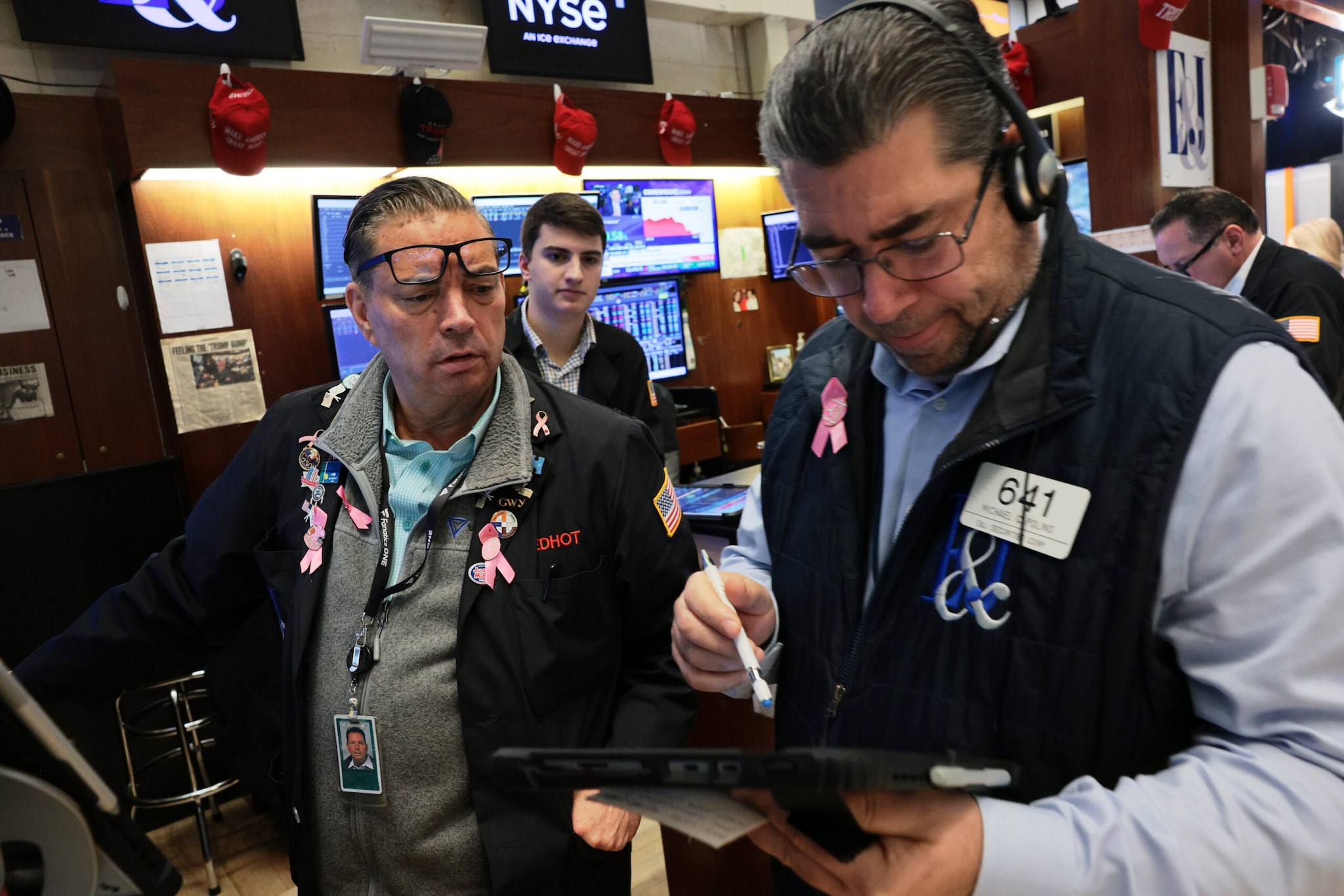
The fluorescent lights of a trading floor do not hum like a refrigerator. They hiss.
I have stood under that hiss during election nights when the ticker tape looked less like a financial instrument and more like a cardiogram during a code blue. You smell stale espresso, cold takeout boxes, and the sharp, metallic tang of adrenaline mixed with cheap deodorant. Nobody talks in full sentences after nine o'clock. They bark numbers. They watch red arrows bleed across three monitors per desk. And underneath the clamor, there is a quieter sound—the soft thwack of a stress ball hitting a cubicle wall, or the rhythmic tapping of a leather-soled shoe against industrial carpet. Building on this theme, you can also read: How Syed Asim Hussain Turned Calculated Rage Into a Hong Kong Hospitality Empire.
Elections are supposed to be about citizens, ideals, and the long arc of civic conscience. On a trading desk, they are treated like weather fronts. High pressure moving in from the Midwest. Low pressure stalling over the rust belt. A sudden squall of legislative gridlock expected by morning.
When people read that JPMorgan—or any major investment bank—expects a certain market reaction around the midterms, they usually picture a room full of gray-suited soothsayers staring into a crystal ball dipped in Treasury yields. It feels clinical. Detached. Almost cold. Experts at CNBC have provided expertise on this matter.
It isn't. Behind every bank note, every strategist's morning briefing, and every probability table on election behavior are thousands of human hands trying not to lose their footing while the ground shifts beneath them.
Let's be honest about what we actually know and what we don't. I cannot hand you a secret memo from JPMorgan's trading desk for this exact election cycle without guessing, and guessing is how retail investors get shredded. What I can give you is something far more useful: how institutional desks like JPMorgan actually read midterm elections, why historical patterns around midterm cycles behave the way they do, and how ordinary people can keep their sanity—and their savings—intact when cable news starts screaming about "historic market shocks."
The Myth of the Election Night Cliff
Watch enough television in the weeks leading up to a midterm election and you start to believe the entire global economy hinges on whether a single congressional district flips from red to blue or blue to red. Anchors draw arrows over maps. Pundits speak in hushed, apocalyptic tones. Every poll swing becomes a financial tremor.
Here is the uncomfortable truth that rarely makes the chyron: markets hate uncertainty far more than they hate the "wrong" party.
Think of the market like a driver cruising down a dark highway in heavy fog. The driver might prefer a straight road over a winding mountain pass, sure. What terrifies the driver is not knowing whether there is a curve ahead at all, or how sharp it might be. Once the taillights ahead clarify—once the vote tallies harden, legal challenges are priced in, and the shape of Congress becomes legible—the fog begins to lift. Even if the road ahead is bumpy, at least the driver can see the guardrails.
To make this concrete, let's build a hypothetical scenario. Imagine a mid-level logistics manager named Clara who lives in Ohio. Clara isn't a day trader. She has a 401(k) that auto-deducts from every paycheck, a mortgage with a fixed rate she feels lucky to have locked in years ago, and a daughter entering her junior year of high school. Two weeks before midterm election day, Clara opens her retirement app on a Tuesday morning, sees a dip of two percent over the prior week, and feels a cold knot tighten in her stomach.
"Should I move everything to cash until this blows over?" she asks her brother-in-law over dinner.
That question is the real battleground of midterm season. Not the Senate map. Not the House margin. The knot in Clara's stomach.
Institutional desks like JPMorgan look at elections through a lens that feels almost alien to someone staring at a single account balance. Strategists model policy probabilities—tax tweaks, regulatory enforcement, healthcare reimbursement, defense spending, trade tariffs—and weigh them against interest rates, corporate earnings, and consumer demand. When an election produces divided government or a narrow legislative majority, desks often note that sweeping, radical policy shifts become harder to pass. For markets, gridlock is frequently read not as paralysis, but as predictability. Fewer surprise bills means fewer sudden shocks to corporate cash flows.
Wait. Read that again, because it trips up almost everyone on their first pass.
Political gridlock can feel maddening to voters who want bold action. To an equity strategist pricing in risk premiums, a government too evenly matched to ram through massive, abrupt overhauls can actually look calming. No dramatic tax overhaul overnight. No sudden, sweeping rewrite of industry rules before companies can adjust their supply chains.
Of course, that is a general framework, not an iron law. Every election carries its own specific pressures—inflation, debt ceilings, geopolitical flare-ups, central bank policy—and no bank's model is infallible. When strategists publish election playbooks, they are mapping probabilities, not printing lottery numbers.
Why Midterm Cycles Play by Their Own Rules
If you look across modern U.S. market history, midterm election years have developed a recognizable rhythm—a kind of seasonal choreography that seasoned investors watch closely even when they refuse to treat it as gospel.
Typically, the run-up to a midterm can bring choppiness. Political rhetoric heats up, policy debates grow loud, and institutional investors sometimes trim risk or hedge exposure while waiting for clarity. Then, once the dust settles after voting day and the political picture clears, markets have historically often found firmer footing over the subsequent months, provided underlying economic fundamentals—like corporate profits and employment—aren't actively breaking down.
Notice the words I just used: historically, often, provided.
Markets are not slot machines where you pull the lever marked "Midterm" and out drops a guaranteed twelve-month rally. A single calendar marker never overrides a recession, a credit crunch, or an oil shock. If the economy is already weakened by high borrowing costs or falling consumer spending, a ballot box will not magically cure a balance sheet.
Consider what happens next when a market narrative collides with reality. Suppose a major bank's research team publishes a note pointing out that stocks have frequently rallied in the year following midterm elections. A retail investor reads a headline summarizing that note—"JPMorgan Sees Post-Midterm Rally"—and goes all-in on high-beta tech stocks the day after the polls close. Three weeks later, an inflation print comes in hotter than expected, bond yields spike, and those high-beta stocks get hammered.
The investor feels betrayed. "You said the midterms were supposed to push the market up!"
No. A historical pattern is a wind direction, not a guarantee of sunny skies. If you sail straight into a squall because you read that November breezes usually blow east, you still have to reef your sails.
I learned this the hard way years ago, sitting at a desk when everyone around me was trading off a neat historical analogy. The analogy made complete sense on paper. Every chart lined up. Then an unexpected macro shock hit overseas, liquidity tightened in hours, and clean historical analogies turned into expensive lessons. The market does not care about how clever your spreadsheet is. It cares about flows, positioning, earnings, and fear.
The Invisible Stakes Behind Every Basis Point
When financial media talks about market reactions, the language turns sterile fast. Basis points. Volatility indexes. Sector rotation. Yield curve steepening.
Strip away the jargon, and every single one of those phrases points back to real human lives.
Let's return to Clara in Ohio, with a clear label that we are staying in our hypothetical scenario. When institutional desks talk about "sector rotation"—say, money shifting out of expensive growth stocks into healthcare, utilities, or industrials depending on policy expectations—what does that actually mean? It means pension funds, university endowments, and mutual managers are adjusting where society's capital sits. Those shifts affect how easily a regional hospital system can borrow money to upgrade imaging equipment, how a factory plans capital expenditures for next spring, and how fast a retirement fund grows over a decade.
Behind every basis point is a mortgage rate someone is trying to afford. Behind every volatility spike is a small business owner wondering whether to hire a second delivery driver or hold off until January.
That is why election coverage often feels so exhausting. It turns deeply personal anxieties—will my job be secure, will groceries cost more next year, will my savings hold their value—into a scoreboard watched by people who treat a two-percent swing like a sporting event.
And here is a quiet confession from someone who has spent years watching this circus up close: even professionals get rattled. Sometimes the smartest analysts in the building are the most anxious because they know how much capital is sitting on a knife-edge and how fast sentiment can turn. There is nothing shameful about feeling uneasy when headlines turn loud. Uncertainty is genuinely disorienting. Our brains are wired to look for threats and patterns, especially when money and security feel linked to the outcome.
The trap isn't feeling anxious. The trap is letting anxiety make your financial decisions for you.
How to Read Bank Notes Without Losing Your Mind
When an investment bank like JPMorgan weighs in on how markets might react to midterms, how should a thoughtful person actually use that information?
First, treat bank commentary as a map of what big money is thinking about, not a command telling you what to do with your checking account. Institutional investors manage massive pools of capital with strict mandates, risk limits, and hedging tools most individuals don't use. A note highlighting potential volatility in certain sectors tells you where institutional positioning might be crowded or sensitive to policy headlines. It does not tell you that your personal time horizon—say, fifteen or twenty years until retirement—should be rewritten because of a November Tuesday.
Second, separate noise from signal.
Noise is the breathless hourly update while ballots are still being counted in counties you couldn't find on a map before this month. Noise is the dramatic pundit claiming a single election outcome guarantees ruin or euphoria.
Signal is much quieter. Signal is checking whether your emergency fund actually covers three to six months of essential expenses so you never have to sell investments in a downturn just to pay a bill. Signal is knowing whether your asset allocation matches your real risk tolerance—not your risk tolerance when stocks are rising, and not your panic level when screens turn red. Signal is asking whether your plan still works if the market is flat for six months, drops ten percent, or climbs steadily.
Think of it like building a house on a coast. You don't tear down the framing every time a storm forecast is issued. You check the shutters, make sure the drainage is clear, and stay inside while the wind howls.
Let's look at how a steady investor approaches midterm season compared to a reactive one:
- A reactive investor checks balances three times a day during election week, sells after a sharp red session, and waits on the sidelines until things "feel safe" again—often missing the rebound that happens quietly while everyone else is still arguing on cable news.
- A grounded investor acknowledges the uncertainty, avoids overhauling a long-term plan based on campaign rhetoric, and focuses on things actually under personal control: savings rate, debt management, diversification, and fees.
Notice how unglamorous that second path is. Nobody writes a roaring theme song about checking your savings rate and keeping your asset mix sensible. There is no flashing red alert graphic for patience.
Yet over years and decades, patience is the single most underrated edge an ordinary person has against Wall Street. Big institutions are judged every quarter, sometimes every day. You don't have to answer to a quarterly performance review from a client board. You get to think in years.
When the Headlines Fade, What Remains?
A few days after the election, the cable chyrons change. A new crisis, a new celebrity feud, a new economic report takes over the top of the screen. The frantic energy that made every poll seem like life-or-death begins to drain away, leaving behind the ordinary work of governing, negotiating, and living.
Markets do much the same thing. They digest the news, reprice what needs repricing, and go back to chewing on the things that always drive them over time: earnings growth, interest rates, productivity, innovation, and human behavior.
Back in our hypothetical Ohio kitchen, Clara sets her phone face-down on the table. The two-percent dip she worried about on Tuesday morning isn't a disaster; it's just Tuesday in a market that moves up and down every single week of the year. Her daughter still needs help studying for chemistry. Her mortgage payment still comes due on the first. Her long-term plan was built for decades, not for a single news cycle.
Election nights will keep coming around every two years, loud and bright and full of certainty from people who have no idea what tomorrow morning will bring. Let them shout at the screens. You don't have to join the chorus to stay steady in the storm.