Markets are terrified of the wrong thing.
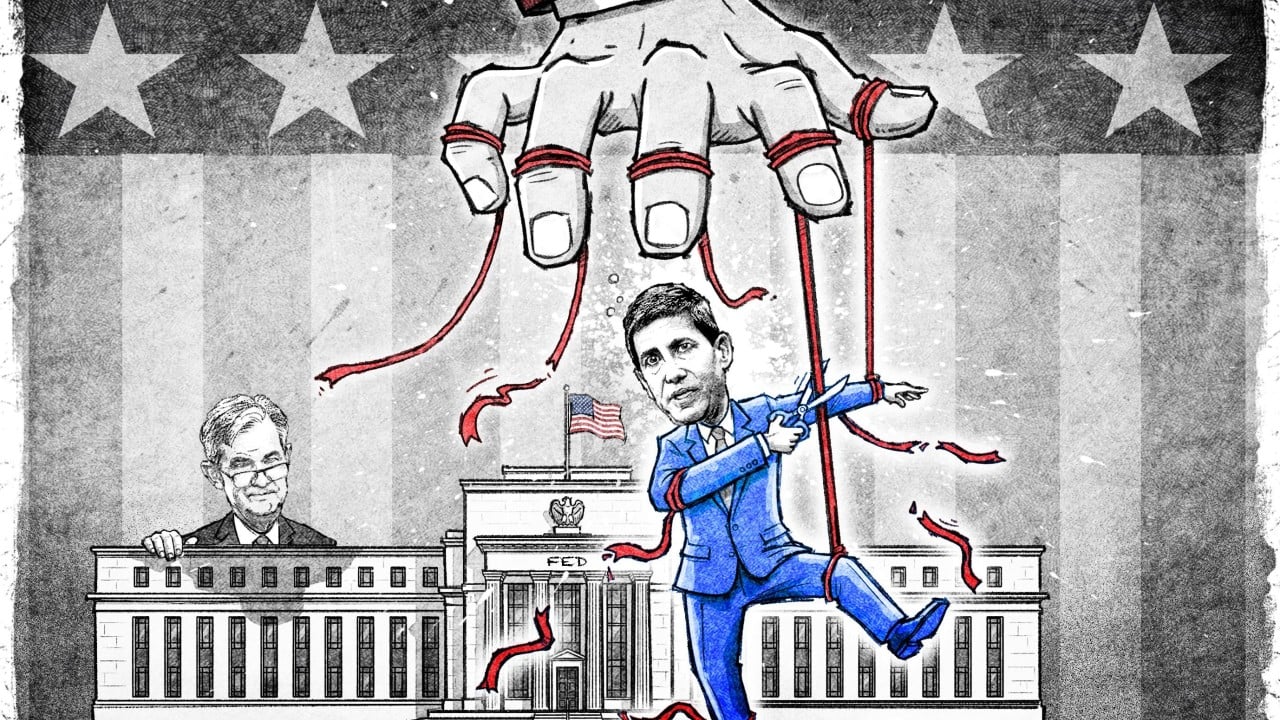
The financial press is currently obsessed with "independence." They treat the Federal Reserve’s autonomy like a holy relic, suggesting that any friction between the White House and the Eccles Building is a precursor to hyperinflationary doom. The standard narrative is simple: Trump picks a loyalist, the loyalist slashes rates to juice the economy, and the dollar ends up in a dumpster fire.
It is a lazy, surface-level take.
The real danger isn’t a Fed chair who listens to the President. The real danger is a Fed chair who listens to the bond market. For the last two decades, we haven't had an "independent" Federal Reserve; we’ve had a reactive one. Whether it was the "Greenspan Put," the Bernanke "Wealth Effect," or Powell’s pandemic-era pivot, the Fed has consistently acted as a backstop for asset prices.
If you are worried about a Trump appointee breaking the Fed, you are about twelve years too late. The seal was broken when we decided that a 20% drop in the S&P 500 was a national emergency requiring a monetary bailout.
The Myth of the Technocratic Monk
Investors love the idea of the Fed Chair as a neutral, data-driven monk, sitting in a room of mahogany and marble, making "unbiased" decisions. This is a fairy tale. Central banking is, and always has been, a political act.
When the Fed sets the federal funds rate, they are effectively deciding who wins and who loses in the American economy. Low rates favor debtors and equity holders. High rates favor savers and creditors. There is no "neutral" setting that doesn't alienate a massive voting bloc.
The obsession with a "loyalist" chair ignores the reality that the current board is already captured—not by a politician, but by a specific school of academic groupthink. This groupthink failed to see the 2021 inflation spike coming, calling it "transitory" until the grocery bills of every American proved them wrong.
A disruptive pick isn't a threat to stability; it’s a threat to the status quo that has systematically transferred wealth from the labor class to the asset-owning class via quantitative easing.
Why the "Shadow Fed" Theory is a Distraction
There is a popular theory circulating that Trump might appoint a "Shadow Fed Chair" to undermine the sitting leader. Critics argue this would create two competing versions of forward guidance, paralyzing markets.
This assumes markets are currently functioning on "clear" guidance. They aren't. We live in an era of "Fed Speak" where every semicolon in a meeting minute is dissected by high-frequency trading algorithms. The current transparency is actually a form of obfuscation.
Imagine a scenario where a new Fed Chair refuses to play the "dot plot" game. Imagine they stop trying to manage market expectations and instead focus on the single variable that actually matters for long-term stability: the price of money relative to real productivity.
Wall Street would hate it. Volatility would spike. And that would be a very good thing.
Price discovery has been dead for a decade. We have companies with zero profit margins trading at astronomical multiples because they have access to cheap credit. If a "political" Fed chair inadvertently breaks the cycle of constant intervention, they might actually save the market by letting it crash and rebuild on solid ground.
The Debt Ceiling Reality Check
The biggest misconception in the "Fed Independence" debate is the idea that the Fed can actually stop the Treasury. It can’t.
We are looking at a national debt exceeding $34 trillion. Interest payments are now a larger line item than the defense budget. No matter who sits in the big chair, the Fed is eventually going to be forced into "Fiscal Dominance."
Fiscal Dominance occurs when the central bank is forced to keep interest rates low enough to ensure the government doesn't go bankrupt. This isn't a choice made by a "loyalist" or a "hawk." It is a mathematical inevitability.
The Taylor Rule, a formula once used to suggest where interest rates should be based on inflation and output, looks like this:
$$r = p + 0.5y + 0.5(p - 2) + 2$$
Where:
- $r$ is the nominal federal funds rate
- $p$ is the rate of inflation
- $y$ is the percent deviation of real GDP from a target
In a world of $34 trillion in debt, the Taylor Rule is a suicide pact. The Fed cannot follow the math without blowing up the federal budget. Therefore, the "independence" of the chair is an optical illusion. They are all employees of the debt cycle now.
Stop Asking if They Are Loyal—Ask if They Are Brave
The "People Also Ask" sections on search engines are filled with variations of: "Will a Trump Fed pick cause inflation?"
The honest, brutal answer: Inflation is already baked into the system through fiscal spending that neither party has the spine to cut. The Fed chair is just the person who decides who feels the pain.
A "traditional" chair will protect the banks. A "loyalist" might protect the industrial base.
I’ve seen portfolios wiped out because investors trusted the "consensus" that the Fed had everything under control. The consensus is a lagging indicator. In 2007, the consensus was that subprime was "contained." In 2020, the consensus was that we’d never see 8% inflation again.
The real risk is not a chair who coordinates with the Treasury. The real risk is the continuation of the current regime that believes it can fine-tune a $27 trillion economy like a thermostat.
The Actionable Truth
If you are an investor, stop looking at the person and start looking at the plumbing.
- Watch the Term Premium: If the market believes the Fed is becoming a tool of the White House, long-term bond yields will decouple from the Fed's short-term rates. This is the "bond vigilante" effect. You don't need a neutral Fed chair if you have a skeptical bond market.
- Hedge for Competence, Not Politics: The danger isn't that a pick is "pro-Trump." The danger is that they are an amateur who doesn't understand repo markets or dollar swap lines. The plumbing of the global financial system is held together by duct tape and overnight lending.
- Ignore the Outrage: Every time a President criticizes the Fed, the media treats it like a constitutional crisis. It’s theater. Truman did it. Nixon did it. LBJ literally shoved a Fed chair against a wall at his ranch. The Fed survived.
The "independence" of the Fed is a convenient myth that allows politicians to spend money while blaming a group of unelected bureaucrats for the resulting cost of living. A chair who pulls back the curtain on this relationship might be the most honest thing to happen to Washington in fifty years.
Stop mourning a "neutrality" that never existed. Start preparing for a Fed that finally admits it’s a branch of the government, not a branch of the Ivy League.
Buy the volatility. Sell the "stability" narrative.