If you think buying a cheap walking pad will magically net you 10,000 steps a day while you answer emails, you're in for a rude awakening. Most people buy these mini treadmills with grand visions of breeze-walking through Zoom calls. Three weeks later, the machine is gathering dust under the couch or serving as a very expensive coat rack.
Getting more steps at home isn't complicated, but buying the wrong machine makes it frustrating. High noise levels, tiny walking decks, and motors that overheat after forty minutes ruin the experience fast.
I've tested walking pads in small apartments, over thin carpet, and directly under standing desks while typing out thousands of words. Here's what actually matters when picking a pad, which features are pure marketing gimmicks, and how to pick one that won't fry your circuit breaker or destroy your lower back.
The Problem With Most Under Desk Treadmills
Cheap walking pads are everywhere online. They look sleek in photos, promise whisper-quiet motors, and cost under two hundred bucks.
They're mostly junk.
The primary issue comes down to motor power and heat dissipation. Standard treadmills use large motors backed by cooling fans designed for continuous belt rotation. Compact walking pads compress those mechanics into a plastic shell barely three inches thick. When you walk on a belt, your weight creates constant friction against the deck. A weak motor struggles against that resistance, heats up rapidly, and starts smelling like burnt rubber inside half an hour.
If you weigh over 180 pounds, that strain doubles. You need a motor with at least 2.25 continuous horsepower (CHP) if you plan on using the pad for multiple hours every single day. Ignore "peak horsepower" numbers on spec sheets—that's just marketing flair for a power output the machine can only maintain for three seconds before choking.
Then there's belt length. A short belt forces a short, unnatural stride. If you're taller than 5'8", walking on a 38-inch deck feels like walking a tightrope. You constantly check your foot placement so you don't step on the front hood or slip off the back edge. That mental friction ruins focus, which defeats the entire point of typing while walking.
Choosing the Right Walking Pad for Your Setup
Instead of picking whatever machine shows up first on a flash sale, evaluate how you actually work and move.
Walking Belt Dimensions
Look for a deck length of at least 41 inches if you're average height, and 45 inches or more if you're tall. Belt width matters just as much. A 15-inch width feels cramped. Aim for 16.5 to 18 inches so you can stride naturally without feeling boxed in.
Noise Levels and Floor Impact
Every manufacturer claims their machine is quiet. None of them are silent. The motor creates a low hum, but the real noise comes from your feet striking the belt. That thud travels straight down through floorboards.
If you live on an upper floor, put a heavy-duty, high-density rubber gym mat underneath the pad. Do not use thin yoga mats—they compress completely and do zero sound dampening.
Weight Capacity and Deck Cushioning
Take official weight limits and subtract 30 pounds. If a pad claims a 220-pound limit, treat its real daily limit as 190. Running the motor right at its maximum load causes belt stutter, where the walking belt momentarily pauses every time your foot strikes. That jerkiness destroys your knees over time. Look for multi-layer shock absorption decks to protect your joints during two-hour walking blocks.
Storage and Portability
Front wheels are mandatory. A decent pad weighs anywhere from 45 to 75 pounds. If picking it up feels like a hassle, you won't roll it out from under your desk. Measure the clearance under your sofa or bed before buying. Some pads feature folding frames, but folding mechanisms introduce a seam in the center of the walking board that you can feel right through your shoes. Flat, non-folding units usually last much longer.
How to Walk and Work Without Ruining Your Focus
Walking while working takes practice. You can't just unbox a pad, crank it to 2.5 mph, and expect to draft complex spreadsheets immediately.
Start low. Set the speed to 1.2 or 1.5 mph. It feels unnaturally slow at first, but your body needs to stabilize your core so your head and hands stay steady. At 1.5 mph, typing is easy, mouse precision stays accurate, and your voice doesn't sound winded on phone calls.
Save high-focus tasks for stationary periods. Brainstorming, reading documents, attending listen-only meetings, and clearing simple emails fit walking perfectly. Writing complex code or editing detailed graphic design assets usually works better when feet are planted on solid ground.
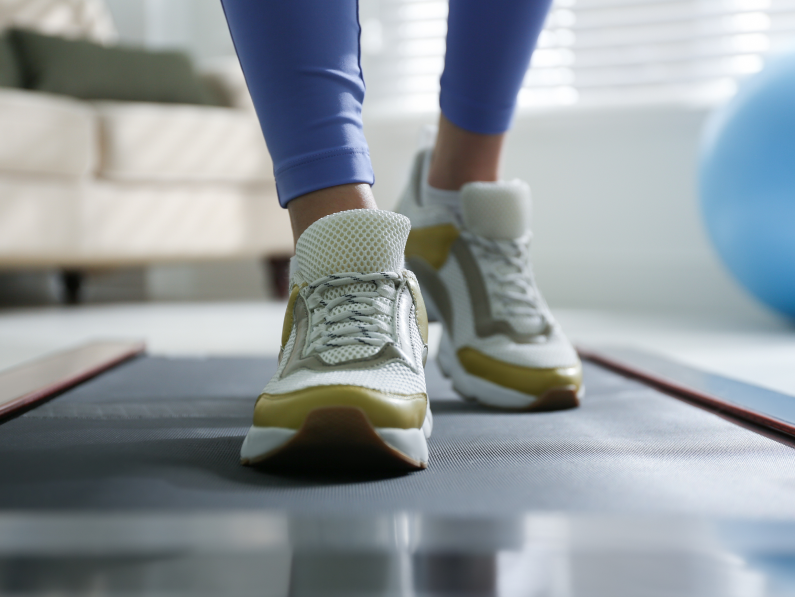
Footwear is non-negotiable. Walking barefoot or in socks on a moving belt causes plantar fasciitis and blistering within a week. Wear a pair of dedicated indoor running shoes with good arch support that never touch dirty outdoor pavement.
Set Up Your Daily Step Routine
Don't start with a three-hour marathon on day one. Your calves and lower back will revolt.
Begin with two 20-minute sessions per day during your easiest tasks. Gradually add ten minutes to each session every few days as your posture adapts.
Keep your desk height adjusted properly. When standing on the pad, your elbows should still rest at a 90-degree angle on the desk surface. Remember that the pad raises your standing height by three to five inches, so ensure your standing desk elevates high enough to match.
Check the belt tension weekly. Use the included Allen wrench to tighten the rear rollers if you feel any slipping during your stride, and apply silicone lubricant under the belt every 40 to 50 hours of use to keep friction low and prevent motor burn-out.