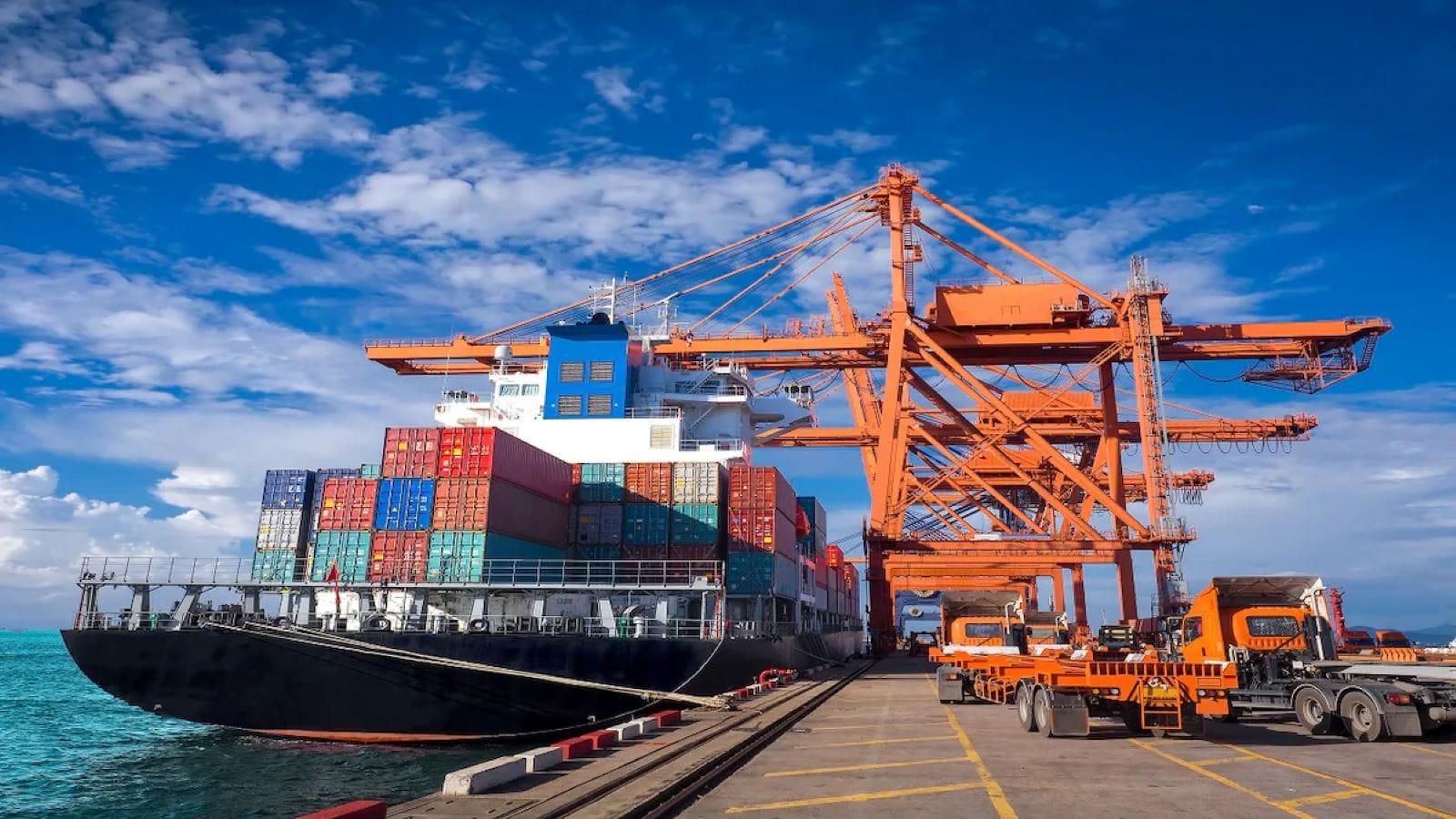
Mega-scale fossil fuel extraction in high-latitude environments represents a masterclass in capital allocation under severe geopolitical constraints. The initiation of crude shipments from Rosneft's Vostok Oil enterprise via the Bukhta Sever terminal on the Taimyr Peninsula marks a transition from speculative state planning to physical execution. Valued at approximately 157 billion dollars in baseline capital allocations, the venture consolidates over seven billion tonnes of low-sulfur oil deposits across the Vankor cluster, Payakhskoye, and West-Irkinsky sites. Deconstructing this asset requires analyzing three distinct variables: reservoir chemistry, logistical architecture through the Northern Sea Route, and the structural substitution of Western technology matrices with indigenous or alternative procurement channels.
The Chemistry of Taimyr Crude and Reservoir Economics
Extraction efficiency in Arctic basins depends heavily on fluid characteristics. The resource base of Vostok Oil consists of low-sulfur crude, with sulfur concentrations measuring between 0.01 percent and 0.1 percent. This chemical composition places the yield at the high end of the global merit order for sweet crudes, commanding a natural refining premium because it minimizes desulfurization capital expenditures at destination refineries.
The structural depletion profile of Russia's legacy Western Siberian fields necessitates this development. Mature assets in Tyumen are facing natural decline curves that threaten total export volumes. Vostok Oil is engineered to offset these volume losses by introducing up to 30 million tonnes annually by the second half of 2027, scaling toward 50 million tonnes per year by 2030, with theoretical capacity ceilings reaching 100 million tonnes if global market demand and pricing structures justify the capital expenditure. At 50 million tonnes annually, the output equates to roughly one million barrels per day, absorbing approximately ten percent of Russia's contemporary aggregate production capacity.
Subsurface operations rely on heavy drilling infrastructure. Reports indicate that over 2,000 wells have been driven utilizing domestic top-drive drilling assemblies designed to execute bores up to 6,000 meters in depth. The total lifecycle operating cost projections, historically estimated well north of 170 billion dollars, underscore the intense capital intensity of continuous permafrost stabilization, thermal insulation of wellbores, and sub-surface pressure maintenance.
The Logistical Architecture of the Northern Sea Route
Moving hydrocarbons from the Yenisey Gulf to international consumer markets forces a complete rerouting of traditional maritime vectors. Historically, Russian maritime crude flowed westward via pipeline networks like Druzhba or through Baltic and Black Sea ports to European OECD economies. Comprehensive sanctions and the subsequent divestment of Western trading partners—such as the exit of Trafigura and Vitol from the equity structure—forced a pivot toward maritime transit via the Northern Sea Route.
The physical export mechanism hinges on specialized ice-class vessels. The initial cargo loading onto the Arc7 ice-class tanker Valentin Pikul at Bukhta Sever highlights the operational dependency on high-specification polar shipping assets. Operating year-round or through extended seasonal windows in Arctic ice requires continuous icebreaker escort fleets and vessels with reinforced hulls capable of navigating multi-year ice ridges.
This creates a geographical arbitrage model oriented toward Asia-Pacific buyers, primarily India and China, while retaining the optionality for western maritime corridors depending on spot freight differentials. However, the shipping economics are bounded by distinct bottlenecks:
- The finite availability of Arc7 and higher ice-class tankers globally, compounded by shipyards under sanctions constraints.
- High insurance and chartering premiums driven by the perceived risk profile of Arctic maritime transit.
- Seasonal weather volatility that introduces variance into transit times, disrupting precise refinery feedstock scheduling.
Sanctions Substitution and Capital Sourcing
The financing and procurement mechanics of Vostok Oil shifted fundamentally following the 2022 geopolitical realignment. The withdrawal of international energy majors and commodity traders eliminated Western debt financing syndicates and proprietary subsea engineering inputs.
To bypass these restrictions, the project execution model relies on state-directed credit lines, domestic banking syndicates, and internal cash flows from operating legacy assets. On the technological front, the substitution of restricted European and American oilfield services with domestic or alternative Asian manufacturing has altered the cost baseline. While state assertions highlight self-sufficiency in drilling systems, the long-term total factor productivity of indigenous hardware operating under extreme sub-zero conditions remains an unquantified variable in the asset's net present value calculation.
The internal rate of return for Vostok Oil is acutely sensitive to global crude price benchmarks (Urals and Brent differentials) and the cost of capital. Because the capital expenditure is front-loaded over a multi-decade development horizon, cash flow generation in the early 2030s must outpace the compounding cost of debt incurred during the initial phase of terminal and pipeline construction.
Strategic Execution Vector
To monetize these reserves without triggering acute balance-of-payments or logistical friction, operators must prioritize the expansion of the dedicated ice-class tanker fleet over aggressive upstream drilling acceleration. Pushing production volume targets toward the 100 million tonne ceiling without corresponding maritime evacuation capacity creates an inventory trap in remote storage terminals. Capital allocation should be strictly gated by the delivery schedule of polar maritime assets, ensuring that upstream extraction velocity never outpaces the throughput capacity of the Northern Sea Route.