When a 19th-century city hall in Limoges burns down and thousands of shops get looted in a single weekend, you know this isn't just another routine French street march. The violent protests in France that erupted around October 17, 2026, pushed an already strained country to a breaking point. Thousands of people took to the streets over soaring living costs, expensive fuel, strained public services, and frustration in schools. Then the unrest spiraled.
Let's be honest about what actually happened. Peaceful demonstrators and union marchers turned out in huge numbers, with the Interior Ministry putting national turnout around 550,000 and the CGT labor union estimating 800,000 across roughly 110 marches. Yet alongside those crowds, small violent factions, black-clad agitators, and opportunistic looters turned streets around Paris's Place de la République and Boulevard Magenta into chaos, while buildings burned in Limoges and public offices faced attacks in Marseille and Lyon. Prime Minister Sébastien Lecornu reported 1,200 arrests and 150 injured police officers and gendarmes, even as other tallies and subsequent weekend flare-ups pushed arrest counts even higher.
Most surface-level news recaps treat this like a sudden explosion out of nowhere. It wasn't. If you've watched French social movements closely over the past decade, the warning signs were blinking red for months.
How Violent Protests in France Escalated on October 17
October 17 didn't start as a riot. For weeks across September and October, students had been blockading schools, workers had been voicing anger over wages and prices, and rumors on social media had been fanning memories of the Yellow Vest era. When marches hit cities like Paris, Marseille, Lyon, Lille, and Bordeaux on Saturday, October 17, huge stretches of the day began as ordinary protests.
Things unraveled fast once evening set in. In Limoges, fire tore through the city's historic town hall, collapsing its roof and bell tower while municipal police took cover inside before escaping unharmed. Regional prefect Maurice Barate noted that roughly two-thirds of the building's exterior was lost—a brutal blow to local civic heritage. In Marseille, protesters rammed the town hall entrance with street barriers, vandalized the inside, set rubbish bins ablaze, and damaged a municipal police station. In Lyon, the tourist office was set on fire.
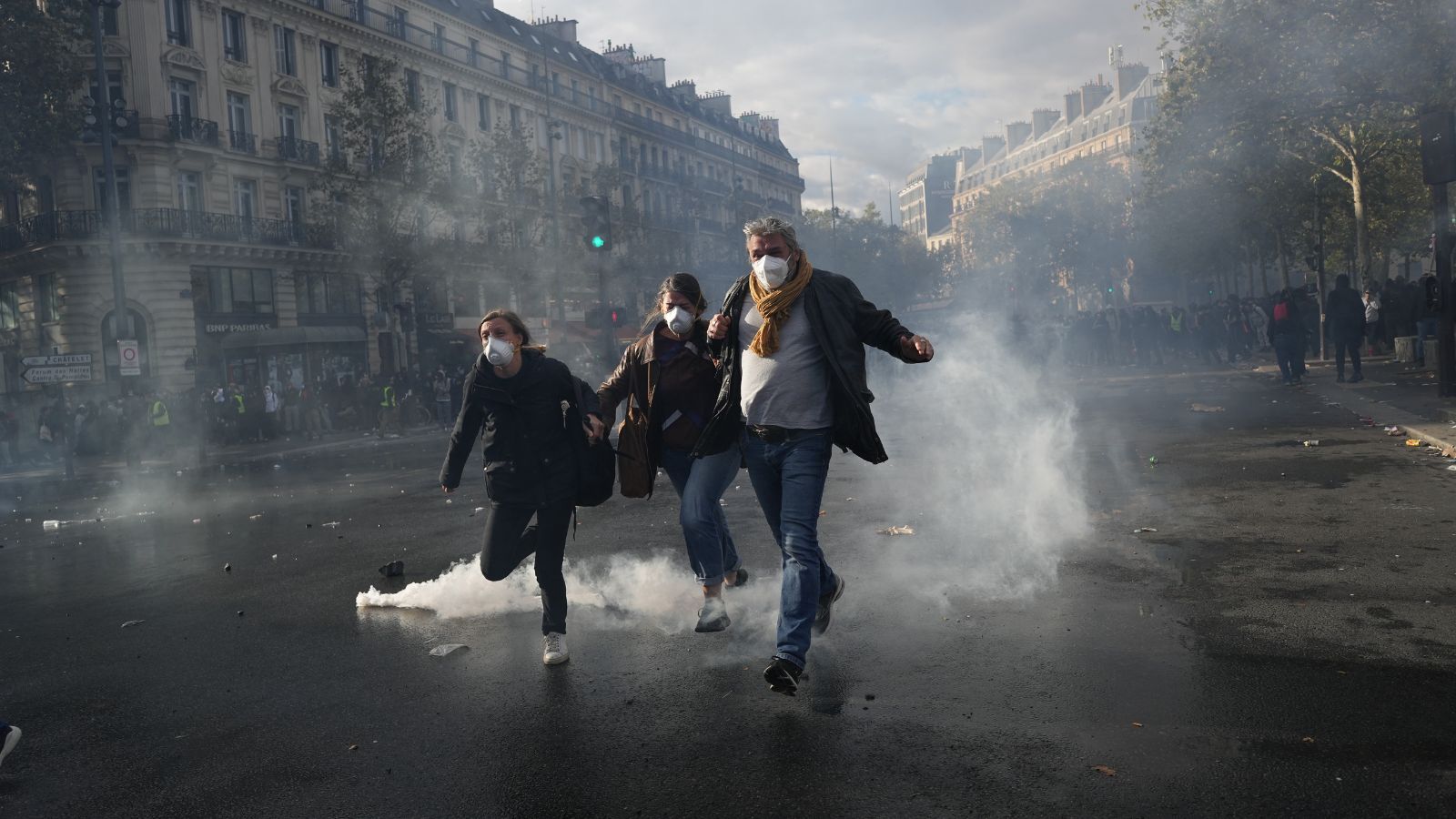
Paris saw some of the sharpest street clashes. Masked groups hurled fireworks, bottles, and paving stones at police, who fired tear gas that drifted up to apartment windows. A burning lorry sent flames toward a nearby structure, Métro stations near sensitive zones like the Champs-Élysées and government buildings shut down on police advice, and crowds broke into banks, boutiques, a mobile phone shop, and a Lacoste store while attempting to breach Galeries Lafayette. Across the country, reports pointed to around 1,500 severely damaged shops, roughly 3,000 looted businesses, more than 1,500 vehicle and street-equipment fires, and damage to around 60 buildings.
What Sparked the Anger Behind the Headlines
You can't separate street violence from kitchen-table math. Families in France have been squeezed by high everyday expenses, fuel costs, and pressure on public services like schools and healthcare. When paychecks feel stretched thin and local services feel harder to reach, frustration builds pressure like steam in a sealed pot.
Still, economic pain alone doesn't explain why a town hall burns or why a sportswear shop gets ransacked. In real-world protest dynamics, three distinct groups often overlap in the same city center:
- Everyday protesters and union members marching to demand better wages, cheaper essentials, and stronger public schools.
- Hardcore agitators and black-bloc elements looking to confront security forces and attack symbols of state authority.
- Opportunistic looters who show up when police are stretched thin and turn street disorder into retail theft.
Confusing all three into one monolithic mob is a mistake that distorts both reporting and policy.
What Most Coverage Misses About the Unrest
Here's the part that gets flattened in fast wire summaries: the clash isn't just protesters versus police. It's a three-way squeeze involving political polarization, policing strain, and viral misinformation.
French officials—including Interior Minister Laurent Nuñez and Prime Minister Lecornu—pointed the finger at far-left agitators and criminal opportunists for sparking attacks on buildings and officers. President Emmanuel Macron defended the right to peaceful protest while warning that violence and property destruction wouldn't be tolerated. Meanwhile, opposition figures traded sharp blows: Marine Le Pen accused left-wing leaders of legitimizing disorder, while France Unbowed leader Jean-Luc Mélenchon backed student demonstrations while calling looting contrary to his movement's methods, and Green leader Marine Tondelier argued the government had misread the social mood.
At the same time, policing itself became a flashpoint. Police unions warned that officers were pushed to breaking point, reporting over 150 injured security personnel in the October 17 wave (with broader tallies citing even higher emergency responder injuries across wider unrest). On the flip side, rights advocates and news reports raised alarms over heavy crowd-control tactics, a teenager losing a hand after picking up a stun grenade, and watchdog investigations into allegations of police violence.
And then came the digital fuel. As documented in coverage from outlets like The Guardian and Reuters via The Japan Times, social media rumors—including false claims about deaths or plots to burn universities—sped up panic and pushed unrest beyond France's borders into cities in Belgium and Italy. That spillover shows why European governments watch French street politics so closely: when cost-of-living anger meets viral posts, sparks jump borders fast.
Why Arrest Numbers and Damage Totals Vary
If you see one report say 1,200 arrests and another mention higher figures or slightly different shop counts, don't assume someone is making numbers up. In fast-moving civil unrest, tallies shift for practical reasons:
- Timing of updates: Early snapshots capture daytime or evening detentions, while later briefings fold in overnight sweeps across multiple jurisdictions.
- Scope of the window: Some counts focus strictly on the October 17 weekend, while broader coverage tracks rolling strikes, school blockades, and follow-up clashes through late October and early November.
- Preliminary vs. audited estimates: Insurance claims, municipal assessments, and police logs take days or weeks to reconcile after hundreds of separate incidents.
Acknowledging that uncertainty makes your reading sharper. In big urban disturbances, early numbers are directional snapshots, not final ledgers.
Practical Ways to Follow and Verify Unrest Coverage
If you're tracking this story—or trying to make sense of dramatic clips popping up in your feed—a few simple habits save you from falling for rage-bait:
- Check timestamps and locations first: Old riot footage from past years or other cities routinely gets recycled during big French protest weekends. Always check the date, city, and landmark.
- Separate peaceful marchers from street vandals: Look for reporting that distinguishes union or student marches from night-time looting and arson.
- Cross-check numbers across wire and major outlets: Compare official government statements, union estimates, and independent reporting rather than trusting a single viral post.
- Watch local civic and economic impacts: Beyond dramatic headlines, pay attention to school closures, transit disruptions, small-business recovery, and court proceedings, which tell you how deeply the shockwave actually hit.
When streets burn in a major European democracy, the real story isn't just the fire—it's what pushed ordinary people into the street in the first place and why the state struggled to keep the lid on.