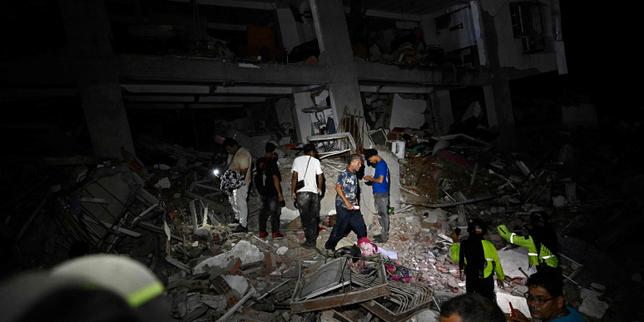
Venezuela just experienced its worst natural disaster in over a century, and the terrifying part is how fast it happened. On June 24, 2026, at 6:04 PM local time, the ground beneath the state of Yaracuy violently shifted. It wasn't just one massive shock. It was a brutal one-two punch that scientists call a doublet earthquake—two major ruptures hitting back-to-back, leaving absolutely no time for people to escape.
The first shock registered a massive magnitude 7.2. Then, exactly 39 seconds later, a second, even larger magnitude 7.5 earthquake tore through the exact same region. If you found value in this post, you should read: this related article.
You can't overstate how rare and destructive this is. When the first quake hits, people naturally seek shelter or run into the streets. But while they were standing outside watching buildings sway, the second, more powerful tremor struck. The United States Geological Survey (USGS) confirmed this double disaster is the single most violent seismic event to strike Venezuela since 1900, when a magnitude 7.7 quake devastated Caracas.
The initial numbers are grim, but the real story is much worse. Acting President Delcy Rodríguez declared a national state of emergency, reporting a preliminary count of 164 dead and over 1,000 injured. However, local rescue trackers show more than 14,000 people are still unaccounted for, buried under pulverized concrete in coastal towns and dense urban barrios. For another angle on this event, refer to the recent update from USA Today.
The Epicenter and Why the Damage is So Severe
The dual epicenters were located in the Veroes municipality of Yaracuy State, roughly 120 kilometers west of Caracas. Geologists point out that both shocks occurred along a complex strike-slip fault system where the Caribbean and South American tectonic plates grind past each other. The fault ruptured along a massive 150-by-20-kilometer zone.
Because the shaking was shallow—the second quake struck at a depth of just 10 kilometers—the energy delivered to the surface was pure violence. The Modified Mercalli Intensity scale reached IX (Violent). The energy wave was so intense that it triggered high-rise evacuations as far away as Manaus, Brazil, and Bogotá, Colombia.
While Yaracuy took the direct hit, the actual catastrophe concentrated heavily in the coastal strip of La Guaira and the northern municipalities of Caracas.
Chaos in Caracas and the Destruction of La Guaira
If you look at how modern Caracas is built, it's a recipe for seismic vulnerability. High-end areas feature concrete high-rises, while the surrounding hillsides are packed with informal brick homes. Both architectural styles failed miserably.
In eastern Caracas, the wealthy municipalities of Chacao, Altamira, and Los Palos Grandes became instant combat zones. Interior Minister Diosdado Cabello confirmed that multiple high-rise buildings completely pancaked. In Altamira, a 22-story residential tower collapsed into a pile of dust in seconds.
Down on the coast, the situation in La Guaira is a total humanitarian disaster. The region is practically cut off from the rest of the country. Rows of apartment complexes in Catia la Mar simply slipped off their foundations.
To make matters worse, the infrastructure failed instantly.
- Simón Bolívar International Airport in Maiquetía suffered massive structural damage, shattering its main terminal and forcing an immediate closure of all airspace.
- The Caracas Metro and all suburban train networks are completely dark and non-operational due to power grid failures.
- Telecommunications went completely dead across north-central Venezuela within ten minutes of the second shock, leaving millions unable to call for help.
In the dark, local residents have been forced to use flashlight apps on their phones to dig through heavy rubble by hand, screaming out names of missing family members.
A History of Unpreparedness
This isn't Venezuela's first brush with tectonic fury, but the country was completely caught off guard. Experts have warned for decades that the building codes in north-central Venezuela aren't strictly enforced. Most structures built during the oil booms of the late 20th century were never retrofitted for a magnitude 7.5 event.
Compare this to the 1900 Caracas earthquake. That disaster killed 21 people and ruined colonial churches. But today, the population density of greater Caracas is over five million. When a 22-story building falls in 2026, the human cost skyrockets exponentially.
Furthermore, over 30 aftershocks have rattled the country since the main event, with the largest hitting a magnitude 4.5. The Venezuelan Geological Society warned that these continuous tremors are actively bringing down buildings that were only partially damaged by the initial double shock.
Immediate Survival and Response Protocols
If you have family in Venezuela or find yourself in an active fault zone after an initial shock, you need to understand that the standard rules have changed. The Yaracuy doublet proves you cannot assume the danger is over after the first round of shaking stops.
First, do not re-enter any building that shows visible cracks, even minor ones. The structure's internal integrity might be completely compromised, and an aftershock can easily trigger a total collapse.
Second, utilize the national emergency apps and alternative communication channels if cellular networks are down. The government has urged citizens to map out missing persons using specific web-based tracking platforms whenever satellite or localized Wi-Fi becomes available.
International aid is slowly mobilizing. The Colombian Red Cross has set up crisis centers along the border and is preparing search and rescue teams for deployment. The European Union activated its satellite monitoring system to map out the worst-hit zones, and US rescue teams are organizing emergency transport.
For now, the focus is entirely on the first 72 hours of search and rescue. The acting government has suspended all non-essential business and educational activities across the nation. Every single medical professional has been ordered to report to emergency triage stations immediately. Reconstruction isn't even on the radar yet. The immediate priority is simply pulling survivors out of the rubble before the next major aftershock hits.