The confirmation of the first human case of West Nile virus (WNV) of the 2026 season in Los Angeles County is not a random ecological event. It is the predictable output of a complex bio-meteorological system. When public health officials announced that an Antelope Valley resident had been hospitalized with West Nile virus encephalitis, they documented the visible spike of an otherwise submerged transmission cycle.
To understand the trajectory of WNV in urban and semi-rural ecosystems, we must move past basic public health advisories and analyze the structural drivers of transmission. The interaction between temperature thresholds, vector replication rates, and human demographic vulnerability dictates the actual risk profile of a region.
The Three Pillars of Vector Transmission
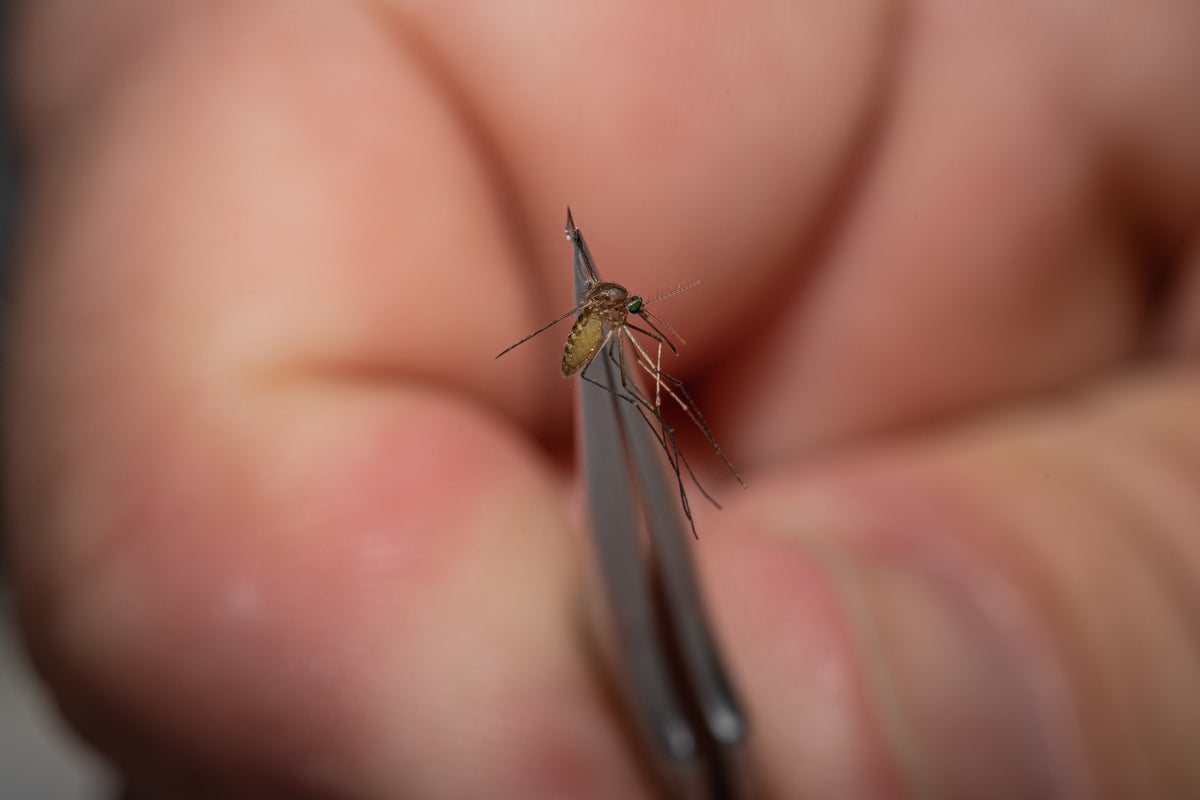
The proliferation of West Nile virus relies on a highly sensitive enzootic cycle. The virus is maintained in nature through a transmission loop between Culex mosquitoes (primarily Culex tarsalis and Culex quinquefasciatus in Southern California) and passerine birds. Humans and other mammals function strictly as incidental "dead-end" hosts because they do not develop high enough viral titers in their blood to reinfect feeding mosquitoes.
The efficiency of this cycle is governed by three primary variables:
[Vector Abundance] x [Extrinsic Incubation Period] x [Host Susceptibility] = Epidemic Risk
1. Vector Abundance and Microclimate Dynamics
Culex mosquitoes require stagnant, organic-rich water to complete their larval development. In Southern California, the primary sources of vector breeding are not natural wetlands, but human-managed infrastructure: unmaintained swimming pools, neglected ornamental ponds, clogged storm drains, and municipal catch basins.
High ambient temperatures accelerate the mosquito life cycle, compressing the transition from egg to biting adult from several weeks to less than seven days.
2. The Extrinsic Incubation Period (EIP)
The EIP is the time required for the virus to replicate within the mosquito, migrate from the gut to the salivary glands, and become transmissible to the next host. This biological process is highly thermodynamic.
Under cooler conditions (below 18°C), the EIP can exceed the life expectancy of the vector, rendering the mosquito harmless. However, when sustained temperatures exceed 30°C, the EIP drops to fewer than five days, drastically increasing the percentage of the vector population that becomes infectious before dying.
3. Host Amplification and Avian Mortality
Before a human outbreak occurs, the virus undergoes rapid amplification within the local wild bird population. Passerine species, such as crows, jays, and ravens, are highly susceptible to the virus and exhibit high mortality rates.
A sudden increase in dead bird reports within a specific ZIP code serves as a highly reliable leading indicator of human transmission. This represents a critical ecological tipping point where the viral load in the vector population has surpassed the threshold of local avian hosts and is spilling over into human populations.
The Severity Spectrum: Clinical Realities
Most public communication emphasizes that "80% of infections are asymptomatic." While statistically accurate, this framing obscures the severe economic and clinical burden imposed by the remaining 20% of cases. The clinical manifestation of WNV is best understood through a strict tiered hierarchy of severity.
| Clinical Classification | Population Percentage | Diagnostic Markers & Symptoms | Primary Risk Demographics |
|---|---|---|---|
| Asymptomatic Clearance | ~80% | High neutralizing antibody titer; no clinical symptoms. | Broad population; robust immune profiles. |
| West Nile Fever (WNF) | ~20% | Acute onset of fever, headache, myalgia, arthralgia, gastrointestinal distress, and maculopapular rash. | Adults of all ages. Systemic fatigue can persist for months. |
| Neuroinvasive Disease (WNND) | <1% (~1 in 150) | Encephalitis, aseptic meningitis, or acute flaccid paralysis. Assessed via cerebrospinal fluid (CSF) IgM antibodies. | Adults over 55; individuals with compromised immune systems or diabetes. |
The patient from the Antelope Valley developed West Nile virus encephalitis, placing them in the rarest and most dangerous tier of infection. The neurological damage caused by encephalitis is frequently irreversible.
When the virus breaches the blood-brain barrier, it targets neurons in the basal ganglia, brainstem, and anterior horn of the spinal cord. This cellular destruction manifests as profound motor weakness, cognitive deficits, and, in severe cases, respiratory failure requiring mechanical ventilation.
Vector Control Interventions and Systemic Limitations
Because there is currently no approved vaccine or specific antiviral treatment for human West Nile virus infection, public health agencies must rely entirely on vector suppression. Modern vector control is a data-driven science, but it operates under severe operational constraints.
The municipal strategy employs a two-pronged intervention model:
Larval Suppression (Larviciding)
This is the most targeted and ecologically responsible intervention. Vector control districts apply biological larvicides—such as Bacillus thuringiensis israelensis (Bti) or insect growth regulators—directly to stagnant water sources.
While highly effective, larviciding is labor-intensive and relies on comprehensive mapping of potential breeding sites. "Green" (neglected) swimming pools in foreclosed or unoccupied properties present a persistent blind spot for municipal inspection teams.
Adult Vector Suppression (Adulticiding)
When surveillance traps indicate a high minimum infection rate (MIR) in adult mosquitoes, districts deploy ultra-low-volume (ULV) applications of pyrethroids or organophosphates. This intervention targets adult mosquitoes mid-flight.
However, adulticiding is a reactive measure rather than a preventative one. It is highly dependent on wind speed, temperature, and thermal inversion layers, and can trigger public opposition due to concerns over non-target insect populations.
The primary limitation of this infrastructure is the structural delay in the feedback loop. A mosquito pool is trapped, sent to a laboratory, and tested via reverse transcription-polymerase chain reaction (RT-PCR). By the time a positive pool is identified and treated, the local vector population has already completed multiple reproductive cycles, leaving a perpetual gap between detection and intervention.
Strategic Playbook for Individual Mitigation
Given the systemic limitations of municipal vector control, individual risk mitigation must be treated as a rigorous, physical barrier strategy. The objective is to disrupt the interface between the vector and the host during peak feeding hours (dawn and dusk).
- Chemical Barrier Optimization: Only four active ingredients have been rigorously proven to provide sustained protection against Culex bites: DEET, Picaridin, IR3535, and Oil of Lemon Eucalyptus (OLE). Applications must be treated as physical coatings with specific reapplication intervals based on concentration.
- Structural Auditing: Property owners must systematically eliminate micro-reservoirs. Any container holding as little as a tablespoon of water for more than five days can produce hundreds of adult mosquitoes. Particular attention must be paid to rain gutters, saucers under potted plants, and pet bowls.
- Mechanical Exclusion: Ensure that window and door screens are fitted with a mesh size small enough to exclude Culex species (typically 16 to 18 mesh per inch) and inspect for any structural degradation along the frame seals.
The baseline viral activity for the 2026 season has officially moved from environmental detection to human infection. As summer temperatures continue to compress the extrinsic incubation period of the virus, localized human transmission rates will scale unless matched by aggressive, targeted larval source reduction and strict personal adherence to chemical barrier protocols.