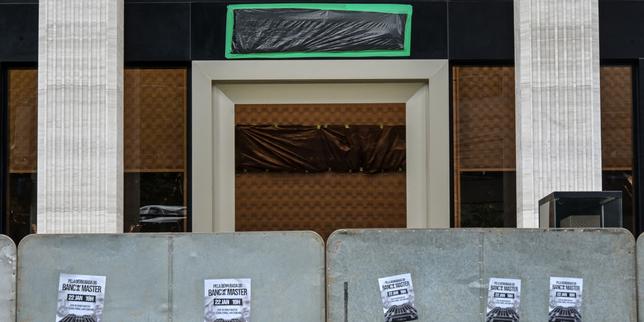
Glass shatters quietly in the damp warmth of a Brasília evening. Not the dramatic crash of a storefront window during a riot, but the subtle, administrative fracture of trust inside a marble-columned office where decisions are signed in blue ink and stamped with the heavy authority of the state.
Money has a voice. Most days, it is a monotonous hum—the steady clicking of wire transfers, the automated clearinghouse sweeps, the dull calculation of quarterly returns. But sometimes, the hum stops. A ledger reveals a tear. A signature looks unfamiliar. And suddenly, the room goes cold.
We are watching that cold front roll across Brazil right now.
To understand what is happening at the center of the Master Bank scandal, you have to forget the balance sheets for a moment. Forget the dry jargon of liquidity ratios, regulatory oversight, and forensic accounting. Those are just the footprints. We need to look at the footprints in the mud and ask who was running.
Imagine walking into a small regional bank in Minas Gerais a few years ago. The walls are paneled in dark wood that smells faintly of lemon oil. The loan officer smiles, leaning forward with the conspiratorial warmth of an old friend. He tells you about a yield that sounds too good to be true because, in any rational universe, it is. He calls it an investment opportunity. He frames it as a ticket to security for your children, a hedge against the relentless erosion of the real.
You sign. Millions of others sign, too—pension funds, institutional investors, everyday citizens looking for a safe harbor in a volatile economic sea.
Now fast forward to the present. The wood paneling is gone. The friendly officer is a subject in a dossier. And the word Master—once stamped on certificates of deposit promising effortless growth—has become a lightning rod in the nation's capital.
When a financial institution of this scale stumbles, the shockwaves do not stay contained within the banking sector. They ripple outward, splashing against the foundations of political power. This is where the story shifts from a simple corporate failure to something much older and much darker: the race to control the narrative.
In the hallways of the National Congress, anxiety wears tailored suits. Lawmakers know that money is the lifeblood of political survival, and when a major financial scandal breaks, everyone starts checking their shoes for stains. Who knew what? When did they know it? Which campaigns were touched by funds that originated in questionable vaults?
The fear of political instrumentalization is palpable. It is the dread that a legitimate crisis of governance and corporate integrity will be flattened into a partisan weapon—a cudgel used to bash opponents ahead of election cycles rather than a scalpel used to excise corruption.
When you turn a tragedy or a scandal into a political game, truth becomes the first casualty. Nuance dies in the crossfire of cable news talking points. One side paints the entire affair as an unprecedented conspiracy born in the previous administration, while the other dismisses it as a witch hunt engineered to discredit rising political stars.
Meanwhile, the actual victims—the depositors whose life savings are locked behind administrative red tape, the taxpayers whose confidence is shaken—are relegated to the background. They become statistical props in a drama directed by people who never had to worry about making rent.
History teaches us a predictable rhythm. Financial panics in Latin America have a distinct theatricality. First comes the revelation. A journalist gets a leaked document or a disgruntled auditor speaks to a federal prosecutor. Then comes the denial—flat, confident, and issued late on a Friday afternoon. Next is the scramble, as political allies distance themselves like guests at a dinner party when a plate drops on the floor.
Yet, beneath the political theater lies a structural vulnerability that transcends any single bank or administration. Brazil’s financial architecture is sophisticated, monitored by vigilant watchdogs at the Central Bank and federal police agencies. But sophistication is not immunity.
Consider how easily modern financial systems can be weaponized. When capital flows across borders and through complex layers of shell companies and high-yield vehicles, it leaves a trail that requires specialized expertise to untangle. Investigators speak of forensic accounting as if it were a science, but most days it feels more like archaeology. You are brushing away decades of institutional dust, layer by layer, hoping the bone you uncover belongs to the creature you are hunting.
As the Master Bank case winds its way through federal courts and congressional committees, the temptation to score cheap points will be overwhelming. Every speech on the floor of the Senate will be calculated for maximum television exposure. Every subpoena will be framed as a moral crusade.
We must resist the urge to cheer for the spectacle.
If the scandal is merely used to score points in the endless tournament of Brazilian politics, the underlying rot remains untouched. The loopholes that allowed questionable risk management to masquerade as genius will stay wide open. The next bank will rise on the same unstable ground, wearing a different name, promising the same impossible returns.
True accountability is quiet. It doesn't happen in front of rolling cameras or during heated floor debates. It happens in the unglamorous hours of document review, in the quiet determination of judges who refuse to be swayed by the political winds, and in the refusal of citizens to accept easy answers to hard questions.
The vault is open now. The contents are spilling out into the harsh light of day. What we choose to do with what we find inside will determine whether this moment is remembered as a reckoning or merely another act in a very old, very tired play.


