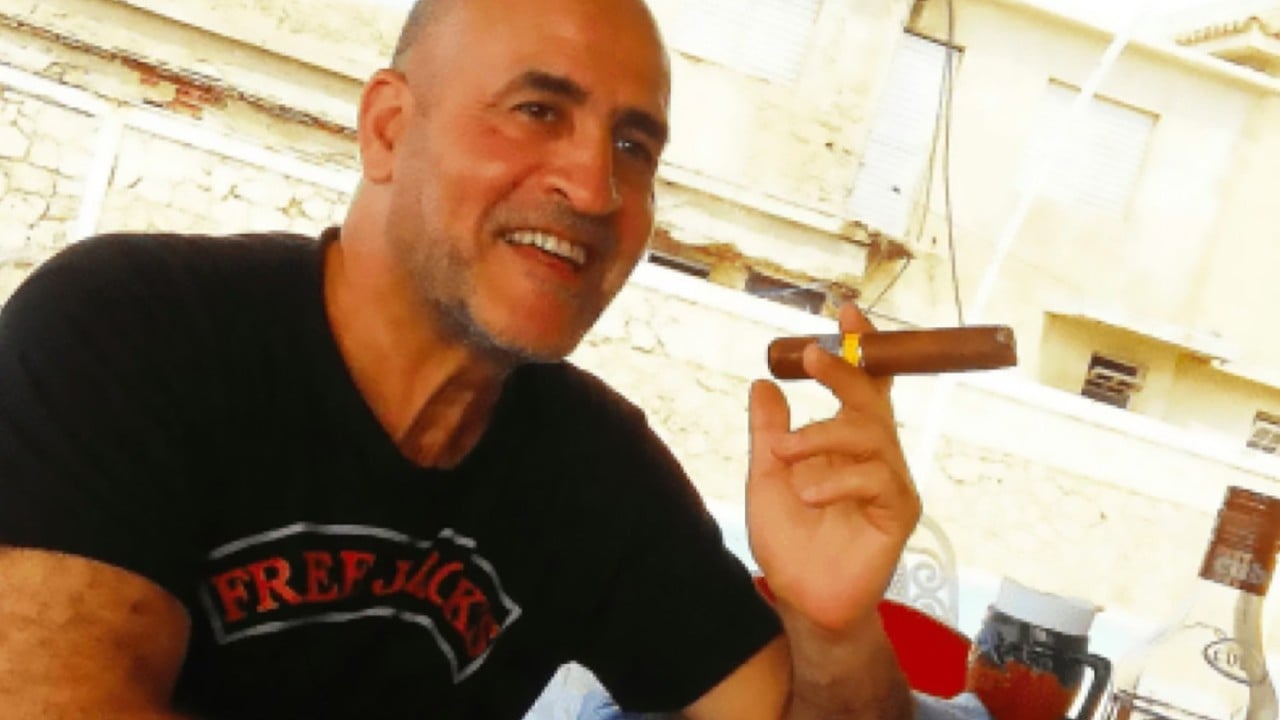
In the quiet suburb of Colombes, just northwest of Paris, a house went silent on a Monday evening. Inside, lying on his kitchen floor, was 69-year-old Daniel Siad. Before the paramedics arrived, before the Nanterre prosecutor’s office officially opened its investigation, and before his name flashed across global headlines, Siad was an answer to a question that may now never be fully answered.
His heart gave out. At least, that is what his lawyer told the press. But to the dozens of women who had spent years fighting to bring him into a courtroom, the news felt less like a medical event and more like a door slamming shut in a dark room.
Siad was not a household name. He didn't own private islands or fly world leaders on luxury jets. He was a scout. A talent spotter. A man who walked through the boulevards of Paris, the quiet villages of Slovakia, and the streets of Stockholm, looking for young women with dreams big enough to blind them to danger.
His job, on paper, was to find models. In reality, according to declassified U.S. Department of Justice documents, he was a key cog in the machinery that fed Jeffrey Epstein.
Consider how the trap was set. A 21-year-old model—let’s call her the archetype of every young woman who ever trusted a well-dressed recruiter—is approached on a Parisian avenue. The scout promises opportunity. He offers a flight to New York, an audition on Madison Avenue. It feels like a breakthrough.
Then comes the quiet taking of hostages.
Upon arrival, her passport is held for "safekeeping". She is handed cash for shopping she didn't ask for, instantly creating an unpayable moral debt. Step by step, the boundary lines are moved until she finds herself in a private room, told that exposing herself is simply part of a standard evaluation. It isn't a sudden attack; it is a calculated erosion of autonomy.
Siad’s name appeared nearly 2,000 times in the declassified Epstein records. In those emails, human beings were discussed with the clinical detachment of inventory. He compared his work to fishing. "In this business I feel like fisherman," he wrote in broken English. "Some time I catch quick, some time no fish."
When Epstein asked if there was anything worth coming to Paris for, Siad was there with promises of "amazing beauty" waiting in Barcelona or young women sourced from small Eastern European villages.
Until his final breath, Siad denied every charge. He claimed his relationship with Epstein was strictly professional, that he was merely an innocent intermediary caught in a storm he didn't understand. He wanted his day in court, his lawyer insisted, to clear his name.
He never got that day. Investigators had monitored his calls and mounted surveillance, but they hadn't yet formally questioned him when his heart stopped.
This is where the story ceases to be about one man in a Parisian suburb and becomes a haunting pattern.
Siad is not the first crucial node in this network to die before facing a jury. In 2022, French modeling agent Jean-Luc Brunel—the man who once ran major agencies and served as another primary pipeline for Epstein—was found dead in his Paris prison cell while awaiting trial. Before him, Epstein himself died in a Manhattan jail cell in 2019.
The men who built the web keep dying. The accountability keep evaporating.
For the survivors, justice in these cases was never just about punishment. It was about validation. It was about standing in a court of law, pointing at the person who shattered their youth, and hearing a judge confirm that what happened was real, illegal, and wrong.
When a key figure dies before testifying, the legal process halts. The files remain locked in administrative limbo. The names of high-profile enablers stay redacted or unindicted. The victims are left with their memories, while the full truth remains buried under an accumulating stack of death certificates.
In the aftermath of Siad's death, French prosecutors insisted the broader investigation into trafficking networks would continue. Ten investigators remain assigned to the case. Dozens of women have come forward to provide testimony. The paper trail left behind in thousands of emails still exists.
Yet, an overwhelming sense of frustration lingers. As former model Ebba Karlsson noted after learning of Siad's passing, working for years toward justice only to have the suspect vanish on the eve of arrest is a bitter end.
The physical evidence may remain, but the living links are breaking, one by one, leaving a growing graveyard of unanswered questions.