The foreign policy establishment is hyperventilating again.
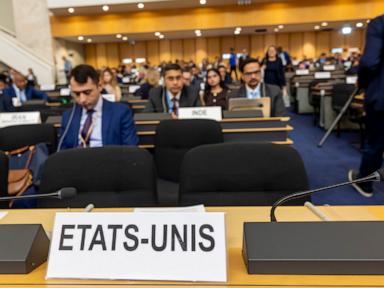
Scan the headlines following the news that the United States is poised to become the first nation to fully shun a Universal Periodic Review (UPR) at the United Nations Human Rights Council (UNHRC). The consensus among the Geneva diplomatic corps, legacy editorial boards, and transnational NGOs is predictable, uniform, and deeply lazy. They call it an abdication of moral leadership. They call it a gift to Beijing and Moscow. They claim that by walking away from the table, Washington is destroying the very rules-based international order it spent eighty years building.
They are looking at the theater and mistaking it for the architecture.
Having spent years dissecting multilateral treaty mechanisms and watching how sovereign states weaponize procedural rules in Geneva, I can tell you what the mainstream coverage completely misses. The UPR was never an objective courtroom where nations are judged against universal standards of justice. It is a political clearinghouse where the world’s worst human rights abusers launder their reputations by trading soft-ball praise with their allies, while democracies submit to performative self-flagellation.
Refusing to participate in a broken ritual is not a retreat from human rights. It is the first honest acknowledgment in two decades that the Emperor has no clothes.
The Myth of Universal Accountability
To understand why the competitor narrative fails, you have to understand what the Universal Periodic Review actually is—and what it is not.
Established in 2006 when the UN General Assembly replaced the discredited Commission on Human Rights with the current Human Rights Council, the UPR was sold as the ultimate equalizer. Unlike treaty bodies—such as the Human Rights Committee, which monitors compliance with the International Covenant on Civil and Political Rights through independent legal experts—the UPR is strictly a peer-review mechanism.
Read those three words again. Peer review.
In Geneva, your "peers" are not impartial jurists from The Hague. They are the diplomatic delegations of every other UN member state. When a country undergoes its UPR, any UN member can take the floor for 45 to 90 seconds to offer comments and "recommendations."
Here is how that works in practice. When China, Iran, or Venezuela sits in the hot seat, dozens of allied states—from Cuba and North Korea to Belarus and Eritrea—line up hours in advance to secure speaking slots. They burn the clock praising the host nation's "tremendous strides in poverty alleviation" and "commitment to social harmony," offering vacuous recommendations like "continue efforts to promote economic development." By the time genuine democracies get a turn to speak, their allotted time is sliced down to a breathless 40 seconds to mention concentration camps in Xinjiang or political prisoners in Caracas.
Conversely, when the United States takes the floor, adversarial regimes use the exact same mechanism to equivalence-wash their own atrocities. Pyongyang lectures Washington on systemic racism. Tehran demands answers on American prison conditions. Moscow expresses "grave concern" over US police practices.
The legacy media treats these exchanges as valid international scrutiny. In reality, it is diplomatic asymmetrics at its worst. Open societies arrive with 30-page national reports detailing their own domestic flaws, authored in consultation with civil society groups that actively sue their own government. Closed authoritarian regimes arrive with state-authored fiction, silence their domestic critics before the flight to Switzerland even boards, and walk away with a higher percentage of "accepted" recommendations than Washington does.
Dismantling the Lazy Consensus
If you look at the standard talking points surrounding a US boycott of the UPR, three specific fallacies pop up repeatedly. Every single one collapses under scrutiny.
Fallacy 1: "If you aren't at the table, you're on the menu."
This is the favorite cliché of multilateral bureaucrats. The argument suggests that American absence creates a vacuum that China and Russia will immediately fill to rewrite global human rights norms.
Here is the problem with that logic: Beijing and Moscow have already rewritten the norms while the US was sitting right next to them.
Look at the voting records and Council membership over the past decade. China, Russia (prior to its 2022 suspension over Ukraine), Cuba, Eritrea, and Sudan have all sat as full voting members of the UNHRC. While Washington was dutifully preparing its UPR dossiers and participating in every session, Beijing successfully pushed resolutions through the Council promoting "mutually beneficial cooperation"—diplomatic code for gutting individual civil and political rights in favor of state sovereignty and economic development.
Sitting at a rigged poker table does not give you influence over the dealer. It just legitimizes the house rules.
Fallacy 2: "A boycott destroys US credibility when criticizing other nations."
Critics argue that Washington cannot credibly call out abuses in Tehran or Moscow if it refuses to submit its own record to the UPR.
This confuses procedural compliance with moral authority. The United States has the most transparent, self-critical, and litigious domestic rights apparatus on earth. Every flaw in American policing, immigration detention, or voting access is debated daily on the floor of Congress, litigated in federal courts, exposed by an unmuzzled press, and protested in the streets without state censorship.
Does anyone seriously believe that a dissident rotting in Evin Prison in Iran cares whether the US State Department submitted a periodic review working group report in Geneva? Or that the credibility of American sanctions against human rights violators hinges on whether Washington politely listens to a two-minute lecture from the Venezuelan ambassador?
Credibility comes from domestic accountability and tangible foreign policy action, not from performing obedience to a UN bureaucracy.
Fallacy 3: "The US will be the 'first nation' to do this, making it a global pariah."
Technically, yes—no UN member state has ever completely boycotted its scheduled UPR session since the mechanism launched in 2008. (Israel temporarily suspended cooperation with the Council in 2012 and delayed its 2013 review, though it eventually returned to the process.)
Being the first to walk away from a bad deal is only a negative if the deal was worth keeping. When the US withdrew from the UNHRC altogether in 2018 under the first Trump administration—a move famously spearheaded by then-Ambassador Nikki Haley—the same chorus predicted diplomatic isolation. Yet the sky did not fall. Bilateral human rights diplomacy continued, targeted Magnitsky sanctions remained the gold standard for punishing abusers, and the fundamental flaws of the Council remained completely unaddressed even after the Biden administration rejoined in 2021.
The Structural Rot Nobody Wants to Fix
To understand why the UPR cannot simply be "reformed from within," you have to look at the math of the United Nations General Assembly.
The 47 seats on the Human Rights Council are distributed by regional groups:
- 13 seats for African States
- 13 seats for Asia-Pacific States
- 8 seats for Latin American and Caribbean States
- 7 seats for Western European and Other States (WEOG)
- 6 seats for Eastern European States
Notice the structural reality. Western democracies—the nations with independent judiciaries, free presses, and enforceable constitutional rights—are permanently locked into a tiny minority. Even when you combine WEOG with democratic allies from Latin America, Eastern Europe, and Asia, free nations rarely command a reliable majority.
Meanwhile, regional slates are frequently "clean," meaning regional groups put forward the exact number of candidates as there are open seats. There is no competition. No vetting. No baseline threshold for human rights performance. That is how countries actively perpetrating mass atrocities walk onto the Council unopposed.
Imagine a scenario where a corporate board of directors allows executives under active indictment for embezzlement to sit on the audit committee, and requires the few honest executives to submit their expense reports to the indicted ones for "peer review." You would not praise the honest executives for "staying engaged to protect institutional norms." You would question their judgment for staying on the board.
That is the exact institutional geometry of the UNHRC.
Furthermore, look at the Council's permanent agenda. Item 7 on the UNHRC agenda is dedicated exclusively to Israel and the occupied territories. It is the only country-specific permanent agenda item in the entire UN system. Not North Korea. Not Syria. Not China. Not Sudan. Every single session, regardless of what else is happening in the world, Israel is guaranteed a dedicated slot for condemnation, while the worst serial abusers on the planet are bundled into general debates under Item 4—if they are mentioned at all.
When an institution embeds that level of structural bias into its foundational charter, participating in its flagship review mechanism does not elevate the process. It validates the bias.
What Actually Protects Human Rights (And What Doesn't)
If you strip away the diplomatic pageantry of Geneva, you are left with a simple, brutal question: What actually changes the behavior of abusive regimes?
I have watched NGOs and foreign ministries pour millions of dollars and tens of thousands of hours into drafting UPR shadow reports, lobbying delegations in Swiss cafes, and celebrating when a repressive government "accepts" a vague recommendation to "strengthen judicial independence." Six months later, the human rights lawyers who helped draft those shadow reports are arrested back home, and the UN does nothing because the UPR has zero enforcement mechanisms. None. Zero.
Compare the output of the UPR with tools that carry actual teeth:
- Targeted Financial and Visa Sanctions: The Global Magnitsky Human Rights Accountability Act allows the US Treasury and State Department to freeze the assets and block the travel of specific corrupt officials and human rights abusers. Kleptocrats do not care about UPR recommendations; they care deeply when their Zurich bank accounts are frozen and their kids can no longer attend boarding school in London or university in Boston.
- Trade and Supply Chain Restrictions: Legislation like the Uyghur Forced Labor Prevention Act (UFLPA) shifts the burden of proof onto corporations importing goods from regions linked to systemic forced labor. Hitting a regime's export revenue achieves in six months what fifty UPR sessions could never touch.
- Treaty Body Reporting and Independent Fact-Finding: There is a massive difference between the political circus of the UPR and legally binding treaty committees (like the Committee Against Torture) or independent UN Commissions of Inquiry. You can engage seriously with legal experts while rejecting peer-review theater from dictatorships.
- Bilateral Conditioning of Aid and Arms: Tying security assistance and development funding to measurable, verifiable benchmarks on press freedom and political prisoners works because it leverages direct bilateral power rather than diluting it through 193-nation consensus diplomacy.
The Real Risk of the Contrarian Play
Intellectual honesty requires admitting the downsides of walking away. A full US boycott of the UPR is not a risk-free maneuver, and pretending otherwise would be just as dishonest as the legacy media's panic.
First, Beijing will exploit the optics relentlessly. Chinese state media and diplomats across the Global South will frame the US absence as proof of American hypocrisy—arguing that Washington wants to police the world while refusing to answer basic questions about its own domestic record. In capitals from Pretoria to Brasília, where skepticism of Western unilateralism already runs high, that narrative will land with some force.
Second, domestic civil society loses an international megaphone. For years, American civil rights groups, Indigenous advocates, and criminal justice reformers have used the UPR cycle to force federal agencies into formal, documented conversations about domestic policy failures. By shunning the review, the US government removes an external forcing mechanism that compelled interagency coordination on domestic rights issues.
Third, allies are left exposed. European partners like the UK, France, and Germany generally share Washington's frustration with the UNHRC's hypocrisy, yet they remain committed to working inside the system. When the US pulls out unilaterally, it leaves democratic allies fighting lonely procedural battles in Geneva without American diplomatic muscle backing them up.
These are real costs. Anyone claiming otherwise is selling ideology rather than strategy.
Stop Confusing Process with Progress
The ultimate error of the foreign policy establishment is treating multilateral institutions as sacred ends in themselves rather than instruments designed to achieve a specific outcome.
If the goal is to advance human dignity, protect dissidents, and hold mass abusers accountable, you measure success by tangible constraints placed on tyrants—not by attendance sheets in Geneva. For twenty years, the United States played by the UNHRC's rules in the hope that good-faith participation would gradually elevate the Council's standards. Instead, the Council's worst actors used American participation as a shield to legitimize their own farce.
Walking out of the Universal Periodic Review forces a overdue reckoning. It strips away the polite fiction that every government in the UN General Assembly has equal standing to judge human freedom. Either the United Nations reforms its membership criteria and dismantles the structural hypocrisy of the Human Rights Council, or the world's leading democracy stops lending its prestige to the charade.
You do not fix a broken scale by stepping onto it every four years and pretending the numbers are real. You throw the scale out and build one that measures weight.