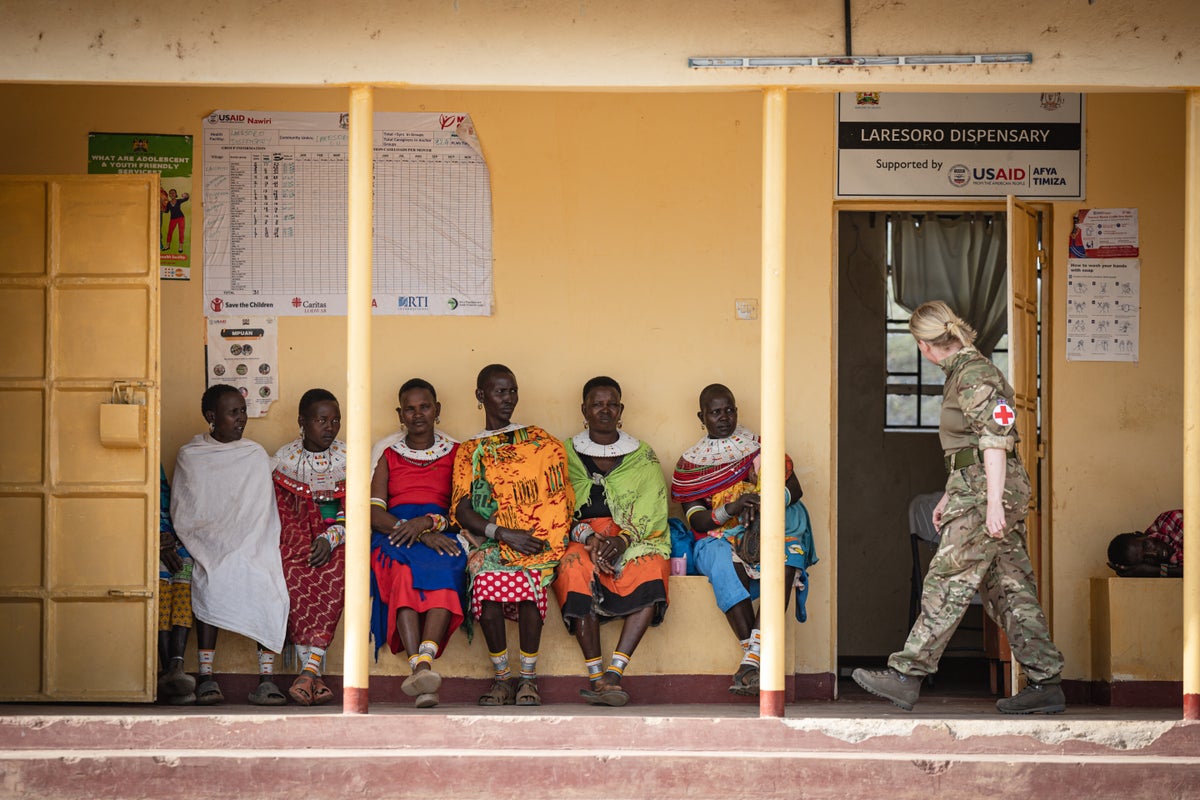
When the United States abruptly froze and subsequently dismantled key portions of its foreign aid program, policymakers in Washington treated it as a simple budget line adjustment. On the ground in countries like Kenya, Nepal, and Colombia, it felt like an earthquake. Recent research published in BMJ Public Health by researchers from the Columbia University Mailman School of Public Health demonstrates that this funding halt triggered an immediate systems-level shock.
The data makes one thing crystal clear. The human cost of US aid cuts falls disproportionately, and often catastrophically, on women and girls.
You won't hear about the true scale of this collapse if you only look at macro-level fiscal debates. Instead, you have to look at closed health clinics, shattered grassroots organizations, and millions of vulnerable individuals who lost access to basic survival networks almost overnight.
The Anatomy of a Systemic Shock
Foreign aid isn't just an abstract stream of cash sent overseas. It keeps the lights on at community health posts, pays the stipends of local midwives, and funds localized outreach for sexual and reproductive health.
When funding stopped, the infrastructure vanished. According to findings compiled by organizations like the Women's Refugee Commission and UN Women, the cuts decimated decades of slow, hard-won progress.
- Maternal healthcare: Up to 88 percent of specific US funding streams targeting maternal and child health faced severe reductions. Pregnant women in remote regions are now routinely turned away from underfunded facilities.
- Reproductive rights: Roughly 94 percent of sexual and reproductive health funding experienced cuts, stripping adolescents and women of basic family planning resources.
- Protection from violence: Funding aimed at shielding women from gender-based violence dropped by 78 percent, leaving more than 3 million women in crisis settings without immediate response support for rape and assault.
Sarah Branoff, a researcher at Columbia Mailman School, noted that the sudden termination exposed deep structural vulnerabilities in international health financing. Every single data point in these studies represents a real person facing a preventable crisis.
Why Grassroots Organizations Couldn't Adapt
Large international non-governmental organizations can sometimes weather sudden policy shifts by pivoting to private donors or alternative governmental grants. Local, grassroots groups don't have that luxury.
Recent UN Women reports show that nearly 90 percent of surveyed women-led organizations can no longer meet current community needs. Demand for support skyrocketed following the 2025 aid freeze, driven by escalating conflicts and regional instability. Yet, two out of five of these local groups expect to shut down permanently.
When local organizations fold, accountability disappears. These groups operate in hard-to-reach conflict zones where massive international bodies simply cannot go. They are the ultimate first responders. Starving them of resources means silencing the most marginalized voices in global society.
Staff members at these local NGOs are currently burning out at unprecedented rates. Sixty-five percent of surveyed groups report that personnel are working entirely without pay just to keep emergency doors open for a few more weeks.
The Cascading Failures in Education and Safety
Aid cuts rarely stay confined to the medical sector. They bleed into education, local economies, and basic safety.
Thousands of girls in humanitarian settings have been forced to drop out of school because families can no longer afford the ancillary costs or because community protective networks have disintegrated. When school doors close for adolescent girls, early marriage rates climb, and long-term economic mobility plummets.
At the same time, conflict-related sexual violence surged sharply through 2025 and into 2026. Safe spaces designed to offer refuge have shuttered across multiple conflict-affected nations. Women seeking safety now find locked doors and empty buildings.
Julia Kosgei, a public health strategist based in Kenya, points out that what looks like a neat spreadsheet reduction in Washington translates directly into life-or-death realities across the Global South.
What Needs to Happen Next
Fixing a shattered global health architecture requires moving past short-term political whims. Public health experts emphasize that international donors must pivot toward diversified, resilient financing models.
Domestic health systems in vulnerable countries cannot absorb these shocks overnight. Restoring stability demands multi-year, direct, and flexible funding explicitly channeled to women-led organizations.
If policymakers want to prevent further human devastation, they must treat gender equality not as an optional line item, but as a core requirement for global security. Protect local leadership, audit the true costs of funding freezes, and prioritize the frontline organizations keeping vulnerable communities alive.


