The fortification of downtown Geneva ahead of the anti-G7 protests represents a classic misallocation of operational risk, where municipal authorities prioritize absolute security asymmetry at the direct expense of local economic velocity. When a city center enters a state of preventative lockdown, the resulting friction is not merely an inconvenience; it is a measurable economic shock. The decision to board up commercial storefronts and restrict civilian mobility operates on a flawed assumption that physical fortressing eliminates threat, whereas it primarily displaces risk and guarantees commercial stagnation.
To understand the full impact of these security protocols, municipal planners and business owners must evaluate the situation through a structured framework of urban risk management, supply chain disruption, and capital flight.
The Tri-Phasic Model of Civil Unrest Mitigation
Municipal security during high-profile geopolitical summits operates across three distinct operational phases. Each phase introduces specific friction points into the local economy, altering consumer behavior and business continuity.
[Phase 1: Proactive Fortification] ──> [Phase 2: Operational Containment] ──> [Phase 3: Capital Friction & Recovery]
Phase 1: Proactive Fortification and Asset Demobilization
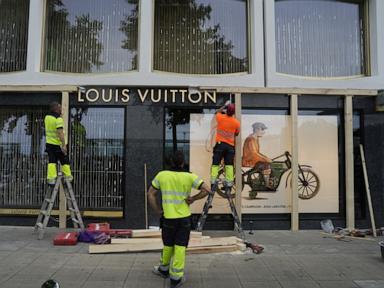
Days before the first protester arrives, the city undergoes a physical transformation. The primary objective of this phase is target hardening. Businesses are pressured by insurers and local police to install physical barriers, typically plywood boarding, over glass facades.
This phase introduces immediate sunk costs. Businesses must divert operational capital to secure materials and labor at inflated, peak-demand rates. Simultaneously, inventory must be demobilized. High-value goods are removed from display cases and transferred to secure off-site locations, halting standard retail operations and inducing premature revenue cessation.
Phase 2: Operational Containment and Perimeter Friction
Once the security perimeter is established, the city center is divided into distinct zones of access control. This spatial engineering relies on heavy physical barriers, water cannons, and integrated surveillance checkpoints.
The immediate casualty of this phase is foot traffic. The friction required to pass a security checkpoint deters the casual consumer base entirely. Only individuals with high-incentive, non-discretionary business navigate the perimeter. For luxury retail, hospitality, and service-oriented businesses within the Geneva core, daytime consumer acquisition drops to near zero.
Phase 3: Capital Friction and Extended Recovery
The economic impact does not terminate when the summit concludes and the protests disperse. The post-event phase involves de-escalation, debris removal, and structural damage assessment.
The primary challenge here is psychological friction. Consumer reluctance persists for days after physical barriers are removed. The perception of the urban core as a volatile zone creates a lingering dampening effect on foot traffic, delaying the return to baseline revenue generation.
The Cost Function of Municipal Hardening
The total economic drain of these security measures can be quantified through a distinct cost function. Municipalities frequently miscalculate this by focusing solely on direct policing budgets while ignoring macro-level externalities.
Total Economic Cost = Direct Security Expenditure + Induced Commercial Losses + Supply Chain Friction Costs + Depreciated Asset Recovery
- Direct Security Expenditure: The hard budget allocated for police overtime, physical barriers, private security contracts, and intelligence operations.
- Induced Commercial Losses: The net drop in gross domestic product (GDP) within the restricted zone, calculated by comparing current daily revenues against historical baselines.
- Supply Chain Friction Costs: The financial penalties incurred by delayed logistics, rerouted delivery networks, and missed operational windows due to checkpoint bottlenecks.
- Depreciated Asset Recovery: The capital required to repair physical damage, clean vandalized structures, and restore public infrastructure to operational standards.
When security cordons are drawn tightly around commercial hubs like downtown Geneva, the induced commercial losses frequently eclipse the direct security expenditure. This represents a regressive tax on local enterprise to subsidize international diplomatic assemblies.
Logistics Strangleholds and Supply Chain Asymmetry
The enforcement of a strict security perimeter disrupts the micro-logistics necessary for daily urban commerce. Modern retail and hospitality rely on just-in-time (JIT) supply chains. When access routes are restricted to designated security corridors, the logistical cadence breaks down.
Delivery vehicles face protracted inspection times at checkpoints. A standard multi-stop delivery route that typically requires two hours can extend to six or eight hours under peak security protocols. This inefficiency introduces a structural bottleneck. Distributors face a choice: absorb the increased labor and fuel costs, pass the expenses onto the urban retailers via surcharges, or bypass the restricted zone entirely.
For perishable goods sectors, such as Geneva’s high-end dining establishments, a skipped delivery window results in direct inventory spoilage and immediate revenue loss. For non-perishable sectors, it creates inventory stockouts, rendering the business incapable of fulfilling even the diminished demand present within the cordon.
The Risk Displacement Paradox
A critical failure in standard municipal security logic is the assumption that hardening a specific zone eliminates threat. In reality, security protocols often trigger the Risk Displacement Paradox. When the urban core of Geneva is rendered impenetrable via boarding and mass policing, the underlying volatile elements do not dissolve; they migrate.
[Hardened Urban Core] ──(Risk Displacement)──> [Peripheral Zones / Vulnerable Suburbs]
This displacement typically follows the path of least resistance, moving outward toward peripheral commercial districts or residential neighborhoods that lack the dense security infrastructure of the primary zone.
- Perimeter Subversion: Protest factions identify gaps in the hard perimeter, often targeting transit hubs or infrastructure entry points just outside the primary cordon.
- Collateral Scalability: Secondary zones suffer higher rates of property damage per capita because they lack the rapid-response deployment capabilities concentrated in the downtown core.
- Asymmetric Insuring: Businesses outside the primary security zone rarely invest in proactive fortification, leaving them highly vulnerable to opportunistic vandalism when protest trajectories shift dynamically.
Consequently, the total societal damage often remains constant or increases; it is simply redistributed onto stakeholders who were excluded from the primary security planning matrix.
Strategic Mitigation Framework for Urban Businesses
To survive high-friction security events, enterprises cannot rely on municipal assurances. They must implement an independent strategic framework designed to minimize capital exposure and maintain operational agility.
Asset Liquidity and Digital Pivot
When physical storefronts are compromised, businesses must rapidly shift their revenue generation models. Luxury retailers should leverage pre-established clienteling networks to transition local sales to digital channels, arranging for fulfillment from warehouses located outside the affected metropolitan area. By decoupling the transaction from the physical storefront, the business bypasses the spatial constraints of the security zone.
Insurance Alignment and Documentation Precedence
Standard business interruption insurance policies often require proof of physical damage or a direct government order forcing closure to trigger payouts. Voluntary closure due to decreased foot traffic is rarely compensated. Business owners must carefully document municipal directives, checkpoint placement, and access restrictions. Establishing a clear causal link between government-enforced friction and revenue deceleration is vital for successful claims processing.
Force Majeure and Labor Optimization
Operating a brick-and-mortar facility during an urban lockdown introduces severe employee liability. Reduced transit options and safety hazards complicate standard shift rotations. Management should trigger remote operational protocols where possible and scale back physical staffing to skeleton crews dedicated exclusively to asset protection. This minimizes labor expenditures during guaranteed low-yield periods while mitigating exposure to workers' compensation claims stemming from commute hazards.
The Long-Term Capital Trajectory
The systematic boarding of a European financial and diplomatic hub like Geneva leaves a psychological scar on institutional capital. While the physical plywood is removed within days, the perception of systemic vulnerability takes quarters to dissipate.
International brands evaluating real estate options look closely at municipal stability. When a city demonstrates that its default response to geopolitical tension is the total shuttering of its commercial core, it diminishes its long-term competitiveness. Capital naturally migrates toward environments that offer predictable operational continuity. The true cost of the G7 security corridor is not measured in the thousands of meters of lumber used to board up windows, but in the unquantifiable volume of investment capital that chooses to bypass the city in the subsequent fiscal years.
The optimal path forward requires an overhaul of urban crowd-management theory. Municipalities must abandon binary lockdown models in favor of dynamic, mobile interception strategies that protect infrastructure without choking the commercial lifelines of the city. Until this paradigm shift occurs, local commerce will continue to bear the financial burden of global diplomacy.