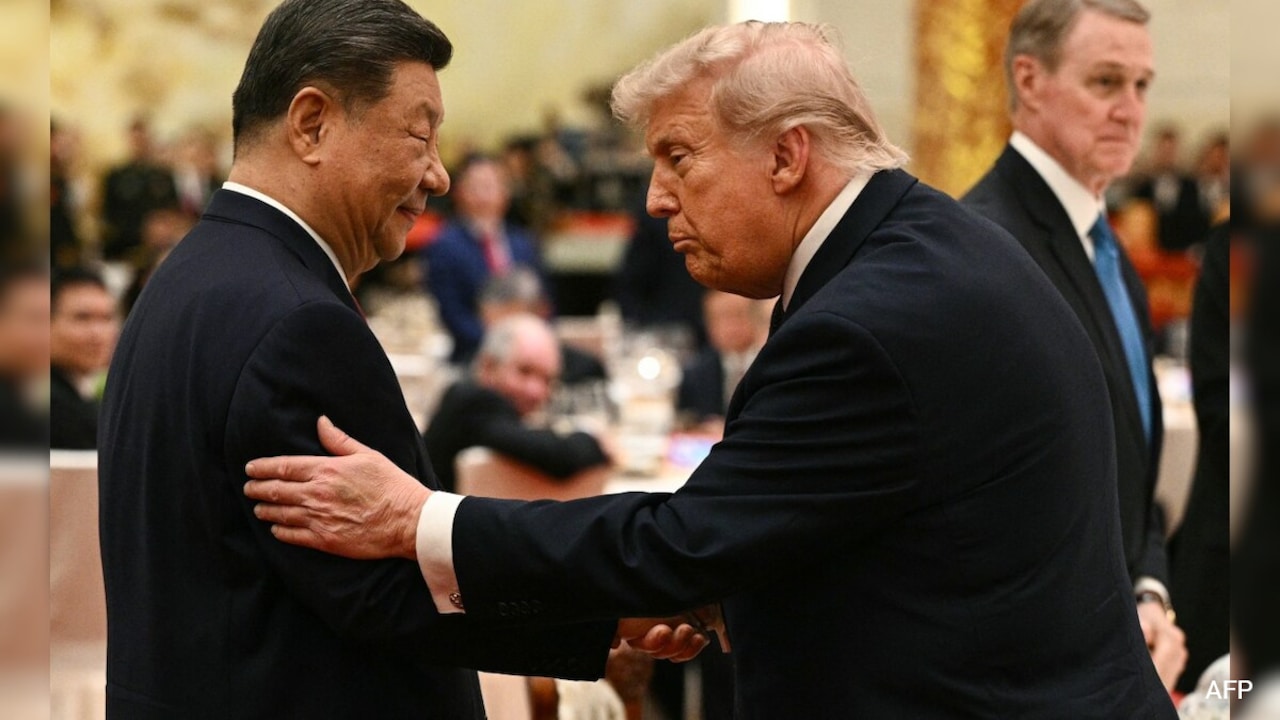
The most revealing diplomatic alignment of the decade happened in quiet conference rooms rather than before television cameras. While tech safety advocates, academic researchers, and various ethics boards spent the last two years demanding an international treaty to slow down artificial intelligence development, the two superpowers ostensibly locked in a generational technology cold war quietly reached a consensus. They decided to do nothing of the sort.
Washington and Beijing share a pragmatic dread. Neither capital is willing to hit the brakes on artificial intelligence capability scaling, regardless of what doomsday scenarios are published by well-meaning think tanks. This shared resistance to artificial intelligence deceleration is not an accident. It is a calculated, high-stakes convergence of national security paranoia, economic imperative, and institutional self-preservation.
When the United States and China look at the frontier of machine learning, they do not see a runaway train that needs a regulatory governor. They see a weaponized frontier where stopping means losing.
The Anatomy of a Quiet Consensus
For years, the public narrative framed the artificial intelligence race as a zero-sum death match between democratic values and state-directed authoritarian capitalism. In this simplified script, Washington championed responsible innovation while Beijing chased raw computational dominance at all costs.
Reality proved far more complicated. When international pressure mounted for a moratorium, a pause, or a coordinated slowdown on training frontier models exceeding specific computational thresholds, the reaction from both capitals was remarkably uniform. Silence, followed by polite dismissal.
The rationale in Washington relies on defense acquisition logic. If American commercial labs halt their clusters, military contractors and intelligence agencies fear foreign adversaries will capture the commanding heights of automated target recognition, cyber warfare orchestration, and logistical optimization. The Pentagon views artificial intelligence capability not as a consumer product category, but as the foundational layer of future national power. To slow down is to invite technological subordination.
In Beijing, the calculation mirrors this anxiety through a different ideological lens. Chinese industrial planners view advanced computing as the ultimate escape hatch from demographic decline and middle-income traps. Stifling domestic foundational model development to satisfy foreign moral panic would hand Washington a permanent economic monopoly. The Chinese Communist Party might fear the destabilizing social effects of unconstrained generative media, but they fear technological obsolescence far more.
Both governments arrived at the exact same conclusion independently: the systemic risk of falling behind vastly outweighs the speculative risk of moving too fast.
The Economics of Infinite Compute
To understand why deceleration proposals fail, one must examine the capital expenditure cycle currently reshaping global finance. Hundreds of billions of dollars are flowing into silicon wafer fabrication, specialized data centers, and gigawatt-scale energy infrastructure.
This is not a traditional software boom. It is heavy industry built on software logic.
When a sector requires sovereign-level capital investments, market forces demand velocity. Venture capitalists, institutional lenders, and state-backed investment funds expect returns that can only be unlocked by compounding capability gains. A mandated slowdown would trigger a catastrophic valuation correction across global markets, stranding physical assets worth trillions of dollars before they have paid for themselves.
Furthermore, the commercial incentives for scaling are deeply entrenched. Enterprises across logistics, biotechnology, finance, and manufacturing have integrated large-scale models into their core operations. Pulling back the frontier now would disrupt commercial roadmaps built over years. The global economy has developed a dependency on exponential computational growth that it cannot simply check into rehab to fix.
Safety research exists, of course. Major laboratories publish alignment papers, hire red teams, and establish internal safety frameworks. Yet these measures function primarily as risk mitigation strategies designed to prevent catastrophic accidents while maintaining maximum forward velocity. They are seatbelts, not speed limits. Neither Washington nor Beijing wants to mandate speed limits that might allow the other side to clear the mountain pass first.
The Illusion of International Control
Efforts to establish global oversight for artificial intelligence mirror the early history of nuclear non-proliferation, but the comparison fails under basic technical scrutiny.
Fissile material requires rare, highly refined physical elements that can be tracked, embargoed, and inspected at specific industrial bottlenecks. Uranium enrichment plants leave heavy thermal and radiological signatures. They are difficult to hide.
Frontier artificial intelligence, by contrast, is fundamentally software and data running on commodity hardware clusters that can be distributed, replicated, and operated in secrecy. A nation or a well-funded syndicate can train powerful models behind closed doors without needing specialized geography or rare earth isotopes in the same traceable manner.
Recognizing this reality, policymakers in both the United States and China understand that any unenforceable treaty would merely disadvantage domestic compliant actors while driving bad actors and rival states underground. If Washington signs a treaty capping training compute at ten to the twenty-fifth power flops, rogue actors or competing states will simply ignore the treaty and continue scaling. The compliant state loses its edge; the non-compliant state wins the century.
This hard geopolitical truth explains why regulatory frameworks coming out of major capitals focus almost exclusively on downstream deployment safeguards—such as watermarking, copyright compliance, and critical infrastructure protection—while leaving upstream capability scaling entirely untouched. Governments are regulating how the weapon is pointed, not how fast it is forged.
The Myth of the Cooperative Pause
Advocates for slowing down often point to historical precedents like the Asilomar conference on recombinant DNA or international climate agreements as proof that humanity can collectively manage existential technological threats.
Those analogies collapse under the weight of current incentives. Biology experiments required physical laboratories and tangible biological agents that could be regulated by scientific bodies with universal authority. Climate treaties deal with a shared atmospheric commons where every nation experiences identical physical degradation.
Artificial intelligence is none of those things. It is an asymmetric power multiplier. The country that achieves generalized autonomous capability first gains a decisive economic and military advantage that alters the global balance of power permanently. In a anarchic international system where trust is scarce and verification is nearly impossible, unilateral restraint is treated as strategic suicide.
When diplomats from the United States and China meet behind closed doors in Geneva or track-two diplomatic channels, they are not debating whether to slow down the machines. They are mapping out the red lines of engagement in a world where autonomous systems are already making decisions at machine speed.
The public debate about slowing down artificial intelligence is an exercise in moral catharsis. The real policy being written in the shadows is an unyielding race to the top, where neither superpower dares to look down.