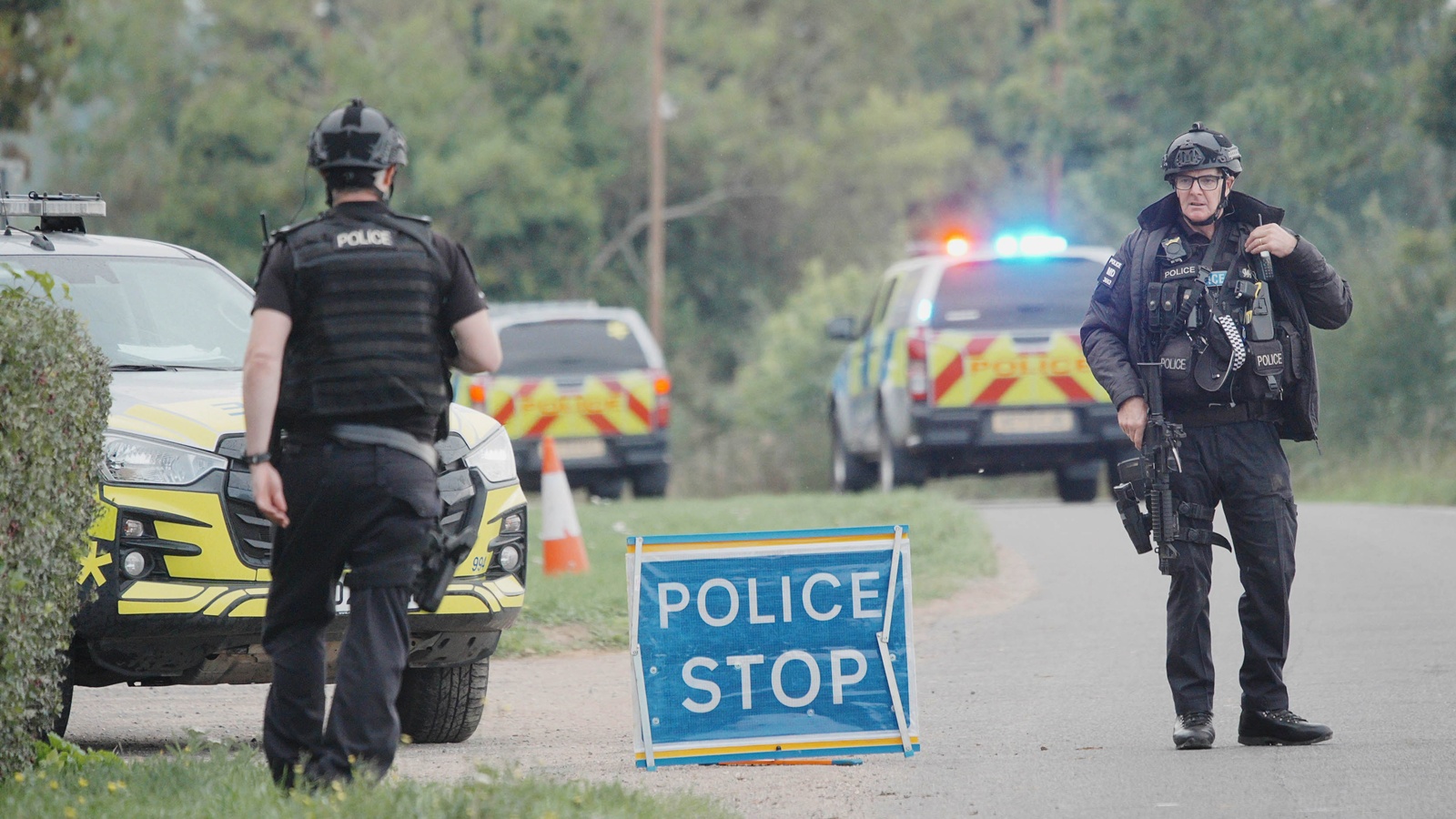
Every time a rusty shell pops out of an English potato field near RAF Fairford and the local constabulary cordons off a B-52 runway, the media acts like we've uncovered an ancient curse. Bomb squad called in. Homes evacuated. The Daily Mail treats a piece of corroded 1940s scrap metal like a personal insult from the Luftwaffe.
It is theatre. Lazy, predictable, low-IQ theatre.
The mainstream narrative wants you to panic about wartime relics because fear sells clicks, and a red-and-white police tape makes a great backdrop for a ten-second broadcast package. Meanwhile, everyone misses the actual structural rot. The real scandal is not that a Gloucestershire farm has a buried mortar from eighty years ago. The scandal is that our entire military-civilian interface is so fragile, so hopelessly bureaucratic, and so completely unprepared for modern asset management that a hunk of oxidized steel can paralyze a strategic installation for an afternoon.
Let us look at the lazy consensus. The common assumption is that British soil remains a ticking time bomb, peppered with unexploded ordnance from the Blitz that randomly decides to ruin Tuesday afternoons.
Nonsense.
Munitions do not spontaneously migrate through the soil column like earthworms. They sit where they were dropped, discarded, or buried during rapid demobilization in 1945. They are stationary hazards. They only become emergencies because our planning permissions, environmental surveys, and defense infrastructure assessments treat historical cartography like optional reading.
I have watched contractors blow millions of pounds on emergency remediation because they decided to skip a competent geotechnical desktop study to save three weeks on a timetable. When the backhoe bucket hits something heavy and cylindrical, everybody panics, dials 999, and plays the victim of unforeseen circumstances. It is not unforeseen. It is the direct mathematical consequence of systemic corporate and military laziness.
The Geography of Panic
RAF Fairford is not just some sleepy grass strip. It is a critical node for United States Air Force strategic bombers operating in the European theater. When a bomb squad evacuation shuts down access roads around a major military installation because an amateur excavator found a training round or an unexploded incendiary, we are broadcasting our operational brittleness to anyone watching.
Adversaries do not need cyber weapons or hypersonic missiles to disrupt a runway when a rusty chunk of cast iron and twenty pounds of old amatol can trigger a civil defense meltdown.
We have institutionalized overreaction. When a suspicious object is flagged, the protocol immediately defaults to maximum theatrical disruption rather than calibrated risk assessment. Local authorities roll out cordons that stretch miles past any realistic blast radius because nobody wants to sign their name to a memo that underestimates a WWII souvenir. Risk aversion has replaced competence.
The Economics of Historical Negligence
Let us talk about the money. Every time a bomb squad is scrambled to a non-threat or a low-risk inert piece of scrap near a defense perimeter, public resources are burned. Emergency services diverted. Commercial traffic halted. Local residents turfed out of their kitchens so technicians can examine a corroded signaling flare from a Lancaster bomber.
Developers know the risks. Ministry of Defence land registries are not secret documents. Historical bomb census data from the Second World War is publicly accessible, mapped down to the grid square. Yet, commercial entities routinely gamble on low-cost archaeological and unexploded ordnance assessments to undercut competitors, knowing that if something turns up, the state taxpayer picks up the tab for the emergency response.
Privatize the profits of fast-tracked groundworks; socialize the emergency disposal costs when you accidentally unearth your great-grandfather's Mills bomb.
If we applied the same liability standards to ground contractors that we apply to industrial waste management, this nonsense would stop overnight. Mandate that any unmapped ordnance discovery resulting from a sub-standard preliminary site survey triggers a punitive fine proportional to the economic disruption caused. Watch how quickly contractors start doing their homework before putting a caterpillar tread into Gloucestershire clay.
Dismantling the Myth of the Accidental Discovery
People love a good mystery. They want to believe that the earth is vomiting up the hidden ghosts of the past.
The truth is much more boring and much more damning. We are not uncovering lost history; we are paying the price for institutional amnesia. The infrastructure surrounding our most sensitive military installations was expanded during the Cold War and post-Cold War eras without a unified, longitudinal audit of legacy contamination. We built housing estates, logistics hubs, and access roads right up against operational fence lines without ever sweeping the soil beneath them with the technical rigor standard in modern engineering.
When an evacuation happens near Fairford, do not look at the bomb disposal technicians. They are just doing their job, clearing the mess left behind by generations of careless planners. Look at the local planning boards who approved the zoning. Look at the developers who skimped on the boreholes. Look at the bureaucratic disconnect between civil local authorities and defense estate management that treats the fence line as an absolute jurisdictional hard boundary.
The bomb in the field is not the threat. The real threat is the systemic incompetence that allows a routine excavation to masquerade as a national security crisis.
Stop blaming the ghosts of 1943 for the administrative failures of 2026.