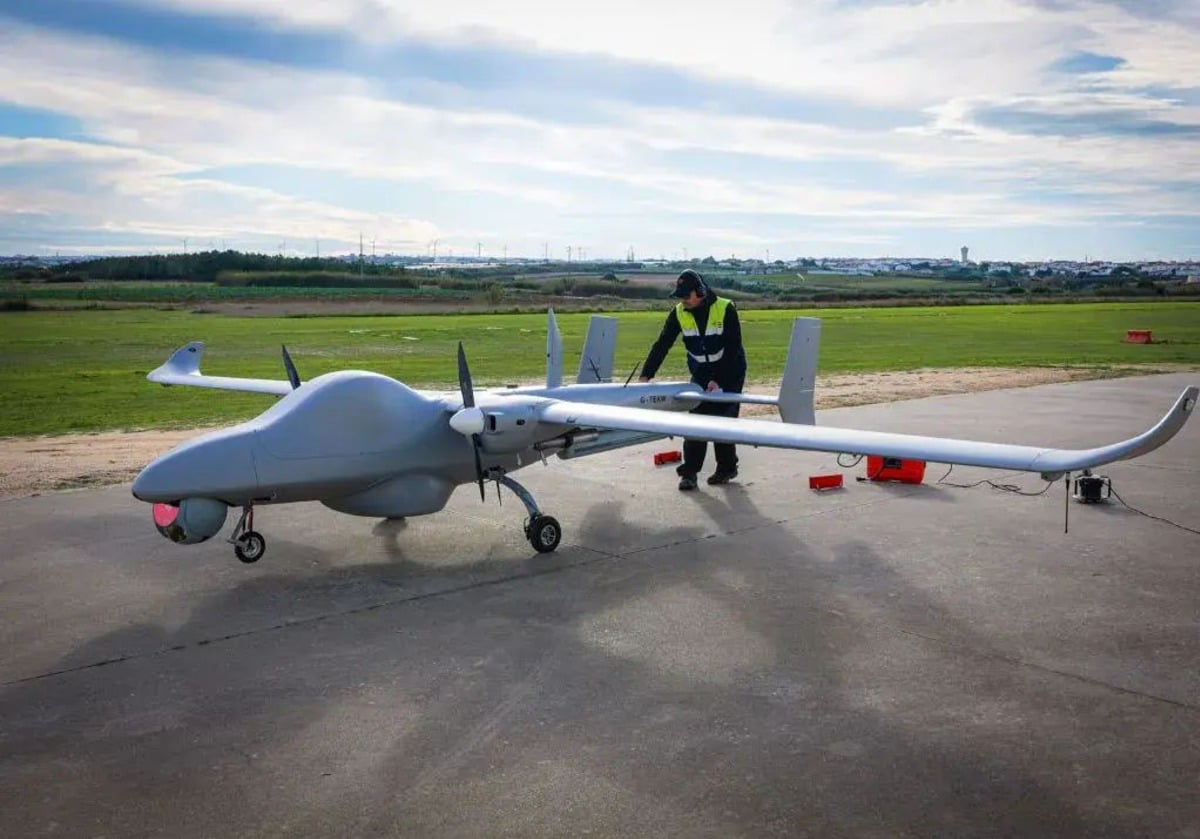
The British Army has officially selected the Tekever drone system to replace the troubled Watchkeeper unmanned aerial vehicle, marking the end of one of the most expensive and protracted procurement failures in modern military history. After more than a decade of delays, staggering cost overruns, and peacetime crashes that eroded operational trust, the Ministry of Defence is pivoting toward a commercial-off-the-shelf solution. This decision signals a quiet admission that bespoke, heavily modified defense projects often collapse under their own bureaucratic weight.
Watchkeeper was meant to give British forces an elite, all-weather intelligence, surveillance, target acquisition, and reconnaissance capability. Instead, it became a symbol of systemic dysfunction. Based on the Israeli Elbit Hermes 450, the program was bogged down by arduous integration requirements, UK-specific certification demands, and airspace safety hurdles that kept the aircraft grounded for extended periods. By the time Watchkeeper finally deployed to operational theaters, modern drone warfare had already evolved past its capabilities. The conflict in Ukraine shattered the utility of slow, fragile, expensive legacy platforms, proving that adaptability and mass matter more than gold-plated certification.
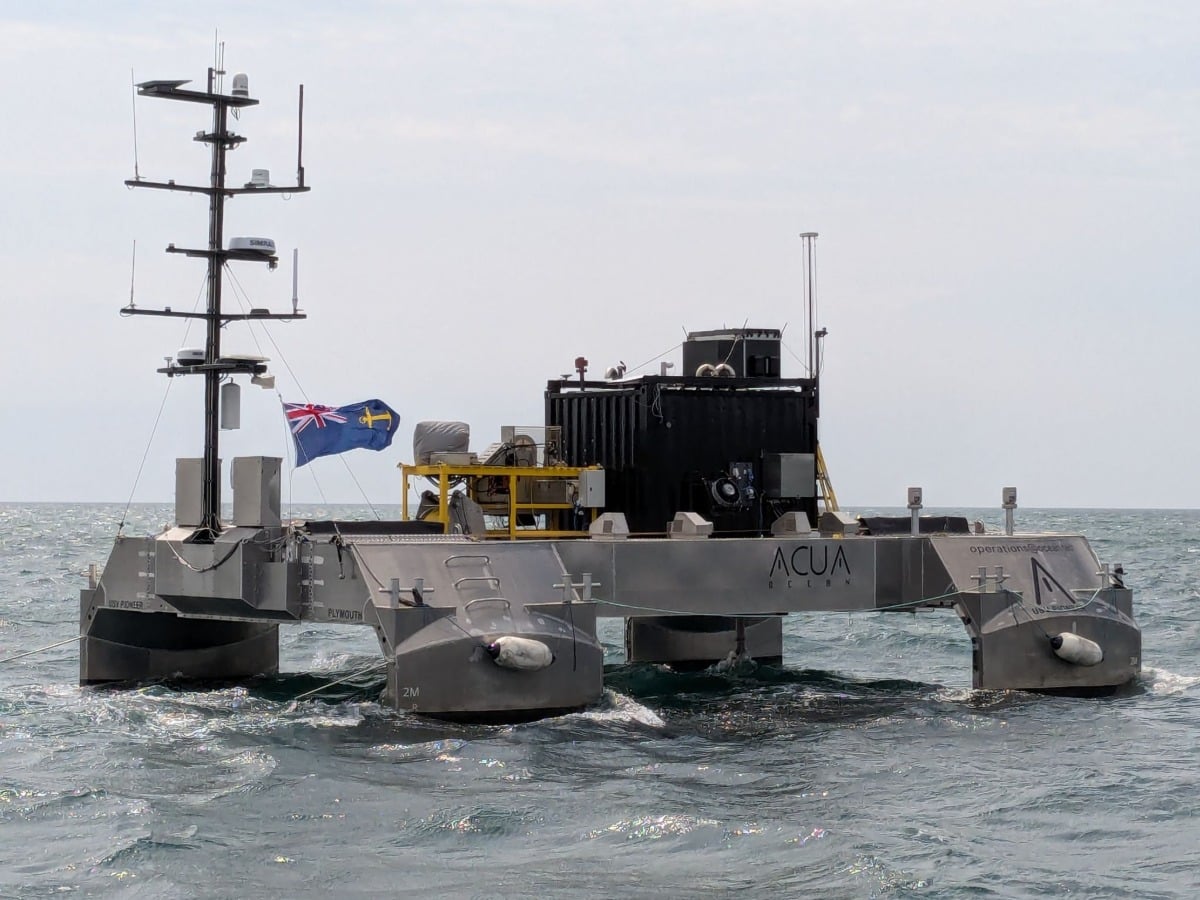
Tekever represents the exact opposite philosophy. Known for building maritime surveillance and tactical unmanned systems that prioritize modularity and rapid software iteration, the Portuguese-founded firm offers a different path. These platforms are designed to be upgraded constantly, utilizing commercial components that can be sourced and replaced cheaply. The British Army's choice to abandon Watchkeeper in favor of Tekever reflects a broader reckoning across NATO. Militaries can no longer afford ten-year development cycles for hardware that risks obsolescence before it even reaches the front line.
Anatomy of a Procurement Disaster
To understand why the British military is rushing to buy Tekever systems, one must look closely at the Watchkeeper timeline. Commissioned in the mid-2000s under a contract worth roughly one billion pounds, the program promised a quantum leap in tactical awareness. The reality proved starkly different. The integration of specialized UK de-icing equipment, secure radios, and complex civilian airspace clearance mechanisms turned a proven design into a logistical quagmire.
Delays piled up by years. Each postponement drove up maintenance costs for legacy bridging equipment while leaving frontline units starved of organic aerial reconnaissance. Worse still, the platform suffered high-profile hull losses during training exercises, compounding safety concerns. When an aircraft meant to keep soldiers safe becomes a hazard during peacetime training due to software glitches or landing gear failures, the psychological damage to the end user is severe. Soldiers stopped trusting the capability.
Industry analysts watched the Watchkeeper saga with familiar exhaustion. The Ministry of Defence has a long history of golden-plating requirements, demanding bespoke modifications that break supply chains and lock the military into proprietary support contracts with single prime contractors. When a part fails, the user cannot simply buy an off-the-shelf alternative. They must wait months for an authorized defense supplier to machine a replacement at exorbitant rates.
Tekever operates on an open architecture model. By leveraging commercial drone components and treating software as the primary differentiator, the company allows operators to swap payloads, update sensor suites, and integrate new artificial intelligence targeting algorithms within weeks rather than years. This agility is what secured the British Army contract.
The Ukraine Effect on British Defense Strategy
The war in Eastern Europe altered the calculus of military procurement forever. Traditional defense primes spent decades convincing governments that exquisite, multi-million-dollar systems were the only way to fight modern adversaries. Ukraine proved that cheap, ubiquitous commercial drones, modified rapidly for military tasks, could neutralize billion-dollar armor and artillery positions.
Attrition is the dominant characteristic of high-intensity conflict. If an army loses fifty drones a week, an industrial base built around hand-crafted, exquisite platforms cannot keep pace. Replacements must be cheap, fast to manufacture, and simple to operate. The Tekever platform fits this new operational reality much better than Watchkeeper ever could. It offers long endurance and modular sensor bays without the bloated price tag of a bespoke military-grade airframe.
Yet, shifting to commercial-off-the-shelf technology introduces its own set of vulnerabilities. Commercial drones rely heavily on civilian supply chains, microchips, and software components that may originate from geopolitical adversaries or unvetted third-party suppliers. Ensuring supply chain security for a system like Tekever requires rigorous vetting. The British Army must establish domestic or allied manufacturing pipelines to ensure that a sudden geopolitical crisis does not cut off the flow of critical spare parts.
Inside the Technology Shift
Switching from Watchkeeper to Tekever means transitioning between entirely different tactical doctrines. Watchkeeper was designed as a centralized strategic asset, controlled by specialized units and tied heavily to fixed ground control stations. It required long runways or specialized launch infrastructure, mirroring traditional crewed aviation footprints.
Tekever systems are engineered for decentralized deployment. They can often be launched from rugged, unpaved surfaces near the front lines, managed by smaller tactical teams who can pack the entire system into transport vehicles. This decentralization reduces the vulnerability of the ground segment. In modern electronic warfare environments, a large, fixed ground control station is a stationary beacon for enemy counter-battery fire and loitering munitions.
Furthermore, the data processing paradigm has shifted. Watchkeeper relied on heavy downlinks to transmit raw video feeds back to central command nodes for analysis by intelligence analysts. Tekever platforms lean heavily toward edge computing. Onboard processors run computer vision models to identify vehicles, personnel, and artillery positions in flight, transmitting only actionable metadata and compressed imagery to operators. This reduces bandwidth requirements, making the data link far harder for adversaries to jam or intercept via electronic warfare measures.
The Bureaucratic Hurdles Ahead
Procuring the drones is only the first step. The British Army faces a massive retraining effort. Operators, maintenance crews, and intelligence officers accustomed to the rigid procedures of a legacy program must adapt to a culture of continuous iteration. Software updates will arrive monthly, not annually. Standard operating procedures will need rewriting to match the speed of commercial technology adoption.
Civilian airspace integration remains a persistent thorn in the side of military drone operators in the UK. While Watchkeeper struggled for years to gain permanent clearance to fly over British skies for training, commercial drone operators face a shifting regulatory framework governed by the Civil Aviation Authority. Integrating tactical systems into crowded domestic airspace without disrupting commercial aviation requires robust detect-and-avoid technologies and hardened command links. Tekever has experience navigating these regulatory frameworks in maritime surveillance roles across Europe, but scaling those protocols to UK military training areas will test Ministry of Defence bureaucracy.
Funding pressures will also dictate the success or failure of this transition. Defense budgets are stretched thin across nuclear modernization, naval expansion, and replenishing stocks donated to international allies. Buying the new drones is easy; maintaining a steady pipeline of upgrades, spare parts, and ammunition for them over a twenty-year lifecycle requires disciplined, protected funding streams that the Treasury rarely guarantees.
The retirement of Watchkeeper and the embrace of Tekever marks a generational break from the procurement model that defined post-Cold War defense spending. It is a tacit acknowledgment that perfection is the enemy of progress, and that adaptability trumps bureaucratic caution. Whether the British Army can successfully institutionalize this agility remains to0 early to tell, but sticking with the past was no longer an option