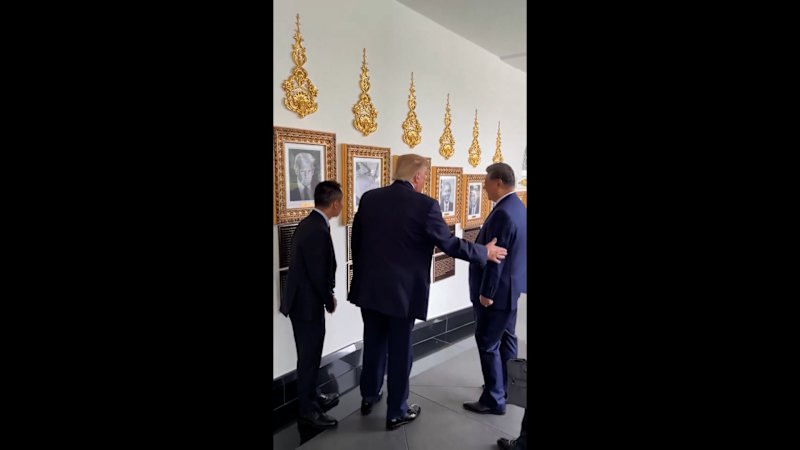
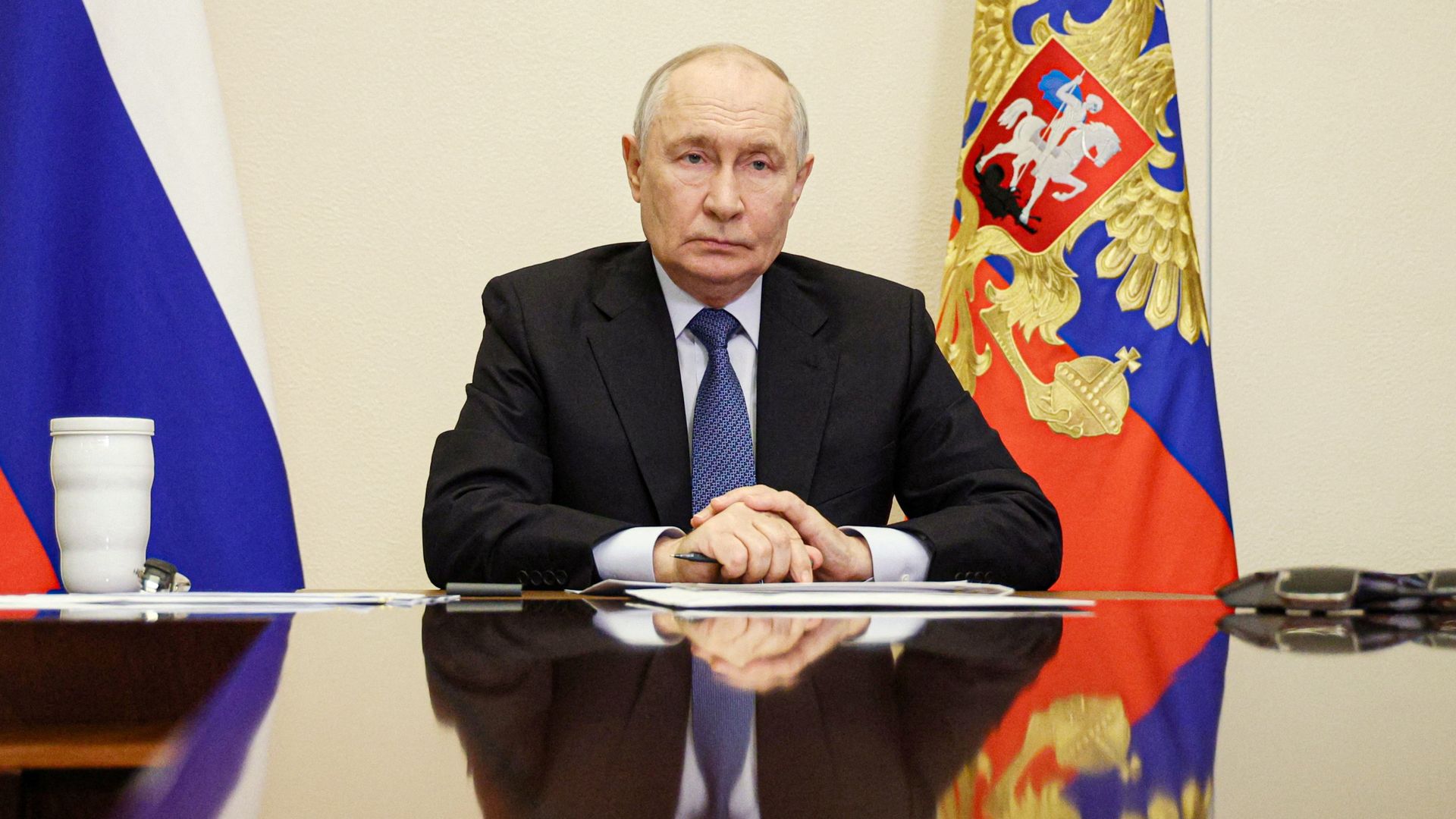
The coffee in the porcelain cups grew cold long before anyone remembered to drink it.
Outside the high-security perimeter, ordinary mornings unfolded across two hemispheres. Commuters crowded onto the Beijing subway, clutching mobile phones displaying encrypted chat apps. Baristas in San Francisco frothed oat milk for software engineers who spent their nights staring at loss functions and transformer architectures. Life felt local, immediate, and utterly normal.
Inside the room, however, the conversation hovered over something altogether different: the invisible architecture of the next century.
When leaders of the world's two largest economic engines sit across a table, the cameras capture the handshakes, the stiff posture, and the carefully neutral expressions meant for the evening news. But history is rarely shaped by the broadcasted moments. It is forged in the margins, in the quiet concessions made over trade tariffs, and in the sudden, sharp realization that both superpowers have accidentally built a digital monster neither knows how to cage.
We tend to think of international diplomacy as a chess match played by grandmasters in slow motion. We imagine grand strategies mapped out decades in advance. But the reality is far more fragile. More often than not, it is two tired human beings trying to decode each other's intentions while their respective domestic populations scream for blood.
Consider what happens when two nations control the nervous system of modern civilization.
On one side sits a nation of relentless manufacturing might, a powerhouse of infrastructure where entire high-speed rail networks appear in the time it takes Western democracies to approve an environmental impact report. On the other sits a culture of venture-backed audacity, a silicon-paved laboratory where garage startups routinely out-innovate sovereign states. For decades, these two titans were locked in a symbiotic embrace. One made the physical world; the other coded its mind.
Then the seams split.
Trade ceased to be an exchange of cheap consumer goods and became a proxy war for national sovereignty. Every container ship crossing the Pacific carried more than just televisions and car parts; it carried vulnerability. When supply chains fractured during the global health crises and geopolitical shocks of recent years, both Beijing and Washington woke up to an uncomfortable truth: mutual dependence is only a virtue until someone decides to pull the plug.
And then there is artificial intelligence.
If trade is the friction between these two giants, artificial intelligence is the nuclear reaction.
To understand why this specific summit mattered, you have to look past the bureaucratic language of joint communiqués. You have to strip away the terms like bilateral cooperation and regulatory frameworks. Words like those are designed to put journalists to sleep and allow politicians to claim victory at home.
The real discussion was about control.
Imagine a hypothetical software engineer working in a windowless server farm in Shenzhen or Redmond. This programmer is writing lines of code that will eventually teach an autonomous system how to optimize power grids, manage financial markets, or synthesize novel proteins. The engineer does not think of themselves as a soldier. They are just trying to hit a quarterly milestone. Yet, the model they are training possesses a dual-use nature so profound that it blurs the line between civilian tool and strategic weapon.
If an AI model can diagnose cancer with ninety-nine percent accuracy, it can also accelerate the discovery of synthetic toxins. If it can translate languages in real time, it can execute automated cyber-attacks against critical infrastructure with terrifying speed.
Both superpowers know this. Both are terrified of the other getting ahead. And both are terrified of what happens if the technology advances faster than their ability to govern it.
This is where the human element breaks through the political armor.
Power is intoxicating, but vulnerability is terrifying. For all their aircraft carriers, trade deficits, and cyber-espionage divisions, the leaders meeting at these high-stakes summits share a private, gnawing anxiety. They are piloting vehicles traveling at supersonic speeds down an unlit road, and they suspect the steering wheel might not be connected to the wheels anymore.
When they discussed AI risks behind closed doors, they weren't just negotiating market access or microchip export controls. They were negotiating the boundaries of human agency.
We have entered an era where machines make decisions at a scale and speed that bypass human cognition. Algorithms approve loans, flag dissidents, route freight, and curate the information diets of billions of people. When the United States and China talk about establishing guardrails for artificial intelligence, they are attempting to draft fireproof rules for a digital forest they themselves set ablaze.
It is easy to become cynical about these meetings. We have seen the press releases before. Two leaders shake hands, utter platitudes about shared responsibilities, and then return home to immediately impose new sanctions or launch new technological initiatives. The drumbeat of competition never really stops. The cold war simply traded its ideology for algorithms.
Yet, dismissing these summits as mere theater misses the deeper, structural shift taking place beneath the noise.
Friction requires management. When two economic heavyweights brush against each other, the sparks can start a wildfire. The mere fact that they are talking—that hotlines remain open, that emissaries are dispatched, that technical working groups are quietly established—is the only thing standing between strategic rivalry and systemic collapse.
Think of the ocean liner crossing a storm-tossed sea. The passengers on the promenade deck argue over seating arrangements and menu options, entirely unaware that deep down in the engine room, the chief engineer and the captain are shouting over the roar of the boilers, trying to keep the hull from splitting in half.
The trade discussions and the AI risk negotiations are the hull inspection.
They reveal a begrudging, pragmatic acknowledgment: neither nation can afford a total decoupling, and neither nation can survive an unmanaged escalation.
As the summit concluded and the motorcades rolled away from the heavily guarded compounds, the world didn't instantly change. Tariffs remained on the books. Export restrictions on advanced semiconductors stayed firmly in place. Laboratories in both countries continued their frantic races to achieve artificial general intelligence, pouring billions of dollars into compute power and talent acquisition.
Nothing was miraculously solved. The structural rivalries are too deep, the historical grievances too raw, and the ideological divergence too wide for a single conversation to erase.
Yet, the air in the room had shifted.
A boundary had been acknowledged. A shared vocabulary for catastrophe had been reluctantly accepted. Both sides looked into the abyss of unconstrained technological competition and saw something that frightened them more than each other.
Back in the streets, the barista poured another latte, the subway doors slid open, and the code continued to compile. We walk through our days wrapped in the comfort of the familiar, rarely looking up to see the invisible wires holding our modern world together. But high above the noise, in rooms where cold tea sits untouched on polished mahogany tables, the architects of our future are slowly realizing that the most dangerous thing man has ever created is something he can no longer switch off.