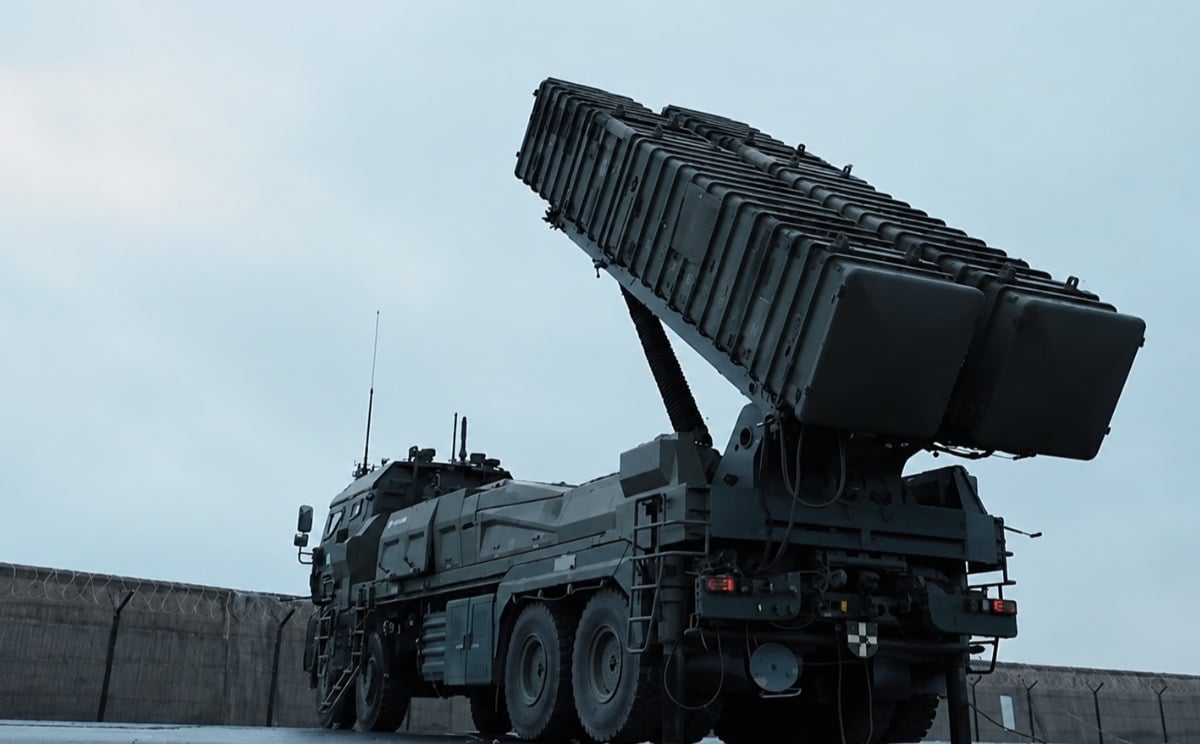
The balance of power in the Eastern Mediterranean and Middle East is quietly shifting. It isn't happening because of foreign arms deals or diplomatic treaties, but through a steady stream of domestic military deliveries arriving at the doorsteps of the Turkish Armed Forces.
State-backed defense giant Roketsan just handed over another major batch of homegrown ballistic missiles to the Turkish military. For anyone keeping tabs on regional security, this isn't just routine inventory tracking. It represents a massive leap toward total strategic autonomy for Ankara, effectively cutting the cord on Western defense dependency.
The Strategy Behind the Deliveries
For decades, countries in the region relied heavily on foreign suppliers for long-range precision fire. If you wanted high-tier defense tech, you bought American, European, or Russian. Turkey decided years ago that model was a security trap.
These latest handovers prove that Roketsan’s production line isn't just building prototypes for parades. They're churning out hardware at scale. According to statements from Roketsan General Manager Murat Ikinci, serial production and deliveries of key systems like the Tayfun short-range ballistic missile and the SOM cruise missile are hitting their targets exactly on schedule.
What makes this specific rollout fascinating is the diversification of the strike portfolio. It isn't just about massive truck-mounted launchers anymore. Turkey is successfully miniaturizing ballistic technology and taking it to the skies.
Moving Fast from Ground to Sky
The big news alongside the heavy ground-launched systems is the official entry into service of the IHA-230. Developed by Roketsan, the IHA-230 is an air-launched, supersonic ballistic missile designed specifically to fire from unmanned platforms like the Bayraktar Akinci drone.
Think about the operational shift here. Traditional ballistic missiles require massive, visible ground vehicles. They're powerful, but they can be tracked by satellites. By pairing a high-speed, Mach 4+ ballistic missile with a high-altitude, long-endurance drone, the Turkish military gets stand-off precision without risking human pilots or exposing slow ground convoys.
The IHA-230 carries a 42-kilogram modular warhead over a range exceeding 150 kilometers. It is built to shred enemy air defense radars, command posts, and moving naval targets before the adversary even knows the drone has launched.
Tracking the Milestones
To understand how Turkey arrived at mass-producing these weapons, you have to look at the relentless pace of their development timeline over the last few years. This wasn't an overnight success. It is the result of a highly calculated, step-by-step engineering campaign.
Overcoming Electronic Warfare
The biggest flaw in modern precision weaponry is its vulnerability to electronic jamming. If an adversary can block your GPS signal, your multi-million-dollar missile becomes an expensive block of falling metal.
That is where Turkish engineers focused their real energy. The Tayfun missile family combines inertial navigation systems with highly secure satellite updates. It features extreme resistance to electronic warfare, meaning it can ignore GPS jamming attempts and still hit targets with a circular error probable of just a few meters.
Furthermore, these missiles operate on a depressed trajectory. Instead of soaring high into space like a classic Cold War rocket, they fly lower and faster. This severely compresses the detection window for enemy radar systems. By the time a defense battery identifies the incoming threat, the missile is already traveling at hypersonic speeds during its terminal descent, leaving zero time for interception.
Re-Engineering Regional Deterrence
The strategic reality is simple. Turkey now possesses deep-strike capabilities that put the entire Eastern Mediterranean, parts of Southern Europe, and the wider Middle East within holding distance.
By manufacturing these systems inside their own borders, Ankara eliminates the threat of foreign arms embargoes. If a diplomatic dispute flares up, no Western ally can cut off their supply of spare parts or ammunition. This independence completely alters how Turkey conducts its foreign policy and military posturing.
Military planners across the region are forced to recalibrate their math. You can no longer rely on traditional air defense nets when facing high-volume, domestic serial production of hypersonic-capable weaponry.
For security analysts, the next logical step is monitoring how fast Turkey integrates these new missile batches into active border deployments. Keeping a close eye on upcoming live-fire joint exercises will show exactly how seamlessly these drone-launched and road-mobile ballistic platforms communicate with frontline command units.
Watch this breakdown of Turkey's missile advancements to see how the latest Tayfun variants are reshaping NATO dynamics and regional defense strategies.