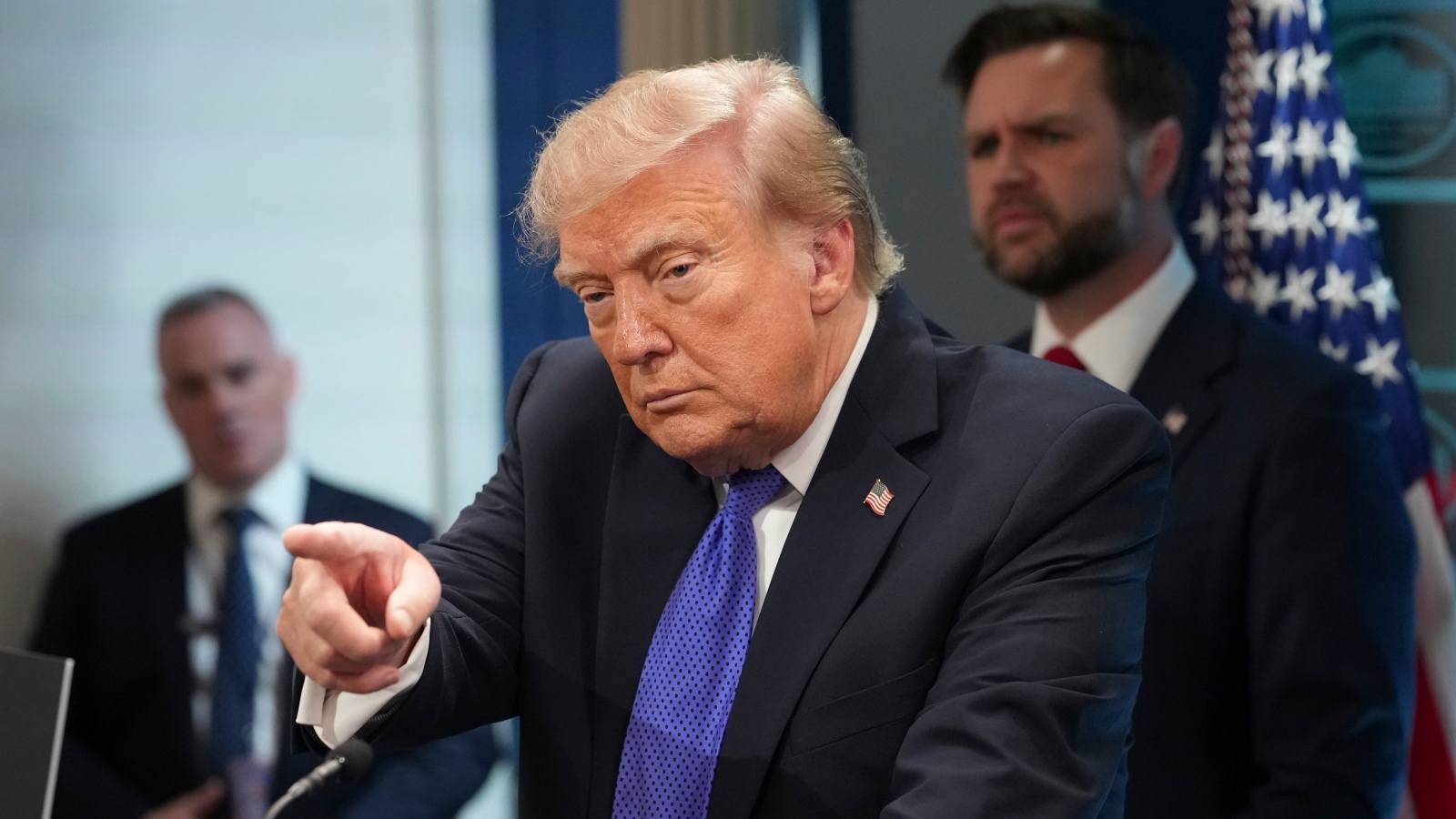
Standing in the White House briefing room on November 20, 2026, President Donald Trump dropped a policy bomb without a single page of written legislation to back it up. If American tech companies keep building AI data centers in foreign countries, he warned, the federal government will hit them with "tremendous penalties".
The timing wasn't random. Washington was still reeling from the Nvidia espionage scandal involving CEO Jensen Huang, suspected Chinese intelligence asset Alice Huang, and a Singapore-based shell network called Megaspeed that funneled high-end computing power into China. Trump's pitch was simple. Keep the servers on American soil so Beijing can't steal or rent the compute.
Except there's a massive gap between a podium threat and a workable trade rule. Right now, U.S. hyperscalers are staring at a policy announcement that has no tax rate, no list of banned countries, and no legal definition of what even counts as a penalized facility.
The Nvidia Spying Row That Lit the Fuse
You can't separate Trump's data center warning from the mess that exploded around Nvidia earlier in November 2026. For years, Washington tried to slow down China's artificial intelligence progress by blocking physical shipments of top-tier semiconductors. On paper, the export controls looked tight. In practice, they had a giant back door.
Foreign data centers—particularly across Southeast Asia—bought up thousands of Nvidia processors that technically complied with U.S. export limits, then rented out remote cloud access to Chinese companies. No silicon ever crossed the Chinese border. The computing power simply traveled over fiber-optic cables.
Then the scandal turned personal and geopolitical at the same time. Intelligence reports surfaced detailing Jensen Huang's extramarital affair with Alice Huang, whom U.S. counterintelligence officials had monitored for over a year as a suspected Chinese asset. Investigators also flagged her business partner, Kang Wei, over alleged ties to China's Ministry of State Security. The Commerce Department quickly slapped Megaspeed and its affiliated firms onto its export-control blacklist.
Huang briefly stepped down from Nvidia amid the fallout before Trump publicly backed him and brokered his reinstatement as CEO on November 23. Even while defending Huang personally, the White House realized the broader infrastructure problem couldn't be ignored. Days before the press conference, the Commerce Department issued new licensing rules restricting remote cloud access to advanced U.S. chips. Trump's November 20 threat went much further, aiming not just at who rents the servers, but where American firms are allowed to pour concrete in the first place.
Why Remote Compute Replaced Smuggling
If you've ever managed enterprise cloud architecture, you know physical hardware location doesn't stop remote execution. Moving a multi-million-dollar server rack across customs checkpoints in Shenzhen or Hong Kong is risky, slow, and easy for intelligence agencies to trace. Renting bare-metal GPU clusters in Singapore, Malaysia, or the Middle East takes a credit card, an encrypted SSH tunnel, and an API key.
That's why the "compute loophole" became the real battleground of 2026. A Chinese AI lab doesn't need to own an H200 or Blackwell cluster inside mainland China to train a frontier model. It just needs low-latency access to a facility sitting three thousand miles away.
Washington's earlier strategy relied on tracking serial numbers through global supply chains. You can audit a pallet of GPUs leaving a factory. Tracking every virtual machine spun up inside a third-party colocation facility overseas is a completely different headache. When a facility sits on foreign soil, draws power from a local utility, and runs software stacks that change every hour, U.S. regulators lose visibility fast.
Trump summed up his fear bluntly during the briefing. "We're not allowing data centres to go into other countries, because China will take all of them," he told reporters. Whether Beijing could literally seize American-owned facilities in allied nations is another question, though the administration clearly views any offshore AI cluster as a potential leak.
What Is Actually Inside the Policy Right Now
Nothing. That isn't an exaggeration.
When pressed by reporters on November 20, Trump admitted he hadn't even discussed the penalty structure with officials inside his own administration yet. There is no executive order on his desk. There is no draft legislation in Congress.
Here is what remains completely undefined as of late November 2026:
- The penalty mechanism: Trump floated "tremendous penalties" and heavy taxes, but nobody knows whether that means punitive corporate tax surcharges, revoked export licenses, or flat bans on federal cloud contracts.
- Geographic scope: Does "abroad" mean high-risk transit hubs in Asia and the Middle East, or does it also punish Microsoft, Google, and Amazon for expanding campuses in Frankfurt, Dublin, or Tokyo?
- Facility thresholds: A small edge server closet handling local video caching isn't the same thing as a 500-megawatt AI training campus. No megawatt or FLOP threshold exists on paper.
- Existing construction: Tech giants have tens of billions of dollars locked into multi-year overseas builds already past the permitting stage. No one has said whether active projects get grandfathered in or stranded.
Interestingly, the Biden administration had explored tiered global AI diffusion rules before leaving office, which Trump initially scrapped upon returning to the White House. Now, burned by the Megaspeed revelations, his administration is swinging back toward restriction—only this time with a much blunter instrument.
The Domestic Power Grid Problem Nobody Mentions
Forcing every major AI data center back onto U.S. soil sounds great at a press conference. In the real world, the American electrical grid is already choking.
Building a hyperscale AI campus isn't like erecting an office park. A single modern training cluster demands anywhere from 100 megawatts to over a gigawatt of continuous, uninterrupted electricity. In hubs like Northern Virginia, Phoenix, and parts of Texas, utility interconnection queues stretch three to five years out. Transformers are backordered, transmission lines are congested, and water usage for cooling has sparked fierce local pushback.
Communities across the United States have started voting down zoning approvals and fighting tax breaks for massive server warehouses. Trump acknowledged that friction during his remarks, telling local towns to stop blocking projects and instead squeeze developers for cash. "You ought to take advantage of the datacenters. Make them pay you, make them pay your community, but don't shut them off," he said.
Even if every town in Ohio and Iowa says yes tomorrow, physics still wins. You can't conjure ten gigawatts of new baseload power out of thin air by next quarter. U.S. tech companies didn't expand into Europe, Latin America, and Asia just to dodge export rules—they went abroad because local data sovereignty laws require citizen data to stay in-country, and because foreign grids had spare capacity when American substations were maxed out.
Who Wins and Who Gets Burned
If the White House turns this rhetoric into an actual rule, the financial fallout splits sharply across the tech sector.
Hyperscalers Face a Revenue Trap
Amazon Web Services, Microsoft Azure, and Google Cloud generate massive chunks of their growth outside North America. European banking regulations, health privacy mandates, and sovereign cloud contracts legally forbid storing certain datasets on U.S. servers. If Washington penalizes American firms for building local infrastructure in Germany or France, European customers won't move their data to Virginia. They'll simply hand those contracts to domestic European providers or Asian competitors.
Domestic Contractors Stand to Cash In
On the flip side, American construction firms, industrial power-equipment makers, regional utilities, and domestic data center REITs would see an immediate demand spike. Every gigawatt of compute forced back inside U.S. borders translates into billions of dollars in domestic switchgear, backup turbines, fiber builds, and long-term power purchase agreements.
Allies Get Caught in the Crossfire
Countries like the UK, Japan, South Korea, and the UAE have spent the last two years courting American hyperscalers with sovereign AI partnerships and subsidized energy. A blanket penalty on overseas builds treats close treaty allies the exact same way it treats shell companies in Singapore. Unless the Commerce Department carves out trusted partner tiers, Washington risks alienating the exact governments it needs to enforce semiconductor export controls in the first place.
How Tech Leaders and Investors Should Respond Now
Right now, overreacting to a single unscripted press conference answer is a mistake. Still, ignoring the direction of travel in Washington would be naive. If you're managing enterprise infrastructure, vendor contracts, or tech equity exposure, take four concrete steps immediately:
- Audit your third-party cloud sub-processors. Check where your AI workloads actually run. Even if you contract with a U.S. cloud provider, verify whether inference or fine-tuning jobs route through overseas availability zones that could fall under new Commerce Department licensing rules.
- Lock in domestic power and colocation capacity early. If your organization relies on dedicated bare-metal GPU leases in the U.S., expect domestic pricing to tighten further as hyperscalers scramble for domestic megawatts. Renew multi-year reservations before regulatory drafts hit the Federal Register.
- Separate sovereign compliance from training clusters. Enterprise teams operating in Europe or Asia should separate basic local storage compliance from heavy model-training infrastructure. Keeping raw customer databases local on standard CPU servers avoids triggering advanced AI chip restrictions while satisfying local privacy laws.
- Watch the Commerce Department, not the podium. Presidential threats set the political tone, but the Bureau of Industry and Security writes the enforceable rules. Track formal BIS notices on Infrastructure-as-a-Service (IaaS) reporting requirements—that's where actual compliance deadlines and country exemptions will appear first.