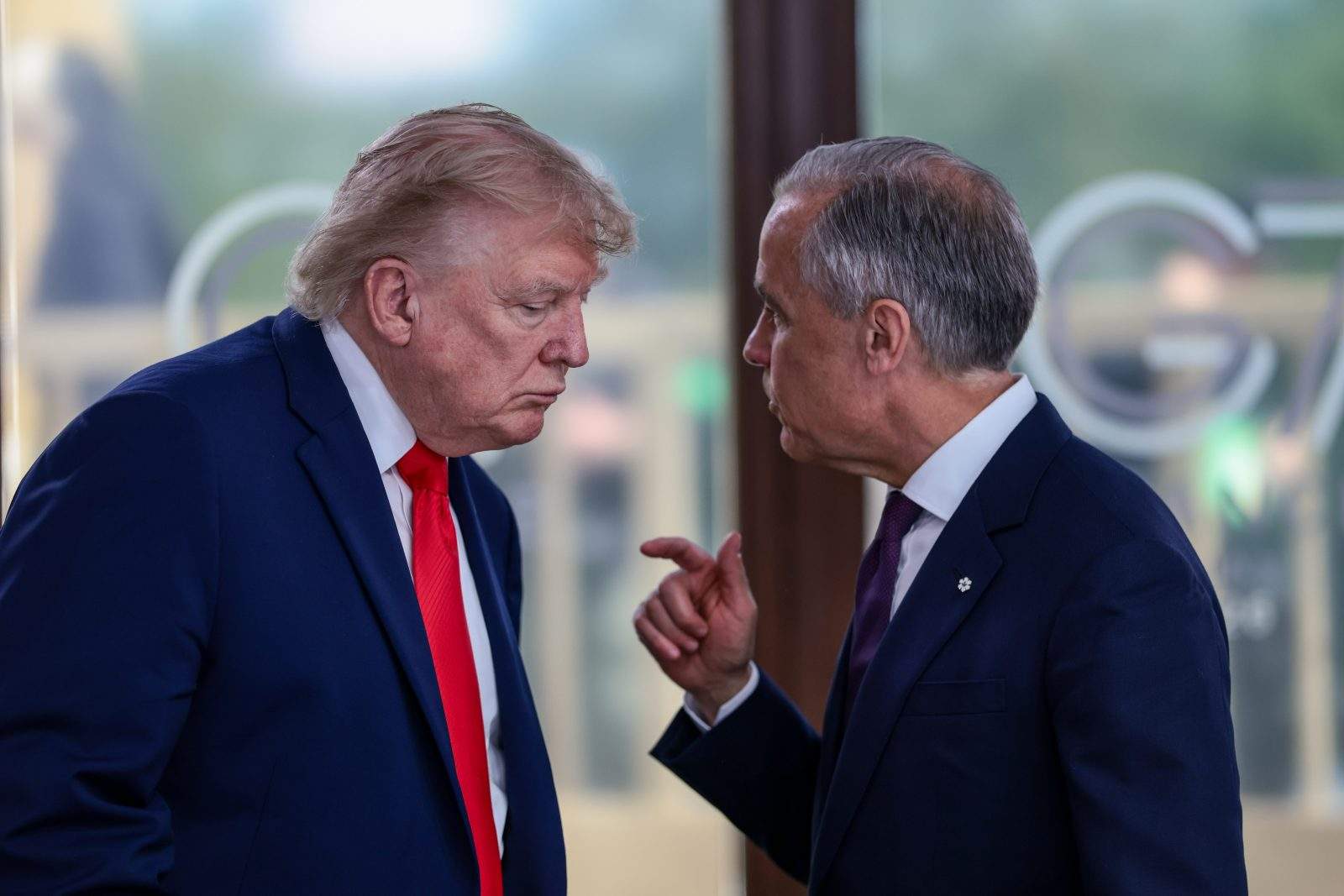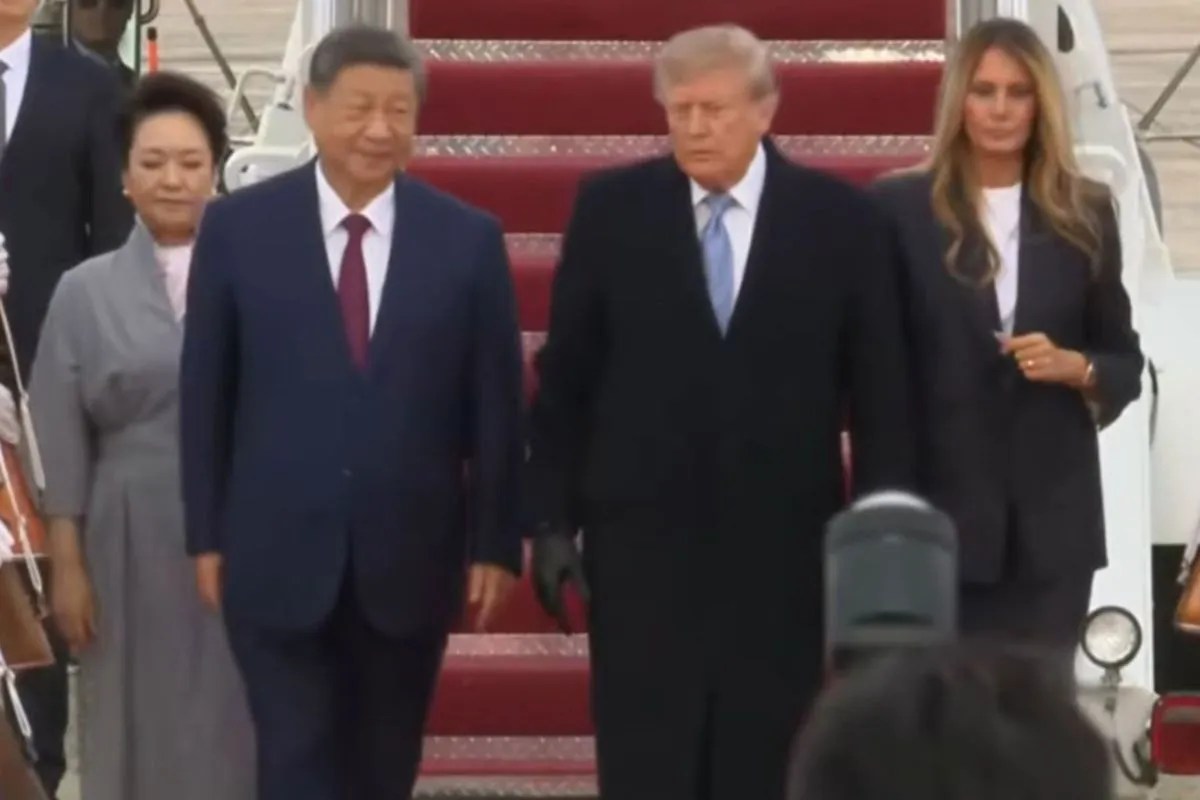
Every single time Donald Trump and Xi Jinping sit down across a shiny mahogany table, global markets hold their collective breath. Commentators salivate over photo ops. Pundits spin elaborate theories about grand bargains on rare earth metals, artificial intelligence supremacy, and tariff rollbacks. Headlines scream about historic breakthroughs or catastrophic impasses.
It is all theater.
The lazy consensus in international relations is that these bilateral summits are where the real geopolitical sausage gets made. Analysts pore over joint communiques looking for hidden signals, as if diplomats are dropping coded poetry about semiconductor quotas. This is a profound misunderstanding of how modern superpowers actually function. Trade policy, technological decoupling, and supply chain re-routing are not solved by two men shaking hands under blinding camera lights. Those agreements are negotiated down to the comma by mid-level bureaucrats months before the leaders ever board their respective aircraft.
When you hear that a summit will settle the tech war, you are watching a manufactured distraction.
Strip away the optics, and you find a stark reality. The structural friction between Washington and Beijing is not a misunderstanding that can be cleared up over a state dinner. It is a zero-sum collision over economic sovereignty, technological dominance, and military posture in the Indo-Pacific. A handshake in Geneva or a closed-door chat at an international summit does not erase a decade of bipartisan consensus in the United States that China represents a systemic challenge. Nor does it alter Beijing's domestic imperative to achieve technological self-sufficiency before its demographic crisis fully bites.
Let us dismantle the three major fallacies dominating current commentary: tariffs, rare earth dominance, and the artificial intelligence race.
The Tariff Delusion
The prevailing narrative treats tariffs as a dial that can be turned up or down depending on the mood of the president. If Trump wins a concession on agricultural purchases, duties go down. If Xi drags his feet on intellectual property enforcement, duties go up.
This view ignores the institutionalization of protectionism. Tariffs implemented during the trade wars were never temporary bargaining chips. They became permanent structural fixtures of American industrial policy. Both Republicans and Democrats view duties on Chinese goods not as a punishment, but as a protective wall for domestic manufacturing and a weapon to starve adversary sectors of capital.
I have watched corporate supply chain strategists spend millions of dollars trying to game Washington trade announcements, only to get blindsided because they believed a political truce would reverse years of sunk capital in Mexico, Vietnam, and India. Companies that wait for a grand tariff repeal are committing slow corporate suicide.
When a leader promises a tariff breakthrough, look at the fine print. You will find exemptions, carve-outs, and enforcement mechanisms that actually tighten the screws rather than loosen them. The direction of travel is absolute. Decoupling is not a policy choice of one administration; it is an enduring economic gravity.
The Rare Earth Mirage
Every few months, panic sweeps the tech sector because Beijing restricts exports of critical minerals or rare earth elements. The media immediately paints a picture of Chinese supply chokeholds bringing Western high-tech and defense industries to a screeching halt.
The panic is real, but the diagnosis is lazy.
China holds a near-monopoly on the processing of critical minerals, yes. But a monopoly on processing is a commercial vulnerability disguised as a superpower. When you control the dirtiest, most environmentally toxic stage of production, you also absorb the ecological and economic costs. More importantly, market incentives work. High prices for neodymium, dysprosium, and gallium are the best catalyst for capital expenditure in alternative extraction and recycling technologies outside of China.
Australia, the United States, Canada, and various European partners are sitting on massive unexploited deposits. For years, mining companies avoided extraction because Chinese state-subsidized dumping made it unprofitable. By weaponizing supply chains, Beijing did not secure permanent dominance; it forced the West to subsidize its own domestic mining industrial base.
Relying on a summit to secure rare earth supply chains is like asking a weather forecaster to stop a hurricane. The solution is engineering, capital allocation, and environmental permitting reform, not diplomatic pleading.
The Artificial Intelligence Chokehold
Then there is artificial intelligence, the crown jewel of modern geopolitical paranoia. The conventional wisdom states that American export controls on advanced graphics processing units will permanently cripple China's ability to train frontier models, while Chinese counter-measures on legacy chips and foundational math talent will starve Western hardware ecosystems.
This frame is outdated.
Hardware export controls did not stop Chinese labs from innovating; they forced architectural efficiency. When you restrict access to brute-force compute, engineers stop burning electricity on inefficient models and start inventing algorithmic shortcuts. Chinese researchers are pioneering novel quantization methods, sparse mixture-of-experts architectures, and alternative training paradigms that require a fraction of the silicon footprint.
Furthermore, compute is becoming commoditized. Illicit supply chains, cloud brokerages operating through third-party jurisdictions, and indigenous fabrication advances mean that complete technological blockades are a fantasy. If you think a summit communique will establish guardrails for artificial intelligence deployment between two systems locked in an existential race for military and economic hegemony, you are selling yourself a comforting fiction.
The two nations are building entirely separate digital stacks. One uses Western toolchains and open-source models adapted to liberal market norms; the other uses sovereign infrastructure insulated from foreign intervention. They will not merge their standards over tea.
The Real Game
If summits do not solve trade, minerals, or artificial intelligence, why do they happen?
They happen for domestic political consumption. Xi needs to project strength and stability to a domestic audience anxious about real estate meltdowns and youth unemployment. Trump needs to project deal-making prowess to voters who equate foreign policy with personal dominance.
For the rest of us, treating these meetings as major economic catalysts is an expensive distraction. The companies winning right now are not the ones lobbying for trade truces. They are the ones aggressively re-architecting their supply chains, securing alternative component pipelines, and building redundancy into every layer of their technological stack.
Stop watching the podium. Watch the balance sheets, the patent filings, and the capital expenditure reports. That is where the actual war is fought.