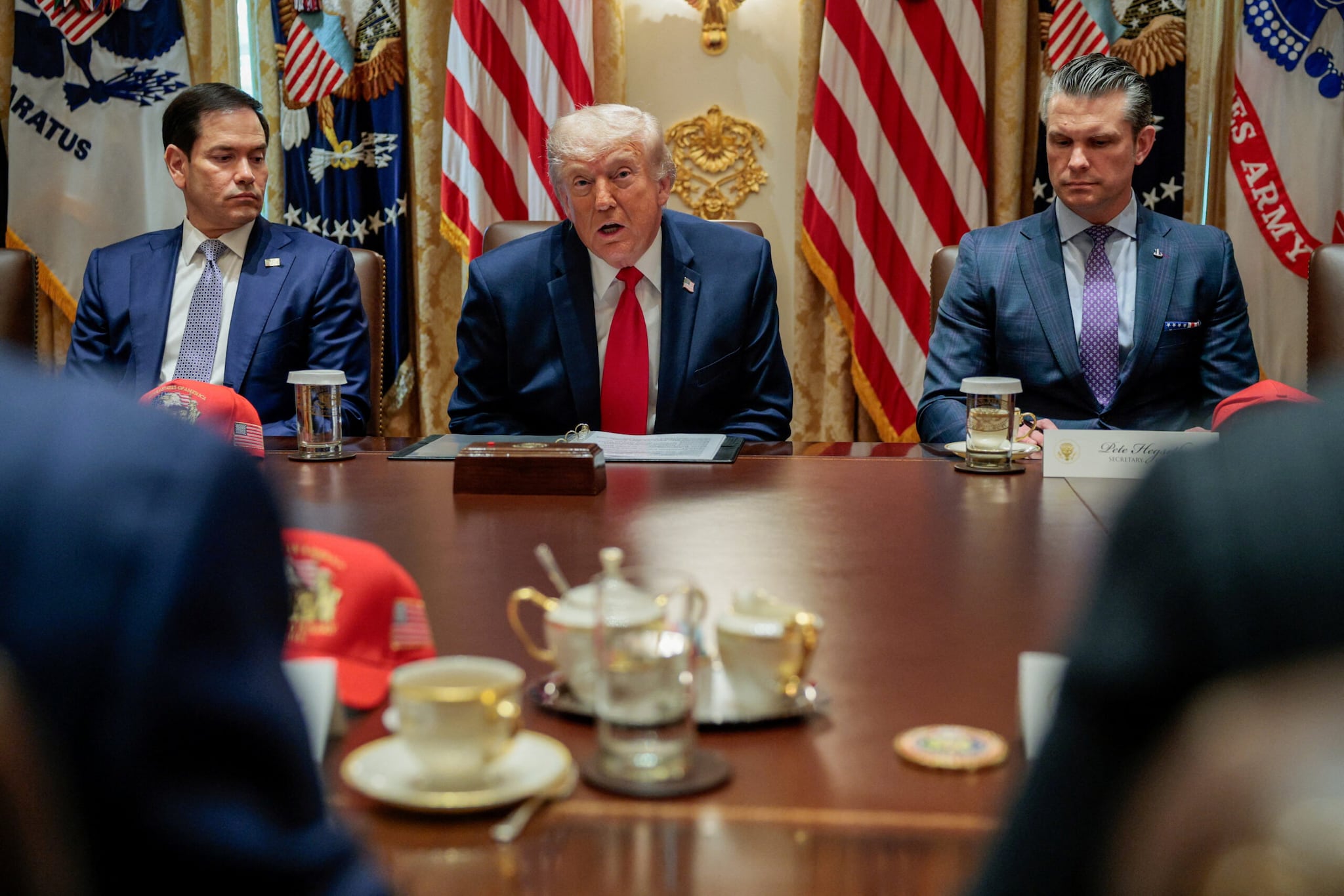
Donald Trump just dropped a bombshell in the Oval Office. He openly stated he is not looking to renew the United States-Mexico-Canada Agreement. Yes, the very same North American trade pact he negotiated and signed into law during his first term.
To anyone watching the headlines, this looks like a terrifying plunge into economic chaos. Panic is already rippling through the agricultural heartland and corporate boardrooms. But if you have watched Trump's political playbook for more than five minutes, you know exactly what this is. It is not a policy shift. It is a classic high-stakes shakedown.
With a crucial July 1 deadline staring down all three nations, the timing is immaculate. Trump knows exactly where the leverage hides. Canada and Mexico are absolutely desperate to secure a 16-year extension to shield themselves from unpredictable American tariffs. By standing up and saying "we don't need anything they have," Trump just flipped the table before the poker game even started.
The Sunset Clause Weapon
When the USMCA replaced NAFTA back in 2020, Trump insisted on a unique mechanism. It was a six-year joint review provision, effectively acting as a soft sunset clause. On July 1, all three nations must formally state whether they want to extend the pact for another 16 years.
Canada and Mexico have already raised their hands. Mexican Economy Minister Marcelo Ebrard and Canadian officials have spent months signalling their eager desire for a smooth extension. Then Trump walked into the Oval Office and blew up the consensus.
He didn't mince words. He openly bragged that the best part of his own trade deal was the built-in right to terminate it. He complained about trade deficits with both neighbors, claiming America should have surpluses instead. He stated plainly that the U.S. does not need Canadian lumber, Mexican cars, or foreign energy.
It sounds terminal, but look closer at how the mechanism works. If the U.S. refuses to sign off on the 16-year extension this summer, the USMCA does not magically vanish. The deal remains fully active under its current terms until 2036. What it actually triggers is a grueling cycle of annual reviews starting in 2027.
Annual reviews mean constant, exhausting uncertainty. For businesses making 10-year capital investments in automotive plants or cross-border supply chains, that uncertainty is poison. Trump knows this. By threatening to withhold the golden ticket of long-term stability, he forces Ottawa and Mexico City to come to Washington on their knees, ready to offer concessions just to get the yearly cloud over their economies removed.
What Washington Really Wants
Trump isn't trying to destroy his own crowning trade achievement. He is trying to fix the parts he feels he got cheated on, or update it for a radically different global reality. A lot has changed since the deal was hammered out.
Take the automotive sector. The original USMCA raised regional value content requirements to ensure cars had to be built with North American parts to move tariff-free. Since then, Chinese EV manufacturers have aggressively scaled up operations, using Mexico as a backdoor to slip cheap vehicles into the American market. Washington wants airtight language to block Chinese corporate bypasses completely.
Then there is the defense angle. Up in Ottawa, Prime Minister Mark Carney's government is facing intense pressure over defense spending. Washington is tired of footing the bill for North American security while Canada fails to meet its NATO commitments. Trump is highly likely to tie trade access directly to defense spending. He wants Canada to buy American military gear and beef up continental defense if they want to keep selling their goods south of the border.
The American agricultural sector is caught directly in the crossfire of this strategy. Groups like the American Soybean Association are already terrified. Between 2020 and 2024, U.S. agricultural exports to Canada and Mexico surged by $20 billion, hitting a staggering $60 billion benchmark. These two markets buy a third of all American agricultural exports.
Trump's aggressive posture puts those farmers at risk of retaliatory tariffs if negotiations go south. But history shows he believes the short-term pain of domestic industries is a price worth paying to extract structural concessions from foreign trading partners.
How Canada and Mexico Will Respond
Don't expect Canada or Mexico to pack up their bags and walk away. They can't. Canada sent over $127 billion worth of goods to the U.S. in the first half of this year alone. They are completely dependent on the American consumer.
Mexico is in a similar boat. Marcelo Ebrard has already stated that Mexico is fully prepared with its arguments and will negotiate through the week if necessary. They will likely try to call Trump's bluff by offering targeted concessions on steel, aluminum, and immigration enforcement while begging to keep the core trilateral framework intact.
Canada will likely try to play the security card, offering deeper cooperation on Arctic defense and critical minerals to appease the White House. But they are negotiating from a position of distinct weakness. Trump's core belief is that the U.S. holds all the cards because everyone else needs the American market more than America needs theirs.
If you are running a business that relies on North American trade, do not panic and assume the sky is falling. This is theater. It is the bombastic opening salvo of a brutal, messy renegotiation. You should prepare for a summer of wild regulatory swings, aggressive rhetoric, and sudden tariff threats.
The smart play right now is to review your supply chain vulnerabilities. Look at your exposure to sudden steel or aluminum duties. Ensure your regional value content documentation is flawless. Most importantly, do not mistake Trump's theatrical rejection of the deal for a final verdict. He wants a rewrite, not a funeral.