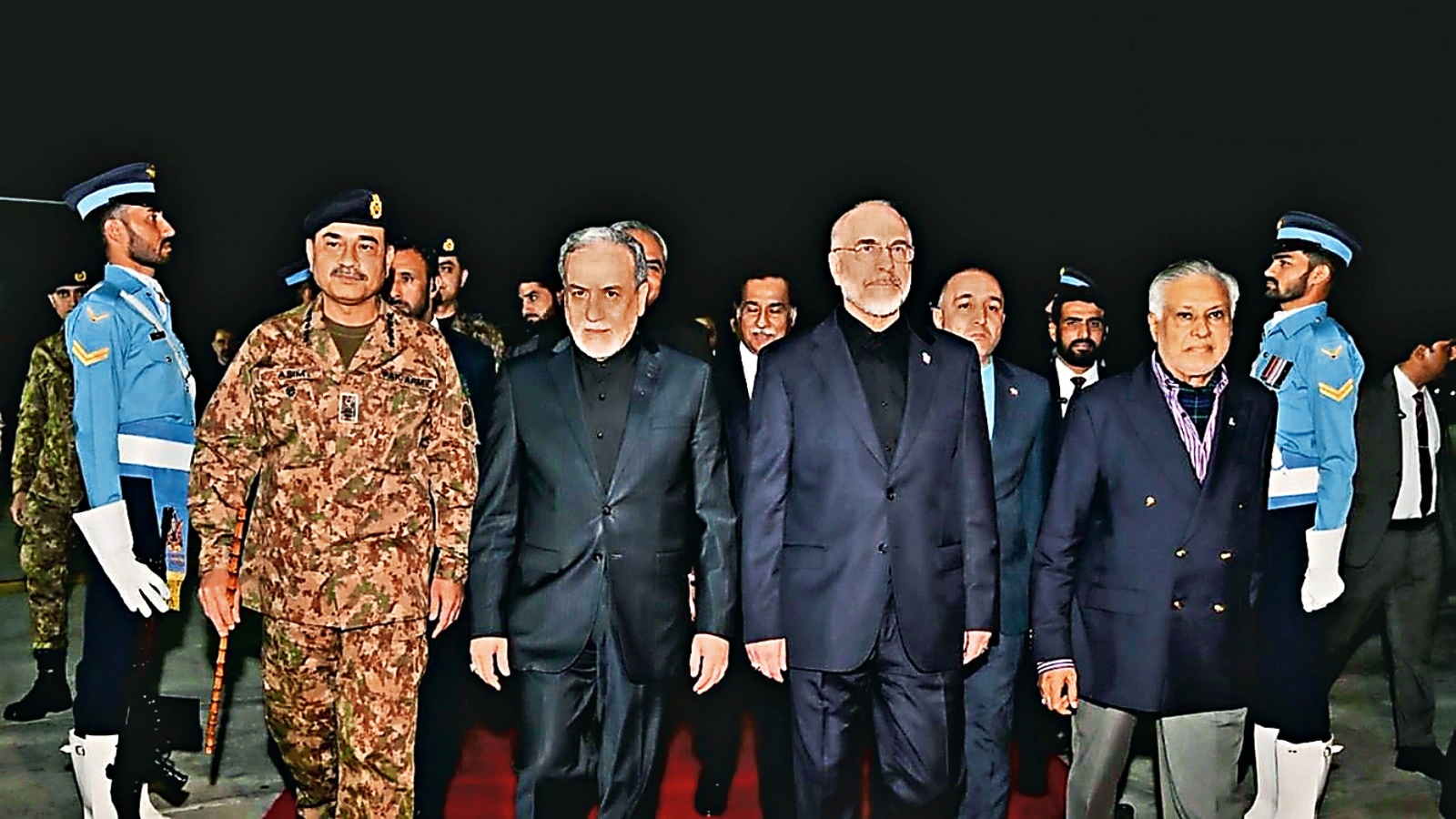
The mainstream media is treating the sudden arrival of the Iranian delegation in Doha as a historical pivot point. They are buying into the manufactured drama of Donald Trump’s "great deal or no deal" ultimatum. Analysts are breathlessly tracking flight paths and dissecting boilerplate press releases from Qatar’s foreign ministry.
They are missing the entire point. If you found value in this post, you should check out: this related article.
This is not a peace negotiation. It is a high-stakes corporate rebranding exercise where both sides have already agreed on the payout but need to terrify the market to maximize their leverage. The talking heads want you to believe we are on the brink of either a catastrophic war or a Nobel Peace Prize-winning breakthrough.
The reality is far more cynical, far more transactional, and entirely driven by domestic economic survival. If you are analyzing this through the lens of ideology, theology, or traditional geopolitics, you are being manipulated. For another angle on this story, check out the latest coverage from The Washington Post.
The Great Ultimatum Illusion
Every major network is running the same lazy narrative: Trump’s aggressive rhetoric has forced a desperate, sanctions-choked Iran to the negotiating table.
This view misunderstands how both Washington and Tehran actually operate.
Trump's "great deal or no deal" posture is not a diplomatic strategy; it is a standard opening gambit from a 1980s New York real estate playbook. You blow up the existing valuation, threaten to walk away, and force the other party to validate your presence.
For Iran, showing up in Qatar is not a sign of surrender. It is a calculated tactical retreat designed to achieve three specific things:
- Relieve immediate currency pressure on the rial.
- Signal to Beijing and Moscow that they have alternative diplomatic options, driving up their value to their eastern partners.
- Give the reformist factions in Tehran enough political oxygen to stave off internal civil unrest.
I have spent years analyzing capital flows and sanctions evasion networks in the Middle East. If you look at the hard data, the idea that a single round of talks in Doha will fundamentally alter the structural hostility between these two nations is laughable.
Consider the mechanics of the Joint Comprehensive Plan of Action (JCPOA) collapse and the subsequent maximum pressure campaigns. Sanctions did not stop Iran from exporting oil; they merely shifted the profits from transparent banking channels to the dark fleet and shadow banks of the United Arab Emirates and Malaysia.
The current talks are not about dismantling that apparatus. They are about regulating the margins.
Why the "Maximum Pressure" Thesis is Flawed
The consensus view holds that economic strangulation forces compliance. It sounds logical on paper, but it ignores the fundamental law of authoritarian survival: Scarcity centralizes control.
When you cut a nation off from the global financial system, you do not empower the pro-Western middle class. You destroy them. The only entities capable of navigating a sanctioned economy are state-backed monopolies, military syndicates, and black-market cartels. In Iran’s case, the Islamic Revolutionary Guard Corps (IRGC) controls the smuggling routes, the front companies, and the border crossings.
The Sanctions Paradox: The harsher the economic penalties imposed by Washington, the more profitable the black market becomes for the very elites the sanctions are meant to punish.
By forcing Iran into a corner, Western policy has accidentally created a closed-loop economic system where the ruling class thrives on the premium charged for smuggled goods. They do not want a total lifting of sanctions any more than Washington hawks want a total normalization of relations. Total normalization means competition. Competition means loss of control.
The Secret Drivers: What They Aren't Telling You
If the ideological battle is a myth, what is actually driving the sudden urgency in Doha? Look at the balance sheets, not the political speeches.
1. The Energy Transition Hedge
Iran sits on the world’s second-largest gas reserves and fourth-largest oil reserves. But stranded assets under the ground are worth zero dollars. Tehran knows the window for liquidating fossil fuels at peak value is closing over the next few decades. They need capital now to diversify into regional infrastructure and digital assets. They aren't fighting for Islamic hegemony; they are fighting for a seat at the post-oil table.
2. The US Debt Imperative
Washington is managing a staggering debt load. Funding prolonged proxy conflicts in the Middle East while simultaneously underwriting European security and Pacific deterrence is mathematically unsustainable. The US administration needs to outsource the stability of the Persian Gulf so it can focus on domestic manufacturing and the escalating trade war with China. A managed truce with Iran is the cheapest way to secure the global shipping lanes without stationing another carrier strike group in the region.
3. The Qatari Commission
Qatar does not host these talks out of the goodness of its heart. Doha functions as the clearinghouse for regional instability. By positioning itself as the indispensable intermediary, Qatar secures its own sovereignty against its larger neighbors and ensures that billions of dollars in frozen assets flow through its financial institutions.
Dismantling the "People Also Ask" Consensus
Let's confront the questions dominating the search algorithms right now, stripped of the usual diplomatic double-speak.
Will Trump actually sign a deal with Iran?
Yes, but it will be a superficial one. It will look like a memorandum of understanding rather than a comprehensive treaty. It will feature highly visible concessions—like the release of specific prisoners or the unfreezing of targeted humanitarian funds—accompanied by massive media fanfare. The core architectural disputes, such as Iran's ballistic missile program and its regional militia network, will be kicked down the road. It will be marketed as a historic triumph, but the underlying friction will remain untouched.
Is Iran ready to give up its nuclear ambitions?
Absolutely not. The nuclear program is Iran's only permanent insurance policy against regime change. Look at Libya; look at Ukraine. The Iranian leadership is highly rational and possesses an acute historical memory. They will agree to caps, enrichment monitoring, and temporary freezes in exchange for immediate sanctions relief. But they will never dismantle the underlying knowledge base or the dual-use infrastructure. To expect them to do so is to misunderstand the core tenet of state survival.
What does this mean for global oil prices?
The market has already priced in the Doha talks. The historical assumption that peace talks drop oil prices and escalations spike them is outdated. The global energy market is highly fragmented now. If a deal is struck and Iranian oil formally enters the market, it won't trigger a crash. It will simply legitimize the barrels that are already flowing secretly to refiners in Shandong. The only difference is that the transaction costs will drop, padding the pockets of state buyers rather than middle-market intermediaries.
The Risk of the Contrarian Reality
Admitting that this entire exercise is a transactional theater carries its own set of bleak realities.
If you accept that both sides are merely managing a profitable status quo rather than seeking a definitive resolution, you have to accept that regional proxy conflicts will never truly end. Yemen, Syria, and Iraq will continue to serve as the kinetic testing grounds where both Washington and Tehran calibrate their leverage without ever risking a direct confrontation.
It is a grim, hyper-rational calculus. It values stability over justice and predictability over peace.
Stop Waiting for a Breakthrough
If you are an investor, a policy analyst, or a business leader, stop rebalancing your portfolio based on daily headlines from Doha. Stop waiting for the "grand bargain" that will open up the Iranian market or the "total collapse" that will trigger a regime change.
The current system is too profitable for the incumbents on both sides to allow it to break. The belligerent rhetoric is the marketing department; the quiet negotiations in five-star Doha hotels are the procurement department.
Watch the capital flows. Track the dark fleet movements. Ignore the press conferences. The deal being made is not about peace; it is about establishing the new price of admission for a global protection racket.