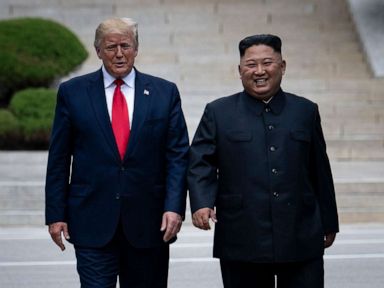
For decades, the Washington foreign policy consensus has worshipped at the altar of joint military drills. Every spring and autumn, thousands of troops mobilize across the Korean Peninsula, billions of dollars burn in jet fuel and ammunition, and diplomats recite the same tired script about defensive readiness and ironclad deterrence.
Then Donald Trump called them what they actually are: insulting, absurdly expensive, and strategically counterproductive.
The mainstream media and the defense establishment lost their minds. They accused him of undermining an ally, appeasing a dictator, and tossing away decades of military doctrine. They missed the entire point. Trump did not invent a new form of diplomacy; he simply stated the obvious truth that career bureaucrats refuse to acknowledge because it threatens their budgets.
The Myth of Routine Deterrence
Ask any Pentagon official why the US-South Korea exercises must continue year after year, and you will hear the same mantra. Deterrence requires muscle memory. Readiness requires rehearsal. If we stop training, the alliance with Seoul rots from the inside out.
This argument falls apart under basic scrutiny.
Imagine a scenario where a foreign military conducts massive, amphibious invasion simulations off the coast of Florida twice a year, complete with strategic bombers flying simulated strike runs toward Washington, all while insisting the exercises are purely defensive. Would the United States cancel them as a gesture of peace, or would the Pentagon go on a war footing?
North Korea views these drills through the exact same lens. For Pyongyang, large-scale theater-wide maneuvers are not abstract deterrents; they look like rehearsed decapitation strikes. By maintaining the status quo, Washington hands the Kim regime the ultimate domestic propaganda tool. Every missile test and fiery threat from Pyongyang is justified to its impoverished populace as a necessary response to imminent invasion.
The foreign policy establishment treats these exercises as a good in themselves, divorcing them from their geopolitical consequences. I have watched defense contractors and think-tank analysts protect programs that burn cash while actively escalating tensions, simply because admitting they do not work means admitting their entire career framework is flawed.
What the Lazy Consensus Misses About Alliance Management
The standard critique of Trump’s stance is that questioning drills damages the alliance. This turns modern statecraft on its head. An alliance is not a suicide pact or a blind endorsement of legacy habits. It is a strategic partnership designed to enhance security, not autopilot toward a crisis.
South Korea is a sovereign nation with the world's twelfth-largest economy and a high-tech military. Seoul spends billions on its own defense and maintains compulsory military service. Treating South Korea like a vulnerable client state that will collapse if American pilots do not drop dummy bombs twice a year is infantilizing.
Real alliance management means aligning strategies with on-the-ground reality. The reality is that massive conventional exercises do nothing to deter cyber attacks, nuclear proliferation, or asymmetric warfare. They are relics of a twentieth-century Cold War playbook designed for a borderless mechanized invasion that will never happen in the way planners model in their air-conditioned war rooms.
When Trump labeled the drills insulting, he was pointing to the absurdity of expecting diplomacy to succeed while simultaneously staging mock invasions on the doorstep of an adversary. You cannot negotiate denuclearization with a gun pressed against the table, no matter how many times you claim the safety is on.
The Economics of Endless Provocation
Let us talk about the ledger. Joint exercises cost hundreds of millions of dollars per iteration. They wear out aircraft frames, exhaust personnel, and tie up naval assets that are desperately needed elsewhere, particularly in the Indo-Pacific theater where the real long-term strategic competition is unfolding.
The Department of Defense loves to spread the myth that these exercises are cheap because the troops are already stationed in the region. That accounting trick ignores opportunity cost. Every hour a carrier strike group spends participating in theater-level peninsula drills is an hour it is not patrolling the South China Sea or maintaining freedom of navigation in contested waters where actual great-power friction is rising.
By forcing the military to prioritize peninsula-bound conventional drills, Washington locks itself into a strategic anchor. We tie down assets to fight yesterday's war on a static perimeter while competitors rewrite the rules of modern conflict through gray-zone tactics, economic coercion, and technological dominance.
A Better Strategic Playbook
Dismantling the consensus does not mean abandoning Seoul or leaving the region defenseless. It means growing up.
True security on the Korean Peninsula requires shifting away from high-visibility theater spectacles toward quiet, scalable readiness and genuine diplomatic leverage.
- Scale down the theater-wide footprints: Replace massive field exercises with computer-simulated command post drills that test staff coordination without mobilizing thousands of troops and provocative strategic assets.
- Tie military posture to diplomatic reciprocity: Make adjustments to exercise scale strictly conditional on verified steps toward disarmament from Pyongyang. Stop giving away concessions for free while demanding perfection from the other side.
- Focus on asymmetric integration: Prioritize joint capabilities in cyber defense, intelligence sharing, and maritime domain awareness over brute-force land-air invasions that serve primarily as political theater.
The establishment will keep defending the drills because the alternative requires admitting that decades of policy produced zero progress toward denuclearization.
Stop funding routines that achieve nothing. Stop confusing motion with progress.