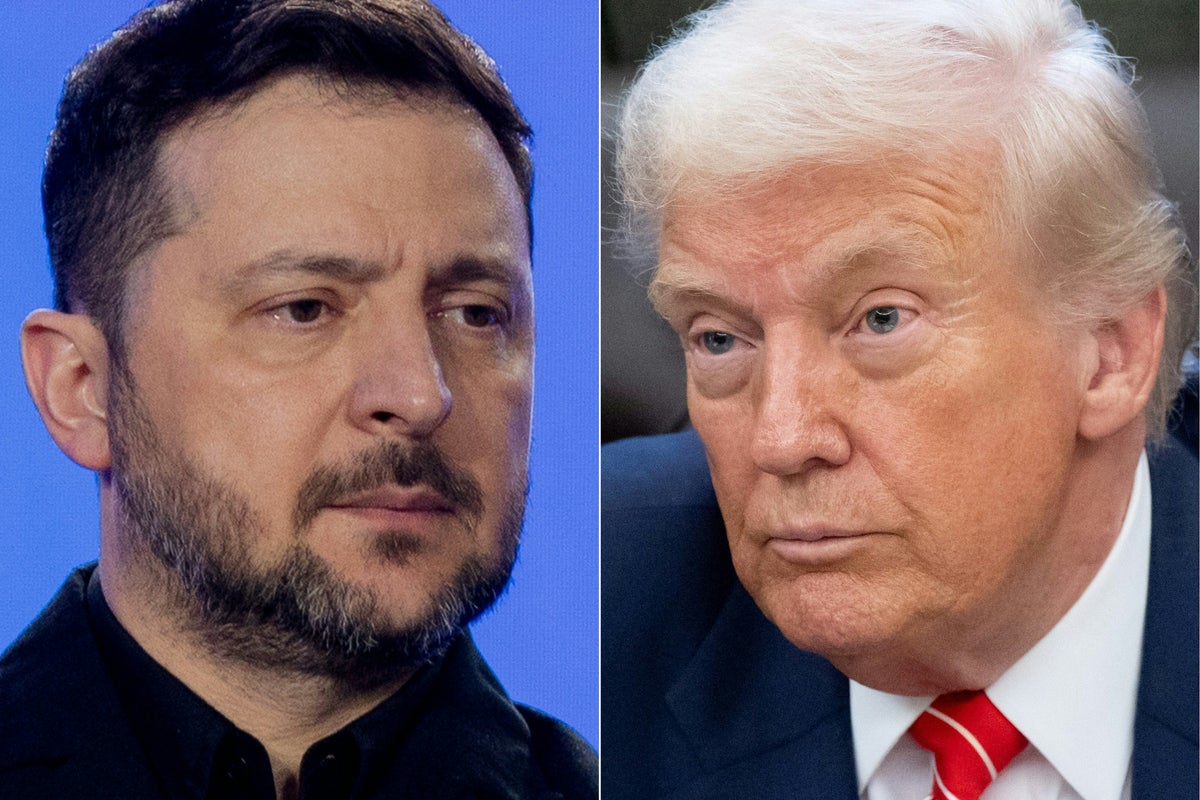
The headlines are screaming about a "snub." They want you to believe that turning down Volodymyr Zelensky’s offer of combat-proven drone technology is a fit of pique or a personal vendetta. They are wrong. They are looking at a high-stakes geopolitical chess move through the lens of a middle-school playground spat.
If you think a US President's primary job is to collect shiny new toys from foreign dependencies, you don't understand how the military-industrial complex or global trade actually functions. Accepting "help" with drone tech from Ukraine isn't a strategic win; it’s a massive liability for the American defense sector and a total surrender of domestic innovation.
The Myth of the Ukrainian Tech Advantage
Let’s dismantle the "lazy consensus" first. The media narrative suggests that because Ukraine has been forced to innovate under fire, they possess a magical "edge" that the US military is too "stuck in its ways" to see.
I have spent years watching defense contractors burn through billions on R&D. Do you know what Ukraine’s drone success actually is? It is improvisation born of desperation. It is the rapid deployment of $500 FPV (First Person View) drones carrying strapped-on RPG warheads.
While impressive on a battlefield where you have no other choice, this is not "technology" in the sense that the United States Department of Defense (DoD) defines it. The US doesn't need to learn how to tape a grenade to a DJI Mavic. The US needs to maintain a closed-loop, secure, and scalable supply chain that doesn't rely on Chinese components—the very components that comprise 90% of Ukraine's current "tech."
If Trump accepts Zelensky’s "offer," he isn't getting a secret blueprint for a stealth bomber. He’s getting a crash course in how to use civilian tech for asymmetrical warfare. The US already knows how to do this. We just choose not to because our doctrine relies on electronic warfare (EW) resistance, something Ukraine’s garage-built drones struggle with every single day as Russian jamming frequencies evolve.
The Sovereignty of the American Defense Supply Chain
Accepting foreign aid in the form of technology is a Trojan horse. It creates a dependency.
Every time a US politician suggests we "learn" from a smaller nation’s defense success, they are essentially telling American aerospace engineers to pack their bags. We saw this in the 1990s with the outsourcing of manufacturing. We saw it in the 2000s with the tech sector. To "collaborate" on drone tech with Ukraine is to open the door for a foreign government to dictate the standards of our own defense hardware.
- IP Contamination: Who owns the rights to a drone co-developed in a war zone? The legal quagmire of "joint ventures" during active hostilities is a nightmare that would stall US production for a decade.
- Security Vulnerabilities: Ukraine’s tech stack is a patchwork. It is full of backdoors and vulnerabilities inherent in rapidly iterated, open-source software. The Pentagon’s "Blue UAS" program exists for a reason: to keep compromised hardware out of the hands of our soldiers.
- Economic Suicide: Why would an "America First" administration import drone tech when they can force the domestic market—companies like Anduril or Skydio—to innovate faster?
The "Deal with Putin" is Not a Surrender; It's a Market Correction
The second half of the outrage cycle focuses on Trump’s insistence that Zelensky make a deal with Putin. The pundits call it "appeasement." I call it liquidation.
In business, when a venture is burning through capital with no clear path to an exit, you cut your losses. You don't "double down" on a sunk cost because of sentiment. Ukraine is currently the world’s most expensive subsidized entity. From a purely cold-blooded, insider perspective, the war is a massive drain on Western inventories with diminishing returns on the "investment" of regional stability.
The "deal" isn't about giving up; it’s about stopping the bleed. The US defense industry is currently struggling to replenish its own stockpiles of 155mm shells and Javelin missiles. By pushing for a deal, the administration is prioritizing the rebuilding of the American arsenal over the endless maintenance of a foreign one.
Addressing the "People Also Ask" Delusions
People often ask: Why wouldn't the US want combat-tested tech?
The premise is flawed. "Combat-tested" in a low-intensity regional conflict is not the same as "ready for a peer-to-peer global conflict." Ukraine’s drones work because Russia’s EW capabilities were surprisingly sluggish to start. In a conflict against a top-tier adversary, those drones would be falling out of the sky like flies. We need $100,000 hardened systems, not $500 disposable ones.
Another common question: Is Trump ignoring the strategic value of the Black Sea?
The strategic value of the Black Sea is irrelevant if you're bankrupting your own manufacturing base to defend it. Authoritativeness in geopolitics comes from the ability to project power, not the ability to fund a proxy indefinitely.
The Brutal Reality of Defense Economics
I’ve seen companies blow millions on "partnerships" that were nothing more than PR stunts. That is what Zelensky’s offer is. It is a PR move designed to make the US feel indebted.
If you want to understand the drone landscape, you have to look at the math of attrition.
$$Cost_{Drone} \times Success_{Rate} < Cost_{Target}$$
In Ukraine, this equation works because the targets are old Soviet tanks. In a modern theater, the success rate of unshielded, civilian-grade drones drops to near zero against sophisticated jamming. The "tech" Zelensky is offering is a solution to yesterday's problem.
The real innovation isn't in the drone itself; it’s in the autonomous targeting algorithms and mesh networking that can survive a signal-denied environment. The US is already the world leader in these fields. Asking Ukraine for help is like NASA asking a hobbyist rocket club for advice on how to get to Mars because the hobbyists managed to launch a bottle rocket 100 feet.
The Tactical "No"
Saying "no" to Zelensky is a signal to the domestic defense market: "The era of the blank check for foreign tech is over. Build it here, build it better, and build it to our specs."
It’s also a signal to Moscow and Kyiv that the US is no longer a passive ATM. It is a reassertion of leverage. If you want American support, you play by American rules, and those rules involve a path to stability that doesn't involve the permanent depletion of the US Treasury.
The media wants a story about a "betrayal." The reality is far more boring and far more significant: it is the return of the US as a rational actor that prioritizes its own industrial health over the optics of international "synergy."
Stop looking for the "moral" angle in a trade and defense negotiation. There isn't one. There is only the cold, hard reality of who owns the factory and who owns the code. If you aren't the one holding the patent and the production line, you aren't a player; you're a customer. Trump just decided he’s done being the customer.
Stop falling for the "help us help you" pitch. In the world of high-stakes defense, there is no such thing as a free lunch, especially when the lunch is made of off-the-shelf parts from Shenzhen. The snub wasn't an insult; it was a realization that the "offer" was actually a request for more funding disguised as a gift.
In this game, if you can’t see the mark at the table, it’s you. Trump saw the mark, and he walked away. That isn't a failure of diplomacy. It’s the first step in reclaiming a defense strategy that actually serves the interests of the people paying for it.