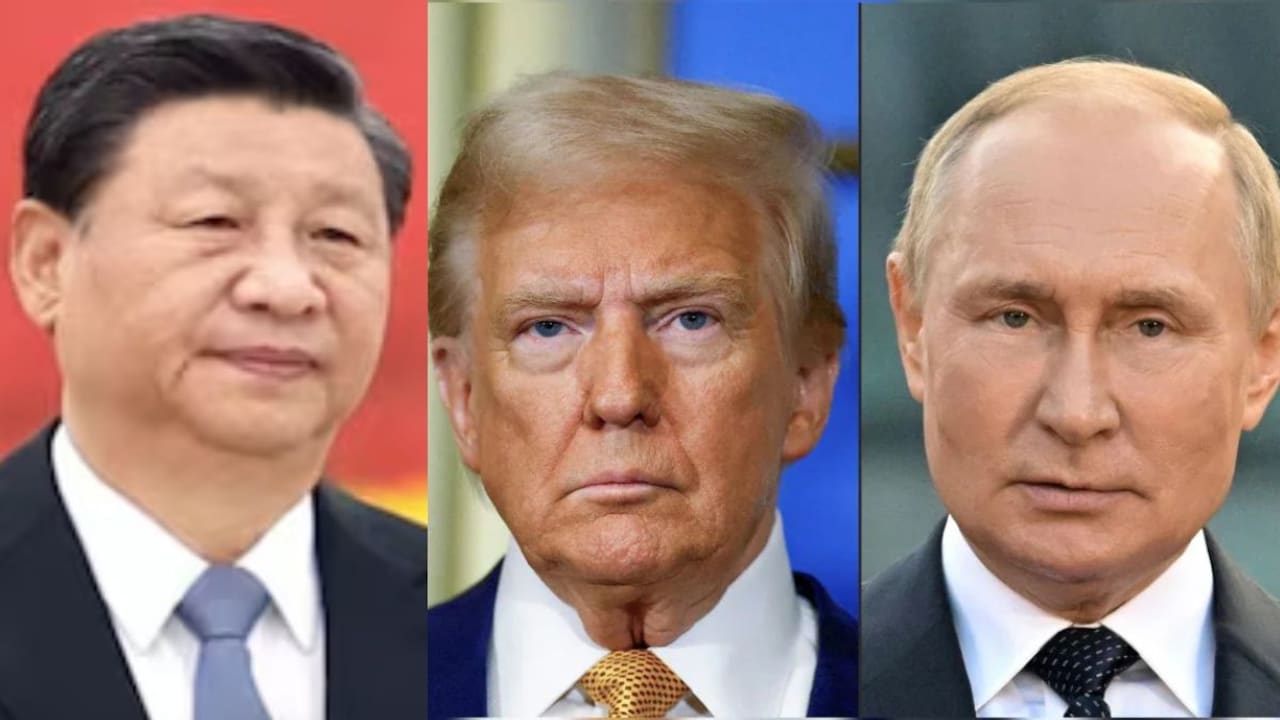
The media framing on any discussion involving Moscow, Beijing, and Washington is predictable to the point of corporate comedy. When the Kremlin drops a casual press note about a potential trilateral alignment between Vladimir Putin, Donald Trump, and Xi Jinping, the mainstream pundit class immediately hyperventilates. They trot out the standard Cold War tropes. They screech about authoritarian axes, anti-Western coalitions, and the imminent demise of the rules-based international order. They treat diplomatic signaling like a comic book villain convention.
They are missing the plot entirely. Don't miss our previous post on this related article.
Standard commentary assumes that a three-way diplomatic mechanism automatically translates into an efficient, unified super-state designed to crush American hegemony overnight. That is a child’s understanding of geopolitics. Great powers do not form harmonious clubs out of ideological affection; they grind against each other constantly. Russia and China share a sprawling, historically fraught land border and deep-seated structural suspicions. Beijing views Moscow as a useful resource pump and a diplomatic shield, not an equal partner. Meanwhile, Trump operates through pure transactional leverage, viewing foreign policy not through a lens of permanent alliances, but through the immediate balance sheet of American interests.
The Fatal Flaw in the Western Consensus To read more about the history of this, NBC News offers an in-depth breakdown.
Look at how the lazy consensus analyzes a potential summit. They assume that if Trump steps into a room with Putin and Xi, Washington loses. The assumption is that talking equals capitulation. This reveals a profound historical illiteracy. Richard Nixon going to Beijing in 1972 did not mean America surrendered to Mao Zedong; it meant Washington cleverly exploited the Sino-Soviet split to isolate Moscow.
A trilateral framework today flips that dynamic on its head. The real panic inside the foreign policy establishment is not that a Trump-Putin-Xi meeting will destroy America. Their terror is that it might bypass the incompetent, bloated middle-management of the State Department and solve transactional gridlocks that current technocrats are too cowardly to touch.
When you strip away the moralizing rhetoric from cable news, diplomacy is simply a market for trading concessions. Trump understands this transactional reality better than any career bureaucrat who spent thirty years failing upward at the Council on Foreign Relations.
Deconstructing the Power Asymmetry
Let us look at the actual math of this supposed axis. The lazy narrative treats the three leaders as an unbreakable trio. The reality is a high-stakes knife fight in a phone booth.
- China: Xi Jinping is playing the long game of economic dominance, needing stability to manage an internal property debt crisis while quietly locking down global supply chains. He does not want a hot war with the West; he wants a slow, uncontested victory through manufacturing and trade dominance.
- Russia: Putin is fighting a war of attrition in Ukraine, isolated from Western capital markets, and heavily dependent on Chinese energy imports to keep his state budget afloat. He is the junior partner in the Eastern bloc, and he knows it.
- The United States Under Trump: Unpredictable, hyper-focused on domestic manufacturing, and fundamentally exhausted by endless foreign aid packages that yield zero return on investment.
If you put these three distinct agendas into a single room, the idea of a unified anti-American front dissolves under the weight of competing national interests. China wants cheap Russian oil and access to Western consumer markets. Russia wants sanctions relief and a permanent buffer in Eastern Europe. America wants to stop bleeding capital into foreign quagmires and force domestic economic renewal.
These goals are fundamentally contradictory. You cannot simultaneously maintain a client state in East Asia while appeasing a revisionist power in Europe, all while satisfying an American electorate that wants to stop funding foreign adventures.
Why the Establishment Hates Realism
The permanent Washington bureaucracy hates the very concept of a trilateral dialogue because it exposes their primary business model: perpetual crisis management. If conflicts are actually resolved through hard-nosed, direct negotiations between strongmen, what happens to the billions of dollars allocated to defense contractors, think tanks, and endless diplomatic junkets?
I have watched corporate consultants and defense lobbyists blow millions on pointless strategic studies that reach the exact same conclusion every single time: we need more funding and more bureaucracy. They treat foreign policy like a sacred text that only credentialed high priests can interpret.
When an outsider like Trump threatens to pick up the phone and talk directly to the adversaries, the priesthood loses its mind. They scream about norms. They hyperventilate about protocol. What they are actually defending is their monopoly on power.
The Uncomfortable Truth About Leverage
Let us be entirely honest about the downside of this approach. Direct, transactional deal-making with autocrats is messy, cynical, and devoid of moral posturing. It involves trading tangible assets—territory, sanctions relief, trade tariffs—for geopolitical breathing room. It ignores the comfort blanket of international law and institutional consensus.
Critics will rightly point out that dealing directly with Putin and Xi validates their regional ambitions. It does. That is the price of admission in a multipolar world. The alternative is the current path: a slow-motion descent into a proxy war that risks escalating into a global nuclear exchange while accomplishing nothing of permanent value for the American worker.
The media wants you to view international relations as a Marvel movie where good fights evil. Real life is an ugly game of risk management.
If a trilateral summit happens, it will not mark the dawn of a new utopian era. Nor will it spell the end of the American century. It will be a brutal, unscripted wrestling match where every participant tries to pick the other's pocket while smiling for the cameras.
Stop listening to the pundits who think a sternly worded statement at the United Nations stops a tank division or a microchip blockade. Real power does not flow from communiqués written by committee. It flows from the barrel of economic leverage and the willingness to look an adversary in the eye and cut a deal.