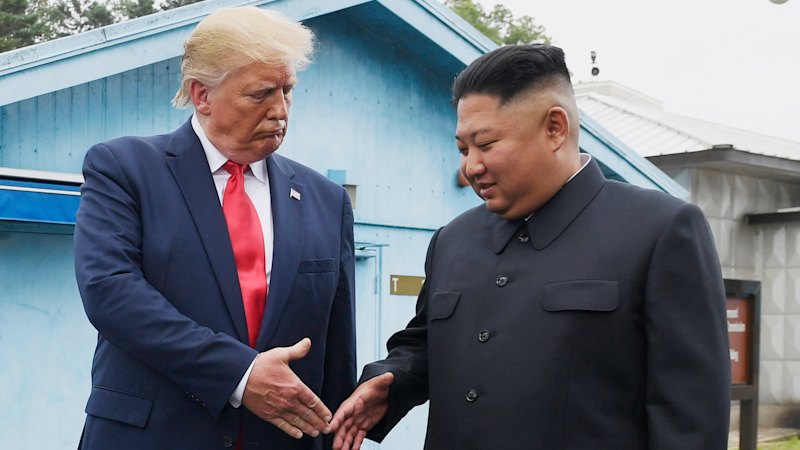
We spent years watching high-stakes diplomacy play out on television screens, wondering if historical animosity would finally end. Donald Trump and North Korean leader Kim Jong Un met in Singapore, Hanoi, and the Demilitarized Zone. Pundits argued endlessly about whether these events were serious diplomatic breakthroughs or empty spectacles designed for domestic political gain.
If you look past the theatrical handshakes and the carefully staged photo opportunities, the underlying reality was always much simpler. Trump wanted a legacy-defining headline that would brand him as a master negotiator. Kim wanted international legitimacy and a way to ease crushing sanctions without giving up a single nuclear warhead. Neither side was ever genuinely interested in total denuclearization because neither side could afford the domestic fallout of walking away empty-handed.
The Mirage of the Singapore Agreement
The first summit in Singapore produced a document signed in June 2018 that sounded revolutionary on paper. It promised a new relationship between Washington and Pyongyang, alongside a vague commitment to work toward complete denuclearization of the Korean Peninsula.
Honesty matters here. The agreement contained zero enforcement mechanisms, zero verification timelines, and zero concrete definitions of what denuclearization actually meant. State Department veterans knew immediately that the text was practically worthless.
Kim wanted to be treated as an equal alongside an American president on the global stage. Walking into a summit with the leader of the free world instantly elevated his status at home and abroad. Trump wanted a signature achievement to prove his unconventional foreign policy approach worked better than decades of traditional bureaucratic wrangling. The joint statement became a masterclass in political theater, giving both leaders exactly what they needed for their respective domestic media outlets while changing nothing on the ground.
Hanoi and the Price of Walking Away
Things fell apart quickly when the two leaders met in Hanoi for their second major summit. Trump arrived expecting a grand bargain, while Kim wanted sanctions lifted in exchange for shutting down only a portion of the Yongbyon nuclear facility.
When American negotiators realized North Korea wanted maximum relief for minimal concessions, the talks collapsed. Trump walked out of the meeting, a move that shocked observers who expected him to accept any deal just to claim a victory.
That moment exposed the fundamental mismatch in their objectives. Washington demanded a comprehensive dismantling of the entire nuclear program before lifting any major economic penalties. Pyongyang viewed its nuclear arsenal as an absolute insurance policy against regime change, making complete surrender a non-starter. Both men discovered the hard limits of personal diplomacy when structural national security interests collided with political timelines.
What Real Strategy Looked Like Behind the Closed Doors
Diplomatic breakthroughs require more than just chemistry between two strong-willed personalities. Real arms control agreements take years of quiet, tedious work by mid-level bureaucrats, inspectors, and intelligence analysts.
The summits bypassed this entire infrastructure. Instead of relying on institutional expertise, the White House treated international relations like a real estate negotiation where a signed letter of intent mattered more than legal verification clauses.
Meanwhile, North Korea continued developing ballistic missiles and expanding its fissile material production throughout the diplomatic charm offensive. Intelligence reports consistently showed that pauses in nuclear testing did not translate into a halt in manufacturing. Kim used the diplomatic breathing room to refine technology, proving that spectacle often masks strategic consolidation.
Moving Past the Theatrical Era of Foreign Policy
Future administrations will inevitably face the same dilemma on the Korean peninsula. Dictatorships armed with atomic weapons do not surrender them simply because an American president offers flattery and a handshake.
Foreign policy outcomes depend on tangible leverage, allied unity, and unbreakable deterrence. Treating summits as the destination rather than the reward for actual progress guarantees failure. We learned that photo opportunities make for great television ratings, but they do not alter geopolitical realities or dismantle nuclear stockpiles.