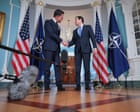
Donald Trump isn't hiding his anger. After a high-stakes, closed-door meeting at the White House on Wednesday, NATO Secretary General Mark Rutte confirmed what most of us already suspected: the President is "clearly disappointed" with his allies. The rift isn't about membership dues this time. It's about a war in Iran that many European nations simply refuse to touch.
The timing of this meeting was incredibly tense. It happened less than 24 hours after a fragile two-week ceasefire was inked between Washington and Tehran. Trump had spent weeks threatening to wipe out "a whole civilization" if Iran didn't open the Strait of Hormuz. Now that the dust has settled—at least for a moment—he's looking around and realizing his European partners weren't standing behind him when the shooting started.
The Test NATO Failed
For Trump, the Iran conflict was a litmus test for the 77-year-old alliance. To him, the result was a failing grade. He's called NATO a "paper tiger" and complained that the U.S. is the only one doing the heavy lifting while everyone else reaps the benefits of stable oil prices.
The specifics of his frustration are biting. During the heat of the conflict, France and Spain restricted or outright forbade the U.S. from using their airspace for combat missions. Other allies declined to send warships to the Strait of Hormuz, leaving the U.S. Navy to handle the brunt of the "Epic Fury" operation alone.
Rutte tried to put a positive spin on things after the meeting. He mentioned that most European nations provided logistics and basing support. He even went as far as to say he "applauds" the U.S. for degrading Iran's nuclear and missile capabilities. But Rutte's flattery only goes so far. Trump's Truth Social post following the meeting was blunt: "NATO WASN'T THERE WHEN WE NEEDED THEM, AND THEY WON'T BE THERE IF WE NEED THEM AGAIN."
Withdrawal or Punishment
The big question looming over Washington is whether Trump will actually pull the plug on the alliance. White House Press Secretary Karoline Leavitt admitted the President has been discussing a withdrawal. While a 2023 law prevents a president from leaving NATO without Congressional approval, Trump has plenty of other ways to make his displeasure felt.
The administration is reportedly looking at a "punishment" plan. Instead of a total exit, they might move U.S. troops out of "unhelpful" countries and relocate them to nations that showed more backbone during the Iran crisis. This isn't just a hypothetical threat; the Wall Street Journal reports that officials are already drawing up the maps.
- Germany and France: Likely targets for troop reductions due to their diplomatic resistance.
- Poland and the Baltics: Possible beneficiaries of relocated U.S. forces.
- UK: Currently in the doghouse after Prime Minister Keir Starmer refused to commit the Royal Navy to the Strait.
Trump’s "friendship" with Rutte—who some call the "Trump whisperer"—is being pushed to the limit. Rutte’s strategy has always been to avoid public criticism and keep the lines of communication open, but even he couldn't hide the President's "frank" and "direct" tone this week.
The Greenland Grudge
In a move that feels like a surreal throwback, Trump also brought up Greenland during his recent venting sessions. He complained that his problems with NATO "all began" with Denmark’s refusal to sell the island during his first term. By linking the Iran war defiance to the Greenland snub, Trump is signaling that he views NATO not as a mutual defense pact, but as a group of partners who consistently refuse to do what he asks.
European diplomats are visibly rattled. They argue the Iran war was a "war of choice" that Trump started without consulting them. They don't see why they should be dragged into a Middle Eastern conflict that risks their own national security. To them, the 2001 activation of Article 5 after 9/11 was a one-time deal for a clear act of aggression, not a blank check for every U.S. military intervention.
What Happens Next
The two-week ceasefire with Iran is a ticking clock. If the peace doesn't hold, Trump will likely demand even more from NATO. If they refuse again, the "paper tiger" rhetoric will turn into actual policy shifts.
You should keep a close eye on the upcoming Pentagon meetings. Rutte is scheduled to sit down with Pete Hegseth to talk "burden shifting." That's code for Europe paying more and doing more so the U.S. doesn't have to. If you're a European leader, the message is clear: start moving your own ships and opening your own airspace, or prepare to see U.S. bases start packing up their gear.
The era of unconditional American protection is over. Trump has made it a transaction, and right now, he thinks the check has bounced. Expect more troop movement announcements and sharper rhetoric as the ceasefire deadline approaches.