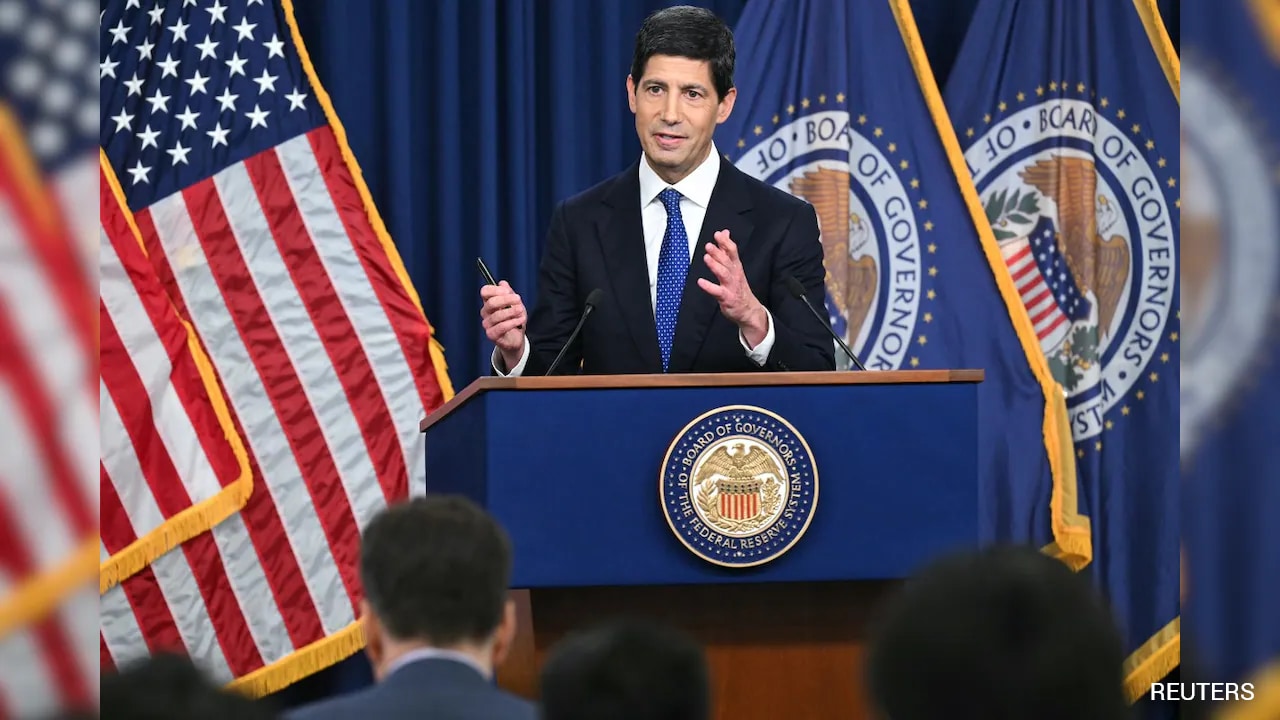
Donald Trump wanted lower interest rates, and he wanted them immediately. When Federal Reserve Chair Jerome Powell refused to bend, the White House launched a relentless public and private pressure campaign that shook global markets and tested the constitutional boundaries of central bank independence. It became one of the defining institutional turf wars of modern American politics.
Yet, despite angry social media posts, unconventional building tours, and thinly veiled threats of termination, the attempted takeover largely stalled. The structural architecture of the U.S. financial system proved surprisingly resilient against executive overreach.
The Anatomy of a White House Pressure Campaign
The friction between Trump and Powell wasn't subtle. Presidents usually respect a strict historical firewall separating monetary policy from partisan politics. Trump tore that firewall down. He branded Powell a "major loser" and publicly fumed that he'd "love to fire his ass" because the Fed was keeping borrowing costs too high.
Behind the insults lay a straightforward calculation. The administration wanted to juice economic growth and offset the fiscal drag of massive federal borrowing. Cheaper debt makes it easier to finance multitrillion-dollar deficits. Powell, operating under the Fed's dual mandate to control inflation and maximize employment, refused to treat interest rates as a political loyalty test.
The clash escalated into surreal territory when Trump made a surprise, highly publicized visit to the Fed's historic Marriner S. Eccles building during a massive multi-billion-dollar renovation. Reporters were dragged through active construction sites while administration critics whispered about political intimidation. Markets shuddered. Investors hate uncertainty, and nothing rattles Wall Street quite like a president openly threatening the stability of the world's most influential central bank.
Why Firing the Fed Chair Is Nearly Impossible
The core constraint stopping a total executive takeover comes down to federal statute. Under the Federal Reserve Act, governors can only be removed "for cause"—meaning inefficiency, neglect of duty, or malfeasance—not simply because the president disagrees with a quarter-point adjustment to the federal funds rate.
If Trump had actually pulled the trigger and attempted an outright firing, it would have sparked an immediate, chaotic constitutional crisis. Powell would have had legal standing to sue for reinstatement, dragging the White House into a messy Supreme Court showdown reminiscent of historic precedents like Humphrey's Executor.
Furthermore, monetary policy isn't an autocratic dictatorship run solely by the chair. The Federal Open Market Committee (FOMC) consists of twelve voting members, including regional Fed bank presidents who are appointed by private sector boards, not the Oval Office. Even a compliant replacement in the chair's seat would still have to wrangle a majority vote among economists and regional bank heads who fiercely guard their institutional autonomy.
The Real Cost of Political Interference
Even though the takeover failed to completely dismantle the Fed's independence, the constant onslaught left deep scars. Wall Street analysts point out that aggressive political meddling introduces an unnecessary risk premium into long-term bonds. When investors worry that monetary policy is being dictated by political whims rather than hard economic data, inflation expectations can unanchor.
Powell absorbed the hits, outlasted the worst of the public lashings, and demonstrated that institutional norms still possess teeth when defended by officials willing to stand their ground. Central bank independence survived this bruising chapter, but the episode serves as a warning shot for future administrations tempted to treat the printing press as a personal political tool.