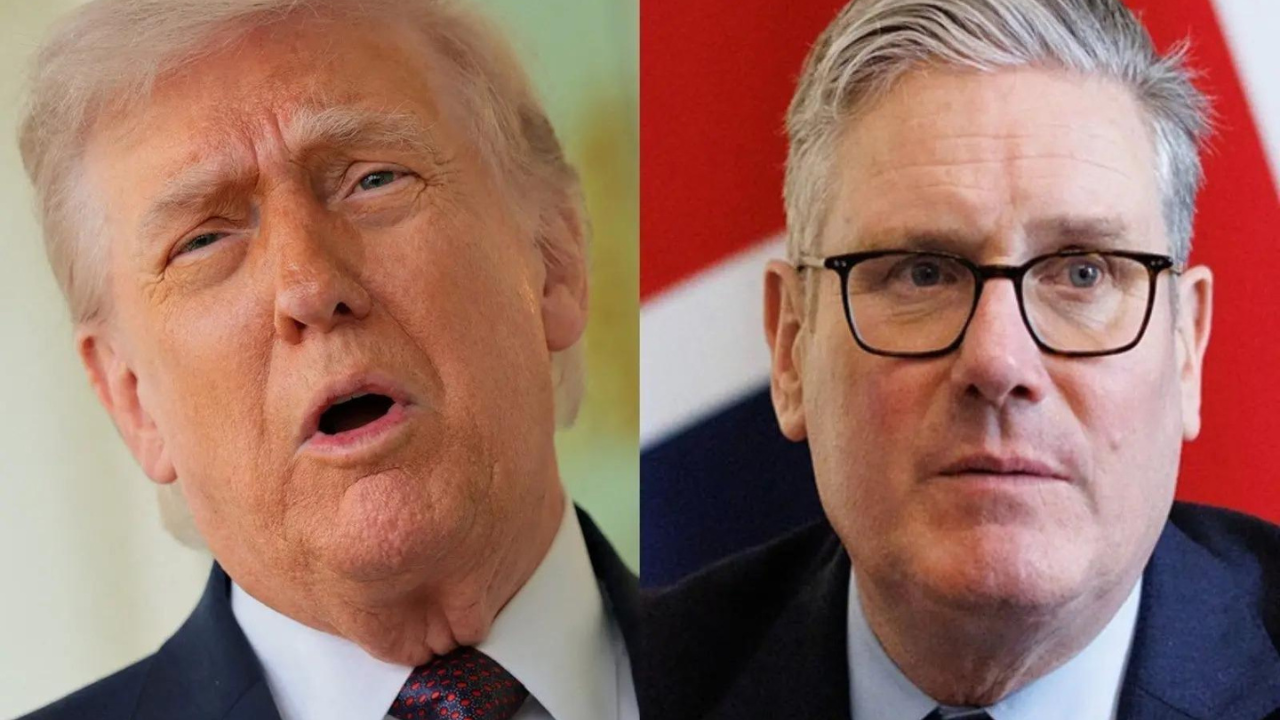
The media consensus is in, and it is beautifully, systematically blind.
Donald Trump logs onto Truth Social to declare that Keir Starmer will resign because he "failed badly" on immigration and North Sea oil. The British press pack salivates, reporting whispered mutinies in Chequers and scheduling the execution for Monday morning. The narrative is tidy, simple, and entirely incorrect.
If Starmer falls, it will not be because of a failure on borders or carbon targets. It will be because he executed a flawless political strategy that was built for an era that no longer exists.
The media loves a story about policy failures. It is easy to write. But the reality of political power is structural, mechanical, and cold. Starmer did not fail on energy or migration; he is the victim of a deeper macroeconomic trap that neither Trump nor the Labour rebels have the courage to name.
The Myth of the Policy Failure
Let us dismantle the core premise of the Trump critique immediately. Trump claims Starmer sank his own administration by banning new North Sea oil licenses and dropping the ball on migration. This is a surface-level misreading of British structural limitations.
The UK energy crisis was not cooked up in Downing Street over the last two years. The closing of the Strait of Hormuz sent global oil prices skyrocketing. No amount of expedited deep-sea drilling in the North Sea could have insulated a mid-sized, import-dependent economy from a global geopolitical supply shock. To suggest that "opening North Sea oil" would have instantly lowered British utility bills is a fundamental misunderstanding of marginal pricing in global energy markets.
The exact same structural blindness applies to immigration. The media points to Reform UK’s surge and the violent protests in Belfast as evidence of an administrative collapse.
In reality, Net Migration into advanced Western economies is driven by structural labor deficits that no single administration can reverse without triggering an immediate, catastrophic recession. I have seen governments across Europe try to simulate border control while quietly begging for agricultural and healthcare labor behind closed doors. The problem is not an ideological failure; it is an economic dependency.
The Real Threat is Not Farage, It is Andy Burnham
The mainstream commentary assumes that Starmer is being eaten from the right by Nigel Farage and the populist wave. This is a complete inversion of reality.
Starmer is not being forced out by the populist right. He is being cannibalized by his own party because of a catastrophic structural error: he mistook a defensive electoral mandate for an ideological blank check.
When Labour won its landslide in 2024, it did not win a mandate for austerity-lite or defensive technocracy. It won because the electorate wanted an end to chaos. But Starmer ran the country like a cautious corporate restructuring officer when the building was already on fire.
The Makerfield by-election changed the equation because Andy Burnham managed to beat back the Reform UK threat by offering an alternative: actual regional investment and an active state.
Burnham’s return to Parliament did not invent the mutiny; it merely gave the executioner a face. When more than 100 Labour MPs demand a resignation timeline, they are not doing it because they care about Donald Trump’s tweets or North Sea oil derricks. They are doing it because they realize that defensive, cautious technocracy is an absolute electoral death sentence in an era of permanent economic crisis.
The Irony of the Cautious Prime Minister
The ultimate tragedy of the Starmer administration is that his greatest strength—his total risk-aversion—became his fatal flaw.
To stay on the right side of the White House for trade terms, Starmer spent months performing a delicate diplomatic dance. Yet the moment the US-Israeli conflict with Iran escalated, Starmer tried to play the cautious, rules-based institutionalist. He refused direct military involvement, earning Trump's "no Winston Churchill" label.
You cannot play the middle of the road when the road itself is collapsing. Starmer tried to manage a decline smoothly instead of arresting it boldly.
| The Starmer Approach | The Structural Reality |
|---|---|
| Banning new North Sea licenses for climate targets | Total exposure to global energy price shocks regardless of local drilling |
| Attempting to manage immigration through technocratic enforcement | Massive domestic structural reliance on foreign labor to prevent NHS collapse |
| Maintaining strict fiscal rules to appease bond markets | Deep public dissatisfaction as public services decay from underinvestment |
Stop Asking if Starmer Will Resign
The media is obsessed with asking when Starmer will walk out the door. That is the wrong question entirely.
The real question we should be asking is this: Can any British Prime Minister govern a post-Brexit, structurally broken economy within the parameters of orthodox fiscal policy?
If Andy Burnham or Wes Streeting takes the keys to 10 Downing Street by the end of the week, they will inherit the exact same spreadsheet. They will face the same soaring energy costs, the same crumbling National Health Service, and the same fundamental truth that the UK cannot print its way out of structural stagnation.
Changing the manager of a bankrupt firm does not make the debt disappear. Starmer’s imminent departure is not a triumph for Trump’s brand of populism, nor is it a simple policy correction. It is the definitive proof that the era of the bloodless, managerial politician is officially dead.