Foreign policy chaos usually starts with a Sunday morning interview. When U.S. Ambassador to China David Perdue went on television and casually dropped that Donald Trump had asked Chinese President Xi Jinping if he wanted to buy American weapons, Washington lost its collective mind.
Selling military hardware to Beijing isn't just a bad idea in the eyes of defense hawks; it is strictly banned by U.S. law. Yet here was the handpicked ambassador telling the world that the President of the United States pitched an arms deal during a high-stakes state visit.
The immediate fallout exposed the frantic, uncoordinated nature of modern diplomacy. Within hours, the State Department scrambled to contain the damage, insisting that no such offer existed and pointing out the legal hurdles. Trump himself later weighed in, claiming the ambassador must have meant Taiwan. It is a messy tangle of mixed signals, but it reveals a lot about how transactional foreign policy actually works behind closed doors.
The Ambassador Statement That Triggered a Washington Meltdown
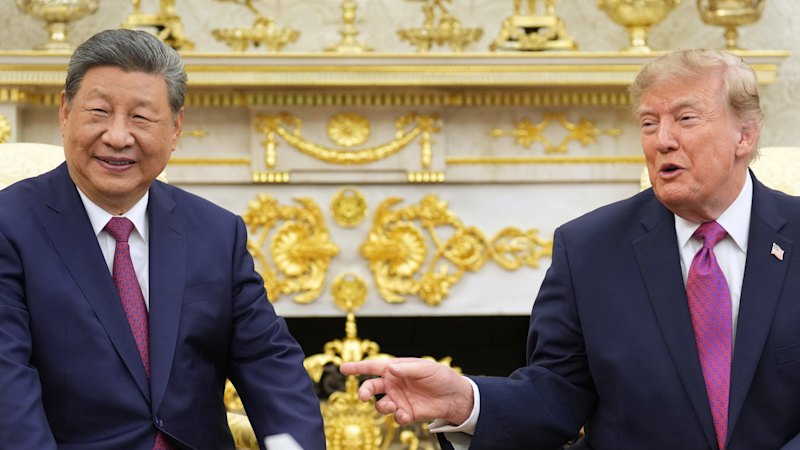
David Perdue appeared on Fox News to discuss the recent summit between Trump and Xi. Instead of sticking to standard diplomatic talking points about trade truces or regional stability, Perdue shared a surprising detail. He claimed Trump told Xi that the U.S. sells arms to various allies across the globe and directly asked the Chinese leader if he wanted to buy some.
The remark immediately set off alarm bells. For decades, American strategy has treated China as the primary long-term strategic competitor. Washington heavily restricts sensitive technology transfers to the People's Liberation Army. The idea of an American president treating advanced military gear like inventory at a car dealership stunned foreign policy veterans.
Critics pointed out the jarring contradiction. While the administration routinely discusses defensive packages for Taiwan to deter potential aggression, floating offensive or standard hardware sales to Beijing obliterates that deterrence logic. Why arm the very adversary you are trying to contain?
Damage Control and Presidential Backpedaling
The White House machinery went into overdrive almost immediately. The State Department issued firm clarifications reminding everyone that federal law flatly prohibits selling weapons to China. There are no loopholes, and certainly no active plans to ship U.S. defense tech across the Pacific to Beijing.
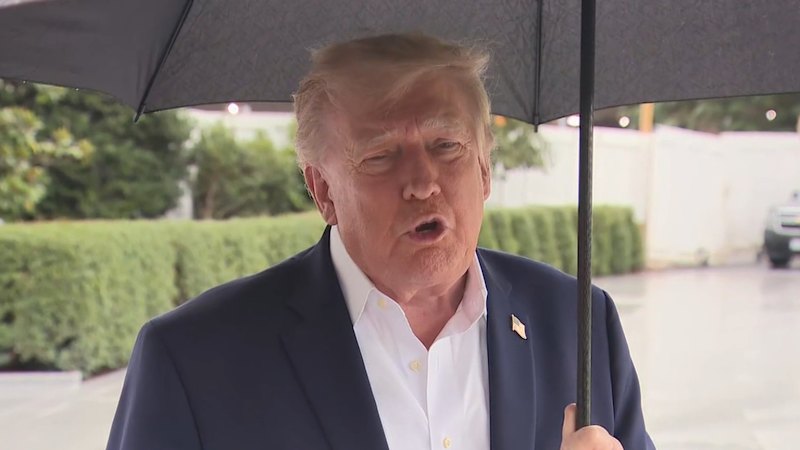
When reporters caught up with Trump at the White House, his response only added to the confusion. He denied having any direct memory of making such an offer to Xi. Then, true to form, he pivoted to a characteristic musing. He noted that China would probably love to buy American equipment because U.S. gear is objectively superior, before settling on an excuse for his ambassador.
"He may have been talking about Taiwan," Trump told reporters, suggesting Perdue simply mixed up the geography.
It is a classic case of political whiplash. One official floats a radical transactional concept, the bureaucracy panics, and the principal shrugs it off as a misunderstanding while teasing the inherent superiority of American manufacturing.
Why This Transcation Mindset Terrifies the Establishment
To understand why this story matters beyond the initial news cycle, you have to look at Trump's worldview. He treats geopolitics like commercial real estate negotiation. Everything is on the table, every alliance is negotiable, and leverage is currency.
When the U.S. paused a multi-billion dollar weapons package for Taiwan earlier, officials defended it as a tactical negotiating chip to pressure China on trade. Bringing up potential arms sales to Beijing fits that same erratic, deal-making framework. To Trump, asking "do you want to buy?" might just be an opening salvo in a broader economic wrangling session.
To the national security establishment, however, that approach is terrifying. Defense secrets, missile tech, and guidance systems are not commodities to be peddled for short-term trade concessions. Blurring the line between allies and existential rivals destroys trust in American security commitments abroad.
Ambassador Perdue walked into a political minefield by saying out loud what usually stays behind closed doors—or what shouldn't be said at all. Whether it was a genuine pitch, a bad joke, or a slip of the tongue, it proved that traditional red lines mean very little when transactional diplomacy takes the wheel.
The dust will settle, and the official policy will remain unchanged because federal law demands it. But the incident serves as a glaring reminder that standard diplomatic norms are treated as flexible suggestions in the current political era.
The U.S. Ambassador says Trump offered to sell arms to China
This video clip covers the original remarks made by U.S. Ambassador David Perdue regarding the proposed arms discussion with China.